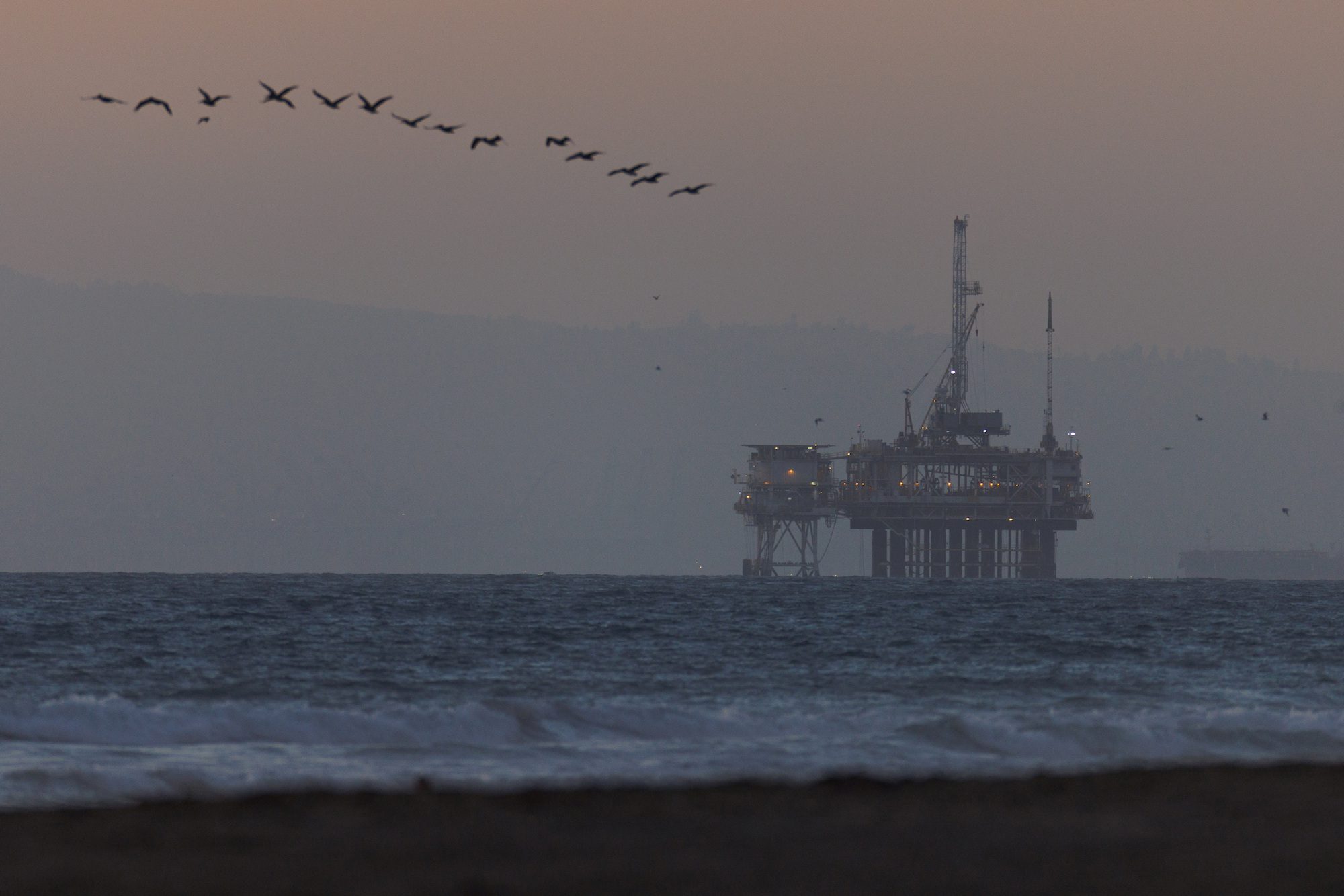
The Trump administration has taken the first formal step toward reopening California’s offshore waters to oil and gas drilling for the first time in decades — triggering swift and coordinated opposition from governors across the West Coast, who warn the move threatens coastal economies, public safety, and fragile marine ecosystems.
The Bureau of Ocean Energy Management (BOEM) announced Monday that it has issued two Calls for Information and Nominations (Calls) seeking industry input on potential offshore oil and gas leasing areas in Southern and Central California. The action initiates the early stages of offshore leasing under President Trump’s proposed 11th National Outer Continental Shelf (OCS) Oil and Gas Program.
Publication of the Calls in the Federal Register formally opens a public comment process, inviting feedback on environmental conditions, socioeconomic impacts, and industry interest. While BOEM emphasized that the move does not represent a final decision to hold lease sales, it marks the first concrete step toward reopening California waters that have largely remained closed to new offshore drilling since the late 1980s.
“We’re taking the first step toward a stronger, more secure American energy future,” said BOEM Acting Director Matt Giacona. “These Calls begin a careful analysis of two key areas with promising resource potential on the Outer Continental Shelf to help guide future decisions about potential leasing and development—supporting U.S. energy security, creating good-paying jobs, and reducing reliance on foreign energy, all while maintaining our commitment to responsible environmental stewardship.”
The two planning areas were outlined in the Department of the Interior’s Draft Proposed 11th National OCS Leasing Program, released in November 2025. Potential lease sales offshore Southern and Central California are tentatively scheduled for 2027, though BOEM stressed that multiple environmental, technical, and economic reviews remain before any final decisions are made.
West Coast Governors Mount Unified Resistance
The response from California and its neighboring states was immediate and unified.
California Governor Gavin Newsom, joined by Oregon Governor Tina Kotek and Washington Governor Bob Ferguson, submitted a joint letter opposing the proposal to Interior Secretary Doug Burgum and BOEM, warning that offshore drilling poses unacceptable environmental and economic risks to the region.
“If offshore drilling is too dangerous for Mar-a-Lago, it’s too dangerous for working families on our coasts — it leads to dead wildlife, devastated communities, and billions of dollars in economic damage to fishing, shipping, and tourism industries,” Newsom said. “We won’t sacrifice that to enrich oil companies, especially when a single spill can cause devastation for generations. We’ll use every legal tool available to stop Donald Trump’s offshore drilling plan.”
California Natural Resources Secretary Wade Crowfoot echoed that message, pointing to decades of bipartisan opposition to offshore drilling along the Pacific Coast.
“This is not a partisan or geographic issue,” Crowfoot wrote in formal comments. “Over the last four decades, California leaders have expressed consistent, united opposition to any new offshore oil and gas activities. In 2006, 2008, 2014, and 2017, Republican and Democratic governors in California, Oregon, and Washington sent letters to the President of the United States and to Congress supporting moratoria on new offshore oil and gas leasing and opposing any efforts to renew and expand oil and gas leasing off the entire West Coast. The economic, environmental, and community risks of expanded offshore drilling are simply too great.”
Economic Stakes and Spill History
State officials argue that offshore drilling puts a massive coastal economy at risk. California’s coastal industries — including tourism, shipping, fisheries, and recreation — support hundreds of thousands of jobs and generate more than $44 billion annually.
Opponents also point to the state’s long history of oil spills as evidence of the potential consequences of offshore development.
The 2021 Huntington Beach spill released approximately 25,000 gallons of crude oil, leading to $210 million in civil and criminal penalties and an additional $30 million in cleanup and restoration costs. In 2015, the Refugio spill along the Gaviota Coast released roughly 100,000 gallons from a ruptured pipeline, killing or injuring more than 230 marine mammals and nearly 560 birds, and ultimately resulting in a $22.3 million environmental settlement.
The most infamous incident remains the 1969 Santa Barbara oil spill, which released more than 4.2 million gallons of crude following a platform blowout — an event widely credited with launching the modern environmental movement in the United States.
The 30-day public comment period begins January 27, 2026, following publication of the Calls in the Federal Register. Members of the public can submit feedback through Regulations.gov using the docket numbers listed in the notices.
California Attorney General Rob Bonta also submitted formal opposition, emphasizing the state’s legal authority to protect its coastal resources and signaling potential litigation should the federal government advance toward lease sales.
With strong political resistance, deep public skepticism, and legal challenges looming, the Trump administration’s effort to reopen California waters to offshore drilling appears poised to ignite one of the most consequential coastal energy battles in decades.
Editorial Standards · Corrections · About gCaptain

 Join The Club