Updated: November 18, 2020 (Originally published October 15, 2020)
Photo: MOLPIX / Shutterstock
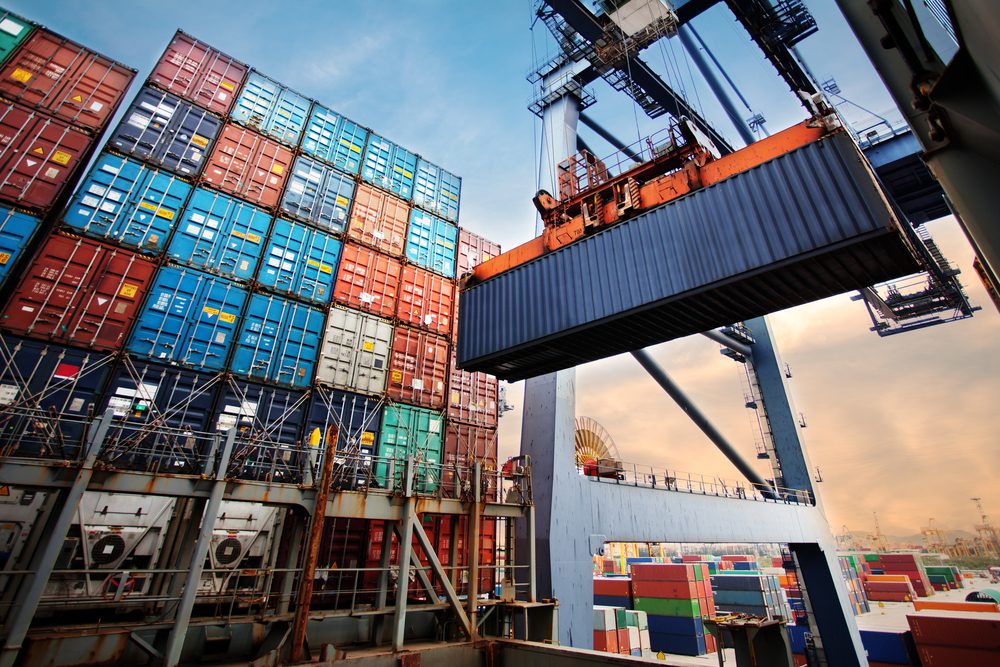
By Michael Hirtzer (Bloomberg) — With the U.S. importing more goods than it’s exporting, shipments of American cotton, grain and hay are getting squeezed due to limited availably of shipping containers.
Peter Friedmann, executive director of the Agriculture Transportation Coalition, warned that customers in Asia will avoid U.S. supplies if container shipments from competitors in Australia or South America are cheaper.
“If we can’t deliver affordably, dependably, then our foreign customers will go somewhere else,” Friedmann said in a webinar Wednesday hosted by the Port of Los Angeles, the U.S.’s largest such facility for containers.
Containers come to the U.S. carrying goods such as TVs and shoes generally are either shipped back to Asia empty or filled with grain or other raw materials. Shippers in Asia sometimes would rather have a container come back empty rather than delayed by picking up goods in the middle of the U.S. in states such as Texas or Wisconsin, Friedmann said.
“The price margins are very thin, so they can only afford to pay so much for freight,” Friedmann said. “Our objective is to get more of those containers.”
Last year, 9% of U.S. waterborne grain shipments were in containers, according to the U.S. Department of Agriculture.
U.S. imports arriving at Los Angeles port stay near record but exports lag
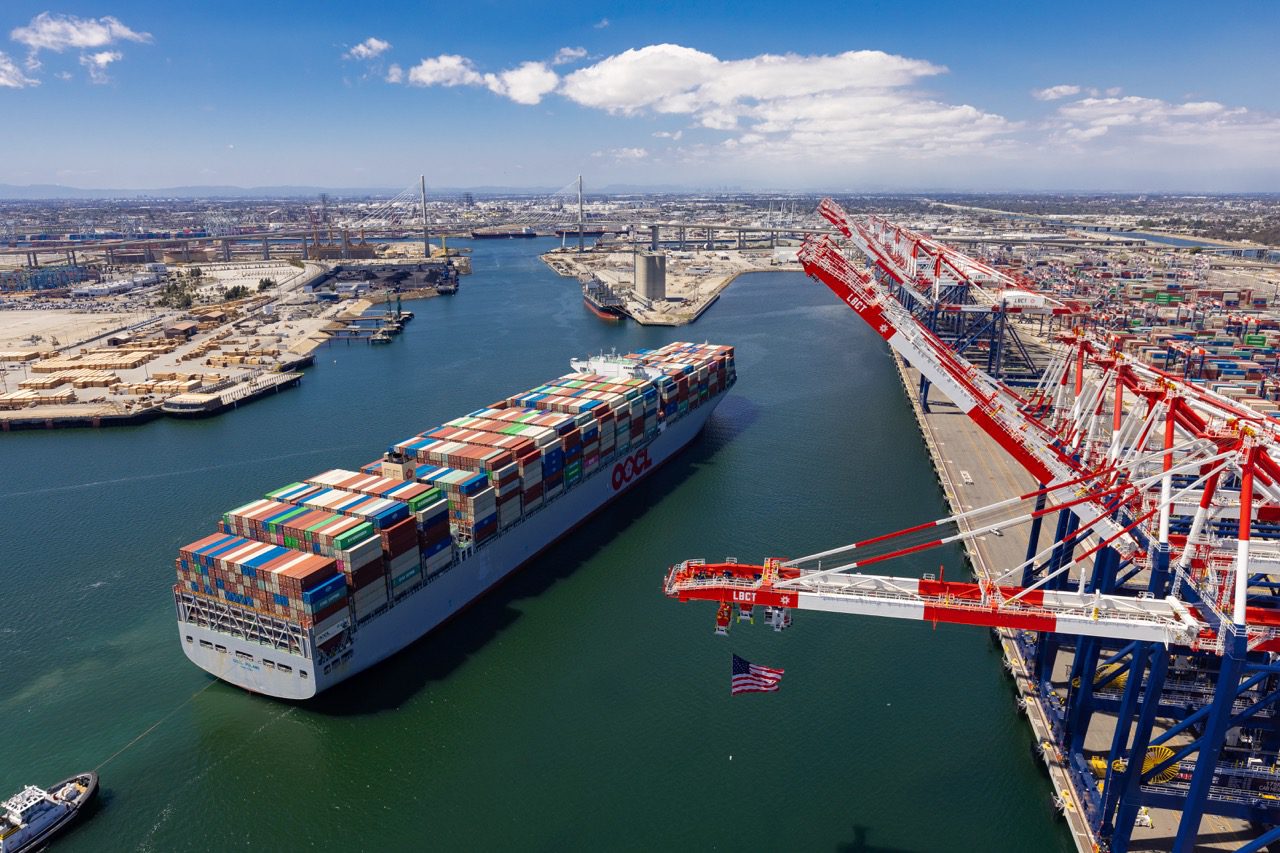
Inbound shipments arriving at the Port of Los Angeles totaled 417,795 containers in September, a little less than the record 516,286 units in August as retailers continue to replenish inventories ahead of the holiday-shopping season, port Executive Director Gene Seroka said at the same event.
The number of empty containers leaving the port to return with imports was 281,434, slightly less than the prior month’s record. Exports, which were on a downward trajectory before the start of the pandemic, snapped three months of gains and declined to 130,397 units.
The U.S.’s goods-trade deficit widened in August to a fresh record of $82.9 billion as companies raced to replenish depleted stockpiles with imports in the face of firmer demand.
“Regardless of who wins the upcoming elections, our country is in desperate need of a cohesive export plan, as well as a national infrastructure program, and a digitization strategy for ports across the country,” Seroka said.
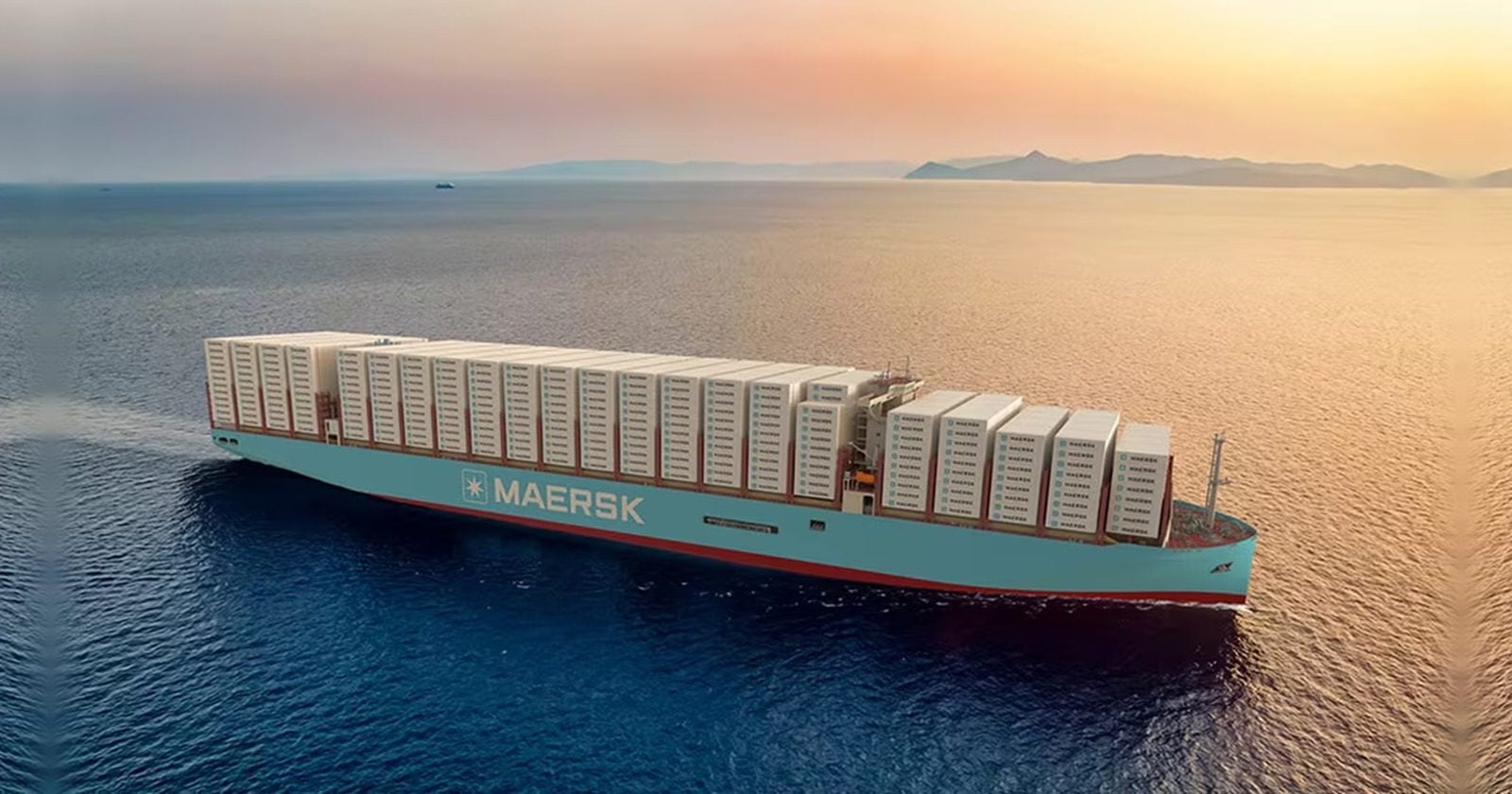
Maersk orders eight 18,600-TEU dual-fuel containerships for 2029-2030 delivery, choosing operational flexibility over megaship scale despite recording its first quarterly loss in years amid freight rate pressure and global overcapacity.
(Bloomberg) — The US trade deficit unexpectedly narrowed in October to the smallest since 2009 on a sharp pullback in imports, notably pharmaceuticals. The goods and services trade gap shrank...
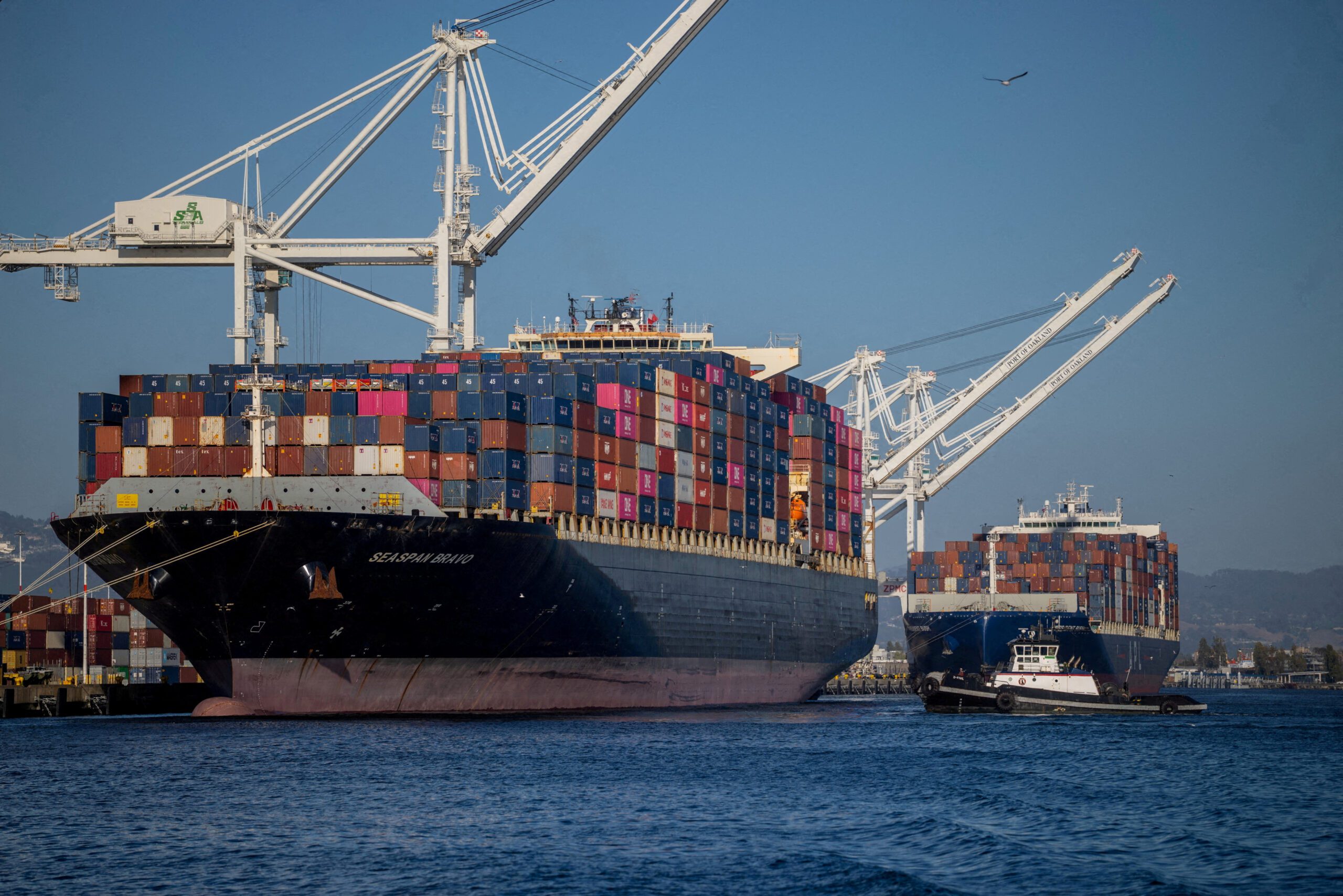
Los Angeles and Long Beach are closing out 2025 near record cargo volumes after a tariff-driven import surge, even as frontloading fades and a weaker 2026 looms. Two of America’s...
December 18, 2025
Total Views: 681
Get The Industry’s Go-To News
Subscribe to gCaptain Daily and stay informed with the latest global maritime and offshore news
— just like 107,252 professionals
Secure Your Spot
on the gCaptain Crew
Stay informed with the latest maritime and offshore news, delivered daily straight to your inbox
— trusted by our 107,252 members
Your Gateway to the Maritime World!
Essential news coupled with the finest maritime content sourced from across the globe.

 Join The Club