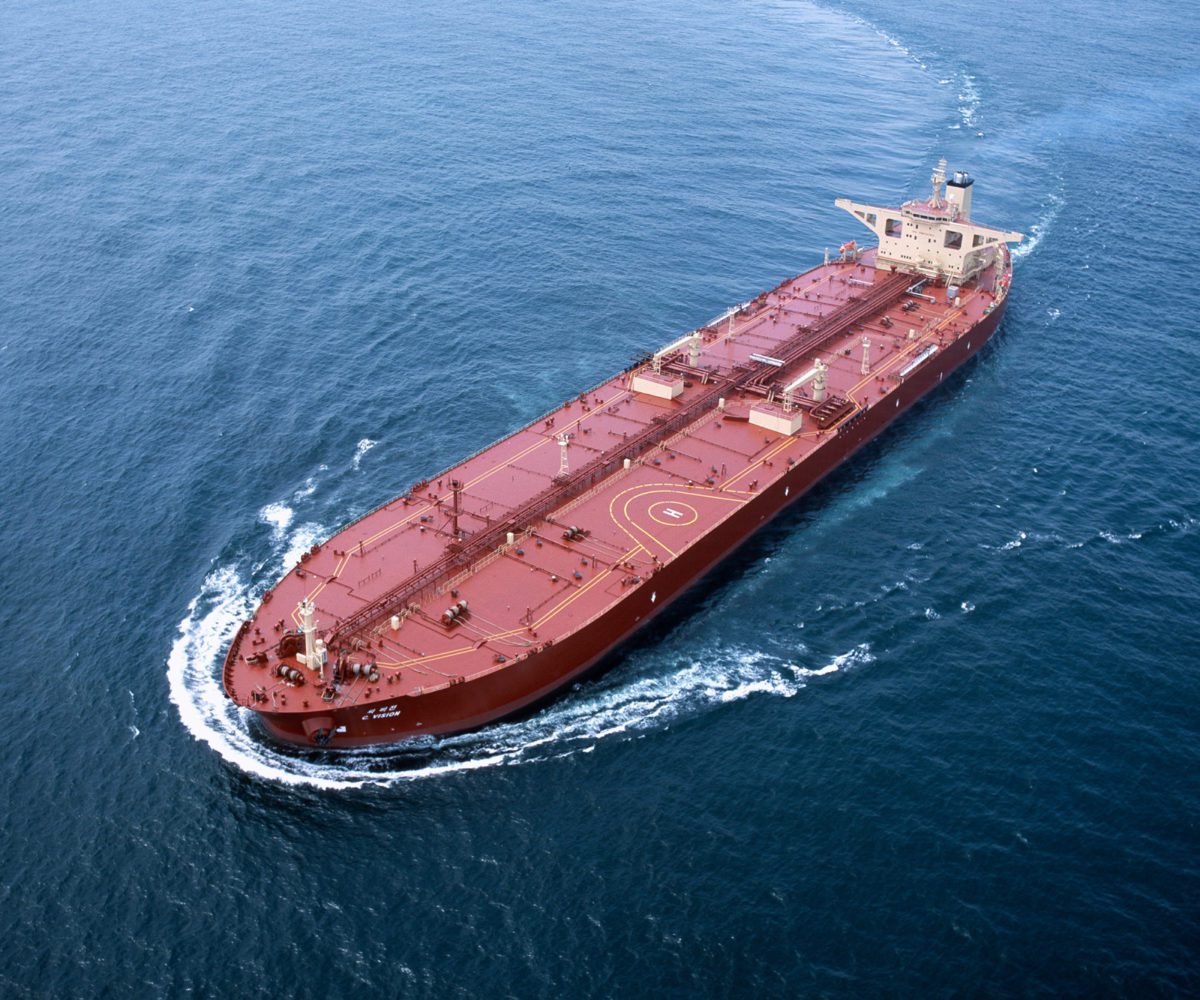
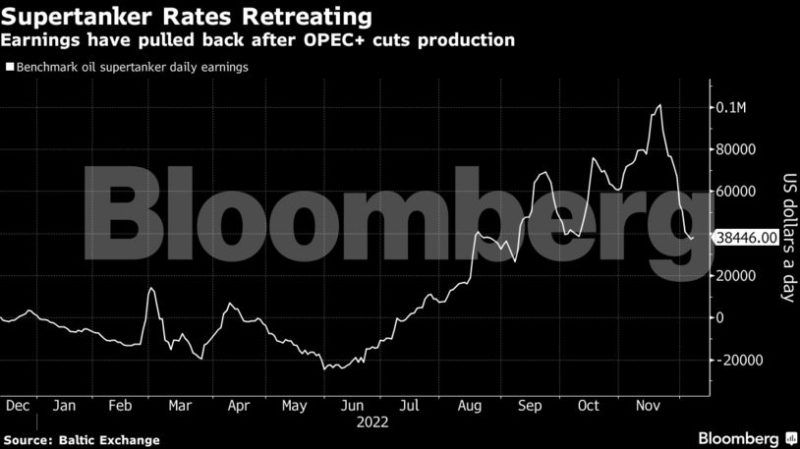
Earnings for giant supertankers carrying crude are slumping as OPEC+ production cuts and reduced releases from US reserves curb seaborne volumes.
Ships capable of hauling 2 million barrels of crude are now earning about $38,000 a day, down 62% from just a couple of weeks ago. While the drop is steep, rates had been at extremely high levels on the back of record US oil exports and vessels from the Middle East sailing further as Europe replaces imports of Russian crude.
But now those key drivers of the boom in earnings are in part reversing. After output cuts for November and December, the Organization of Petroleum Exporting Countries and its allies decided to keep production steady for subsequent months.
Plus, the pace of releases from the US strategic oil reserve has abated in recent weeks, further cutting volumes available for export. That’s lowering demand for ships and weighing on tanker rates.
“Clearly OPEC+ cuts and waning SPR releases would both be short-term volume headwinds,” said Lars Bastian Ostereng, an analyst at Arctic Securities. “They cut production from the first of November and you would expect some lag, and we are seeing activity in the Middle East cooling off somewhat. That’s the simple explanation.”
The OPEC+ cuts are affecting larger vessels the most, as those tend to serve Middle East producers and subsequently sail onward to consumers in Asia and Europe. Earnings for smaller ships meanwhile remain high as Russia pivots exports further afield on such vessels, boosting demand for them.
Historically high freight rates have weighed on physical oil markets in recent weeks, too. Elevated shipping costs make it hard to transfer crude to other regions in the world, keeping supplies stuck in key pricing regions and pressuring prices.
There now are signs that the recent earnings pullback is prompting some crude to travel longer distances. A South Korean refiner bought 2 million barrels of US crude for March arrival, traders said this week. Offers for long-haul US cargoes for delivery to Asia have declined partly due to falling shipping costs, they said.
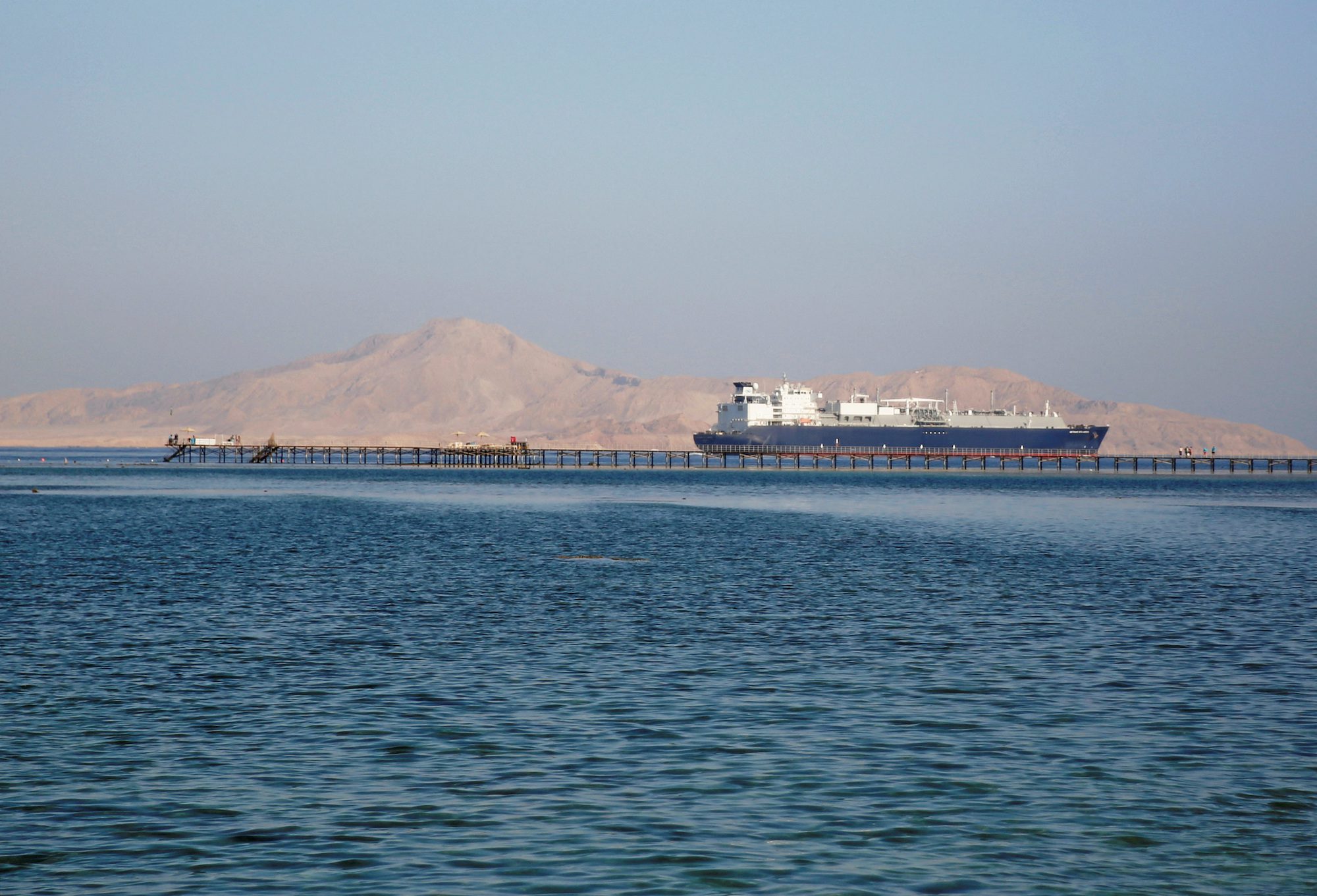
By Weilun Soon Aug 22, 2026 (Bloomberg) –Shipowners including Sinokor Group are helping Saudi Arabian crude exit the Red Sea via the safer northern route, as Iran-backed militants target the kingdom’s...
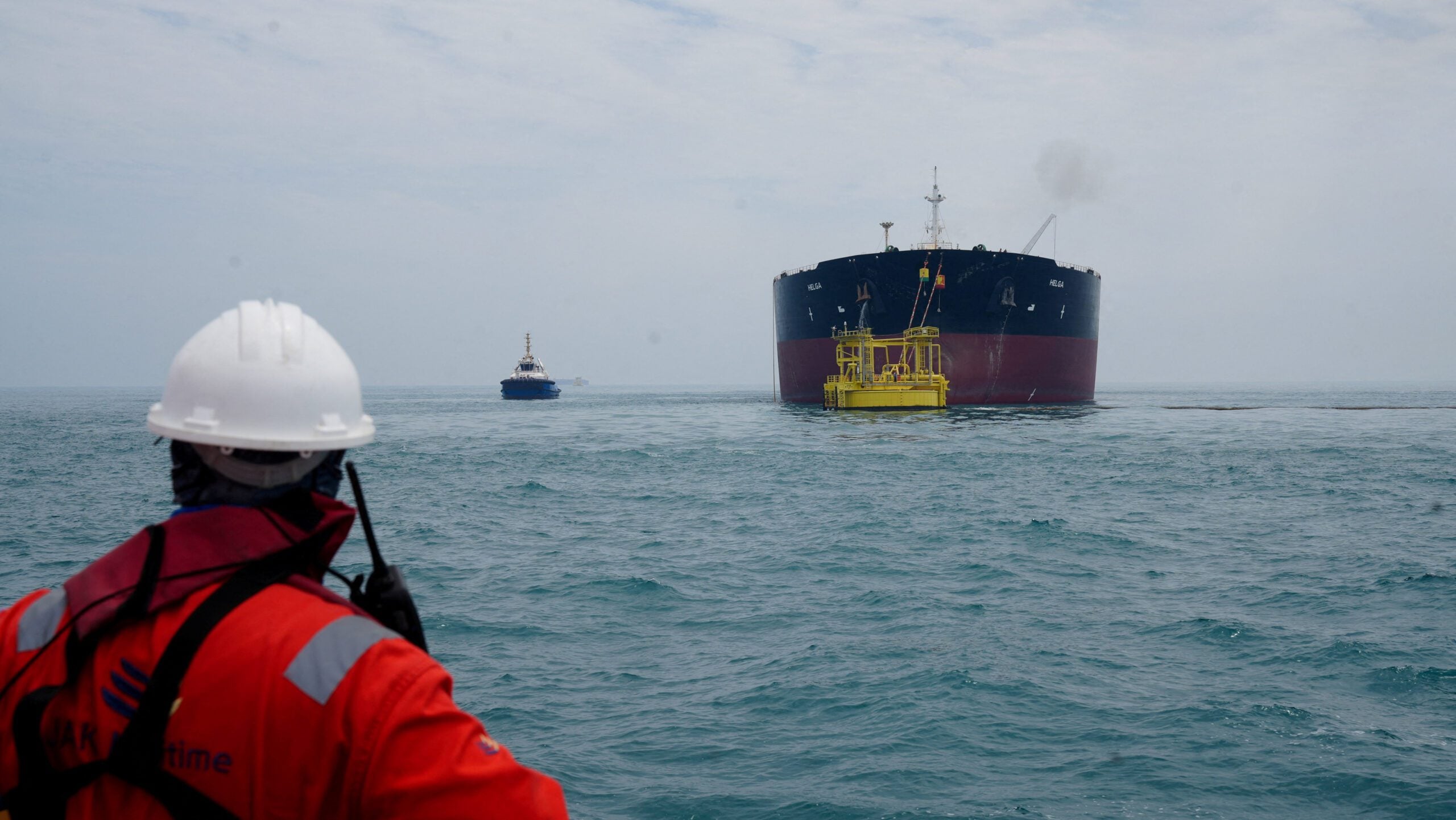
More ships are openly signaling their intention to traverse the Strait of Hormuz, pointing to growing confidence among shipowners and traders about sending vessels through the chokepoint as tensions ease.
Three Saudi-flagged supertankers with six million barrels of crude onboard sailed through the Strait of Hormuz hours after U.S. President Donald Trump signed a deal with Iran over an end to their war, ship tracking data showed on Thursday.
June 18, 2026
Total Views: 466
Get The Industry’s Go-To News
Subscribe to gCaptain Daily and stay informed with the latest global maritime and offshore news
— just like 104,572 professionals
Secure Your Spot
on the gCaptain Crew
Stay informed with the latest maritime and offshore news, delivered daily straight to your inbox
— trusted by our 104,572 members
Your Gateway to the Maritime World!
Essential news coupled with the finest maritime content sourced from across the globe.

 Join The Club