The gradual return of container shipping services to the Suez Canal is expected to release vessel capacity absorbed by lengthy diversions around Africa, but persistent port congestion and major network adjustments could keep supply chains under pressure well into 2027, according to DHL Global Forwarding.
In a market assessment published Monday, DHL said more than 10% of the global container shipping fleet remains tied up in port congestion, representing approximately 3.6 million TEU of capacity.
The bottlenecks persist even as carriers begin restoring services through the Red Sea and Suez Canal.
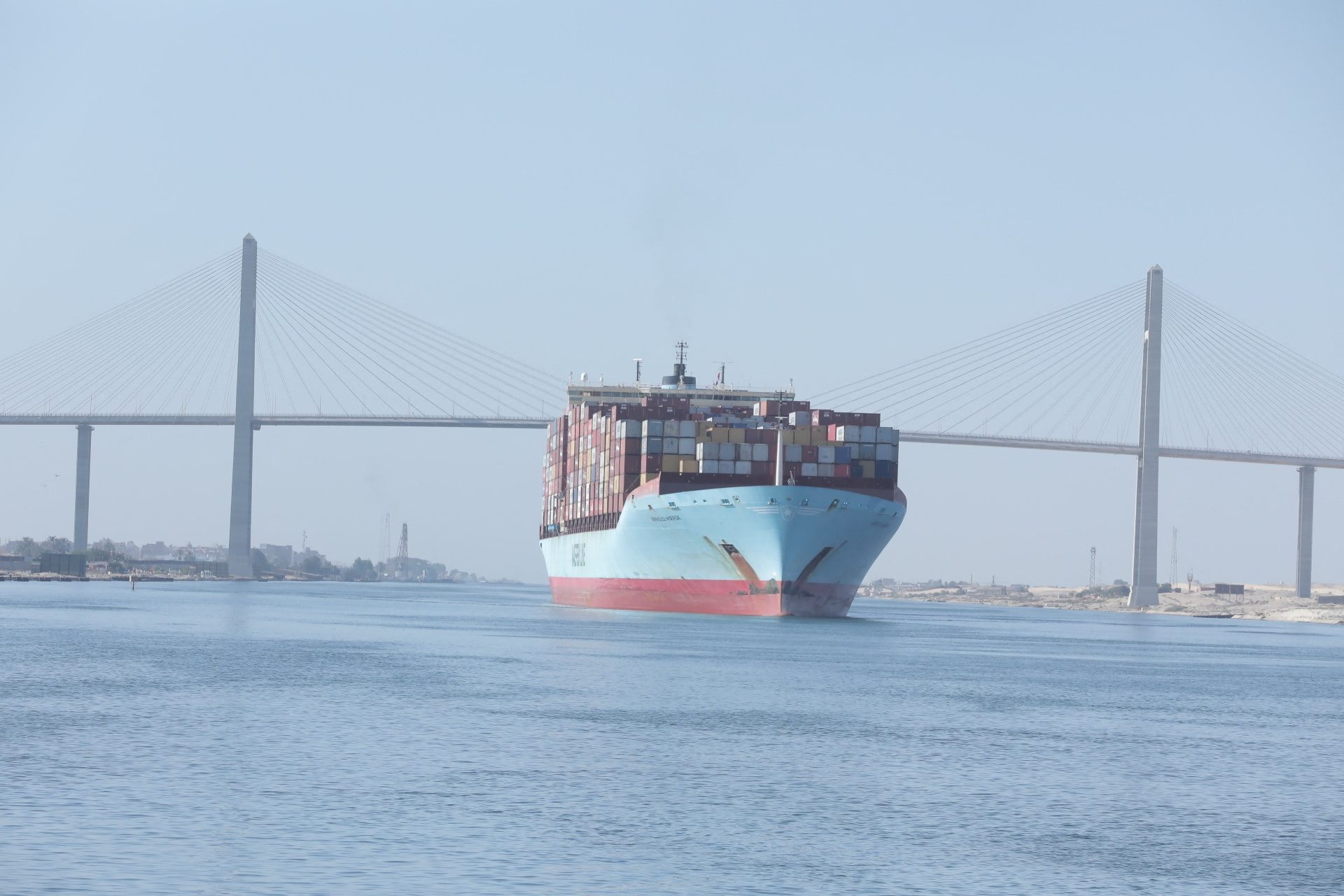
Around 60% of relevant Asia-Europe headhaul services are currently planned to operate through Suez, although the return remains uneven across trade lanes, DHL said.
The transition could take another six to 12 months as carriers reposition vessels, rebalance schedules and adjust networks that have spent years operating around the Cape of Good Hope. That timeline assumes security conditions do not force further changes.
The assessment comes as Maersk and Hapag-Lloyd announced additional structural changes to their Gemini Cooperation services through the Suez Canal, marking another step toward restoring traditional Asia-Europe shipping routes.
While shorter voyages free up vessels previously committed to longer routes, DHL warned that the additional capacity will not necessarily translate into reliable schedules.
“Carriers must reposition ships, rebalance schedules and manage services operating across different routings,” said Bjoern Schoon, Senior Vice President of Ocean Freight at DHL Global Forwarding Asia Pacific.
The changes are unfolding as the global containership fleet continues to expand.
DHL’s November Ocean Freight Market Update forecasts fleet capacity growth of approximately 4% in 2026, while global ocean freight demand has increased 5% year to date.
Meanwhile, DHL cited Linerlytica data showing that containership orders reached 6.4 million TEU so far this year, bringing the orderbook to approximately 47.8% of the active fleet.
The combination of new ships, shorter Suez voyages and ongoing port congestion is creating increasingly uneven market conditions.
DHL said freight rates are showing signs of weakness on some Asia-Europe services, while the transpacific market remains comparatively firm. In the Middle East, strong demand and severe congestion continue to support higher rates, with berth delays exceeding two weeks at some Gulf gateways.
For shippers, the result is a market where additional fleet capacity does not necessarily mean faster or more dependable cargo movements.
The logistics company expects schedule reliability, rather than available capacity alone, to remain a key challenge as shipping networks adjust through 2027.

 Join The Club