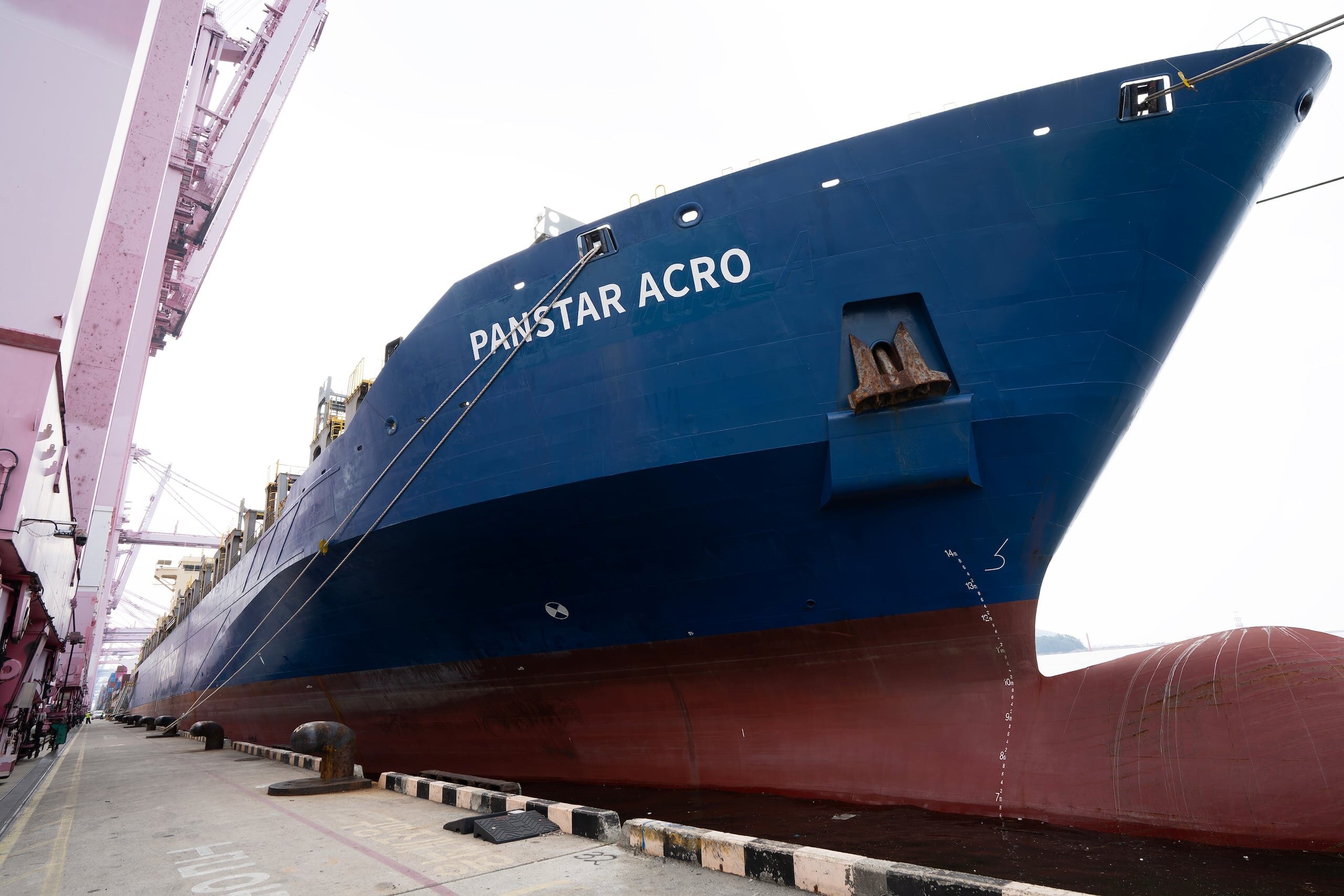
South Korea’s first container ship trial along the Northern Sea Route exposed the challenges of Arctic navigation, with crew members describing a near-abandonment decision after drifting ice blocked their path. The operator is now considering selling the vessel after a single round trip, reportedly negotiating a potential sale back to its former owner, HMM.
The South Korean vessel’s struggles also exposes the experience gap with China. Chinese operators have spent several years building experience running container ships through the Arctic, while PanStar was making its first attempt. The voyage underscored how operational experience can be just as important as a vessel’s ice-class capabilities.
“When we were trapped by countless ice floes, I thought we might not be able to continue the voyage. There were many unexpected situations every day,” first officer Park Ji-jeong said at an October 22 press briefing hosted by South Korea’s Ministry of Oceans and Fisheries. “I am relieved that we ultimately returned safely.”
The PanStarAcro, a 2,758-TEU container ship, encountered drifting ice south of Wrangel Island in the Chukchi Sea during the night of August 31 into September 1.
“The ice was drifting in large quantities. We could not see ahead and had to rely solely on radar,” Park said. “The situation was difficult enough that it was hard to continue sailing, but fortunately visibility improved after some time and we were able to move again.”
Captain Seo Myeong-won said the crew considered turning back. Rather than attempting to navigate blindly, he consulted with an ice pilot and decided to wait for daylight.
“If we could not find a route because it was dark, I judged it would be better to check again when daylight came,” Seo said in an interview published by the South Korean government. “We waited without moving recklessly, and about three hours later the route became visible.”
Park Ji-jeong shares his thoughts on the problems encountered during the trial voyage. (Source: Ministry of Oceans and Fisheries)
The episode is reflected in the vessel’s AIS track. On August 31, the Acro slowed and maneuvered back and forth for several hours southeast of Wrangel Island. The Centre for High North Logistics, analyzing Kpler/MarineTraffic data, estimated that the vessel made only about 16 nautical miles of westward progress during the episode, adding approximately eight hours to its transit.
The ship also encountered large ice floes near Vilkitsky Strait and experienced cold-weather equipment problems affecting fuel and lubricating-oil circulation. It completed both Arctic passages without icebreaker assistance, but the voyage exposed limitations in its suitability for sustained polar operations.
PanStar is considering selling or chartering out the Acro and acquiring a more ice-capable, fuel-efficient vessel for further Arctic trials in 2027. Korean media reported that HMM, which sold the vessel to PanStar in August, is the prospective buyer and that price negotiations are underway. No agreement has been announced.
The proposed sale comes as PanStar Line faces mounting financial pressure. Its debt-to-equity ratio rose to 336.5% in 2025, with borrowings reaching KRW 140.2 billion ($100 million), according to financial publication The Bell. The company has not disclosed the Acro‘s purchase price or expected resale value.
The voyage also fell short of its commercial ambitions. The ship carried just 737 TEU of loaded exports and returned with 1,743 TEU of empty containers, without securing import cargo. The Korea Shipowners’ Association provided KRW 3 billion in basic voyage support and offered up to another KRW 1 billion tied to round-trip cargo volumes exceeding 2,000 TEU. Whether empty containers count toward the threshold remains unknown.
South Korea’s government, meanwhile, has reaffirmed its commitment to Arctic shipping. In a statement, Oceans Minister Hwang Jong-woo called the trial a “meaningful achievement” in demonstrating the potential of a new maritime route using a container ship carrying Korean exports.
“We will continue preparing so that this achievement leads to the next voyage and the Northern Sea Route can become a new opportunity for our economy,” he said.
For PanStar, replacing the Acro may be necessary to continue the project. But the first voyage also demonstrated that an ice-class vessel alone will not guarantee reliable operations. China’s accumulated experience suggests that developing the expertise to interpret ice conditions, manage unexpected situations, and maintain schedules will be just as important.
The UK is moving ahead with a £90 million investment in autonomous underwater systems, advanced sensors and artificial intelligence to strengthen the Royal Navy’s ability to track Russian submarines and...
U.S. container imports reached their highest level of the year in September, capping an unusually long peak shipping season that has kept major ports busy since the spring despite tariffs,...

 Join The Club