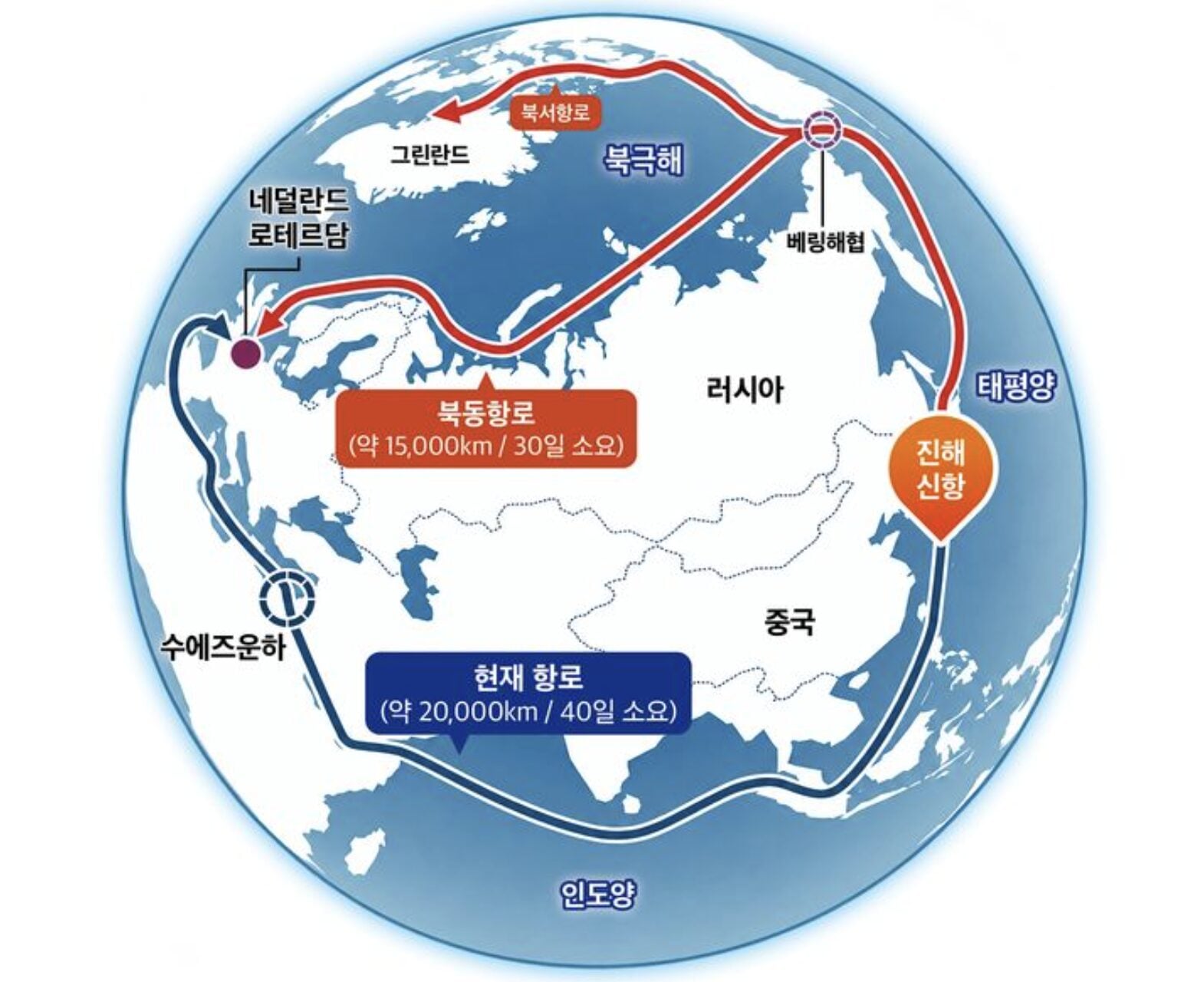
The South Korean city of Changwon is seeking to position the planned Jinhae New Port as a future hub for Arctic shipping, linking the major port development project with the region’s established shipbuilding, machinery, and defense industries.
The initiative reflects growing interest in the Northern Sea Route as a shorter alternative for trade between Asia and Europe. While the port is already under construction it will not begin opening its first terminals until the next decade, reflecting the long-term proposition of Arctic shipping.
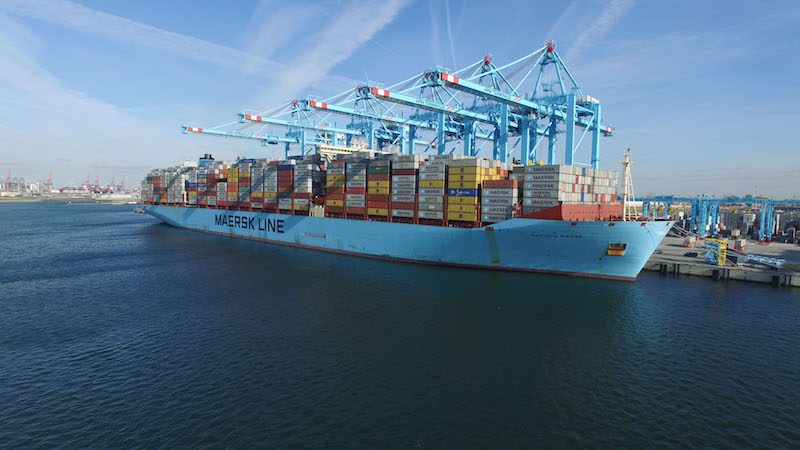
Jinhae New Port is a national infrastructure project designed to accommodate some of the world’s largest container ships. Plans call for 21 berths capable of handling vessels of up to 25,000 TEU and a 6.98 million-square-meter logistics hinterland. The first phase, comprising nine berths, is targeted to open in 2033.
Changwon’s latest proposal is not to build a separate Arctic port, but to incorporate the potential shipping route into the development of Jinhae New Port and its surrounding industrial base.
The city expects increased Arctic shipping to generate demand for ice-strengthened and polar-capable vessels, specialized ships, engines, propulsion systems, insulation materials, sensors and automated port equipment. It believes manufacturers in the Changwon National Industrial Complex could adapt existing capabilities in shipbuilding, machinery, robotics and defense to supply those markets.
The strategy would give Jinhae a role extending beyond cargo handling, potentially making it a base for vessel equipment, maintenance, and other services in support of ships operating in polar conditions.
That proposition differs somewhat from the one brought forth by neighboring Busan, South Korea’s established maritime and logistics center. Busan is positioning itself as an international maritime business hub, emphasizing shipping, logistics, maritime finance and related services.
The distinction is also reflected in the central government’s broader plan for the southeastern region, which envisages Busan as a maritime business center and South Gyeongsang Province, where Changwon is located, as a supply-chain and manufacturing base.
Changwon Mayor Kang Ki-yoon said the city wanted Jinhae, historically an important naval port, to take on a new role in the Arctic shipping era. He pledged close cooperation with the central government to establish the port as a source of economic growth for the region and the country.
South Korea’s Arctic ambitions have gained momentum following the PanStar Acro’s round-trip voyage between Busan and Europe via the Northern Sea Route. The 2,758-TEU container ship returned to Busan on October 11 after a 50-day voyage, demonstrating that a South Korean container vessel could complete the journey.
The commercial results, however, were less conclusive. The vessel departed on August 22 with just 737 TEU of loaded export cargo, alongside 202 TEU of empty containers, well below the roughly 1,300 TEU initially anticipated. It returned without loaded import cargo, highlighting the difficulty of securing freight in both directions.
South Korean officials attributed the limited outbound cargo partly to the short period available to arrange bookings before departure. Whether that reflects an exceptional constraint of a pilot voyage or a more persistent challenge in attracting customers to the route remains unanswered.
Seoul is targeting regular Arctic shipping services by 2030, although the route’s commercial viability, reliability, and operating costs still require further assessment.

 Join The Club