The SS United States has settled upright on the floor of the Gulf of Mexico, completing its transformation from record-breaking ocean liner to the world’s largest artificial reef.
Early sonar and remotely operated vehicle inspections confirmed that the 990-foot vessel came to rest upright, just feet from its intended location, following its controlled sinking off Florida’s Gulf Coast on Wednesday, November 11.
The first underwater images are also emerging. RV Explorer, a shipwreck research and salvage vessel based in Cape May, New Jersey, shared an image of diver Captain Will Hinton positioned in front of the ship’s stern.
“Happy to report the SS United States is sitting perfectly upright,” RV Explorer said.
The confirmation marks a significant milestone for a project that required extensive preparation to ensure the historic vessel would settle safely on the seabed and remain accessible to divers.
According to Destin-Fort Walton Beach tourism officials, the ship now rests approximately 22 nautical miles offshore in about 180 feet of water, with its uppermost deck roughly 60 feet below the surface.
The safety zone surrounding the deployment site has been lifted, allowing divers to begin exploring the wreck.
“The successful deployment of the SS United States is a significant achievement, and I couldn’t be prouder of the team,” said Jennifer Adams, tourism director for Destin-Fort Walton Beach.
“To see a vessel of this size come to rest upright, within feet of its intended location, is a great testament to the expertise and collaboration of everyone who helped bring this ambitious vision to life.”
A Historic Sinking
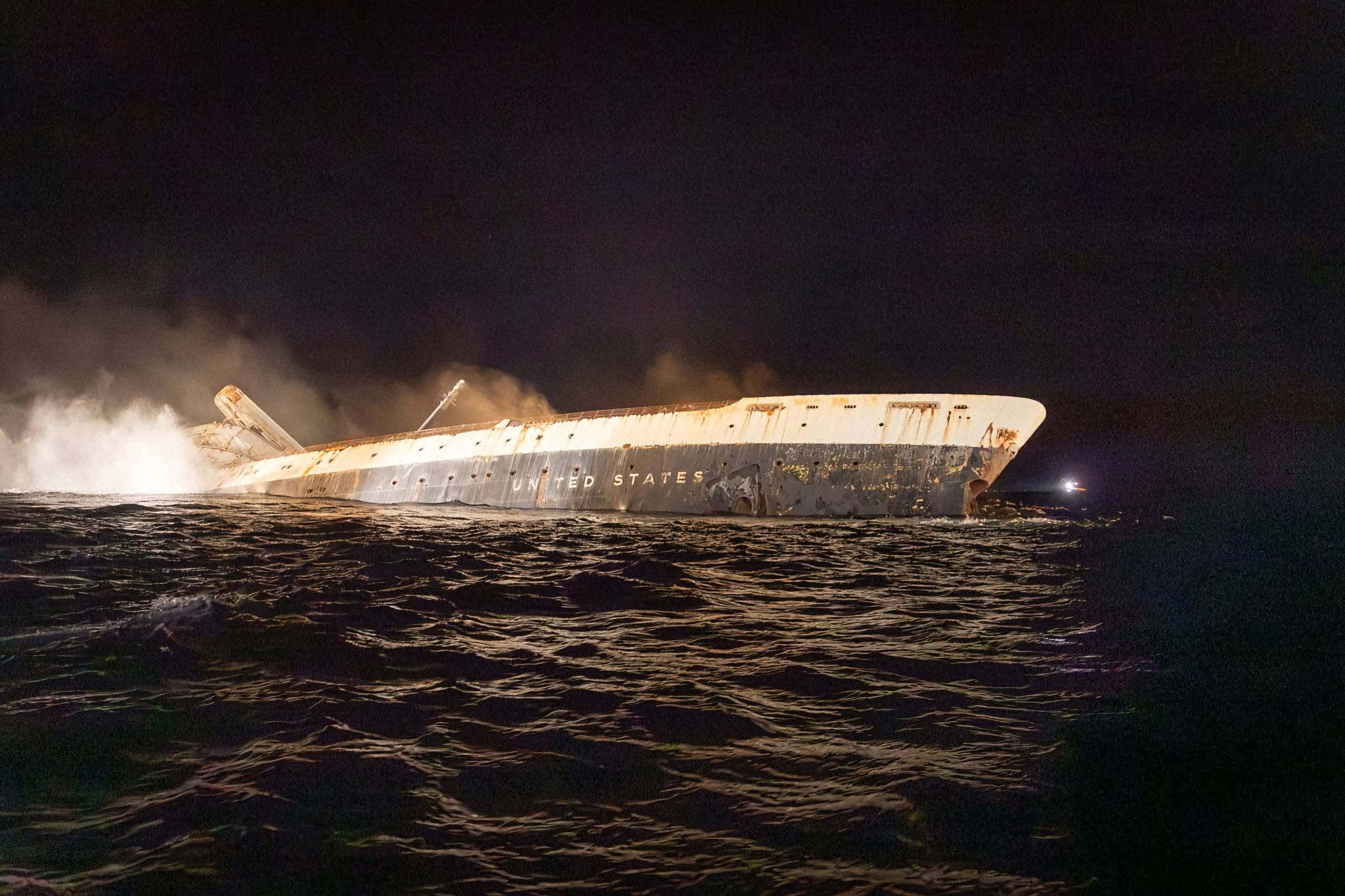
The SS United States was deliberately sunk on Veterans Day after weather concerns prompted Okaloosa County to move the operation forward from its original November 12 schedule.
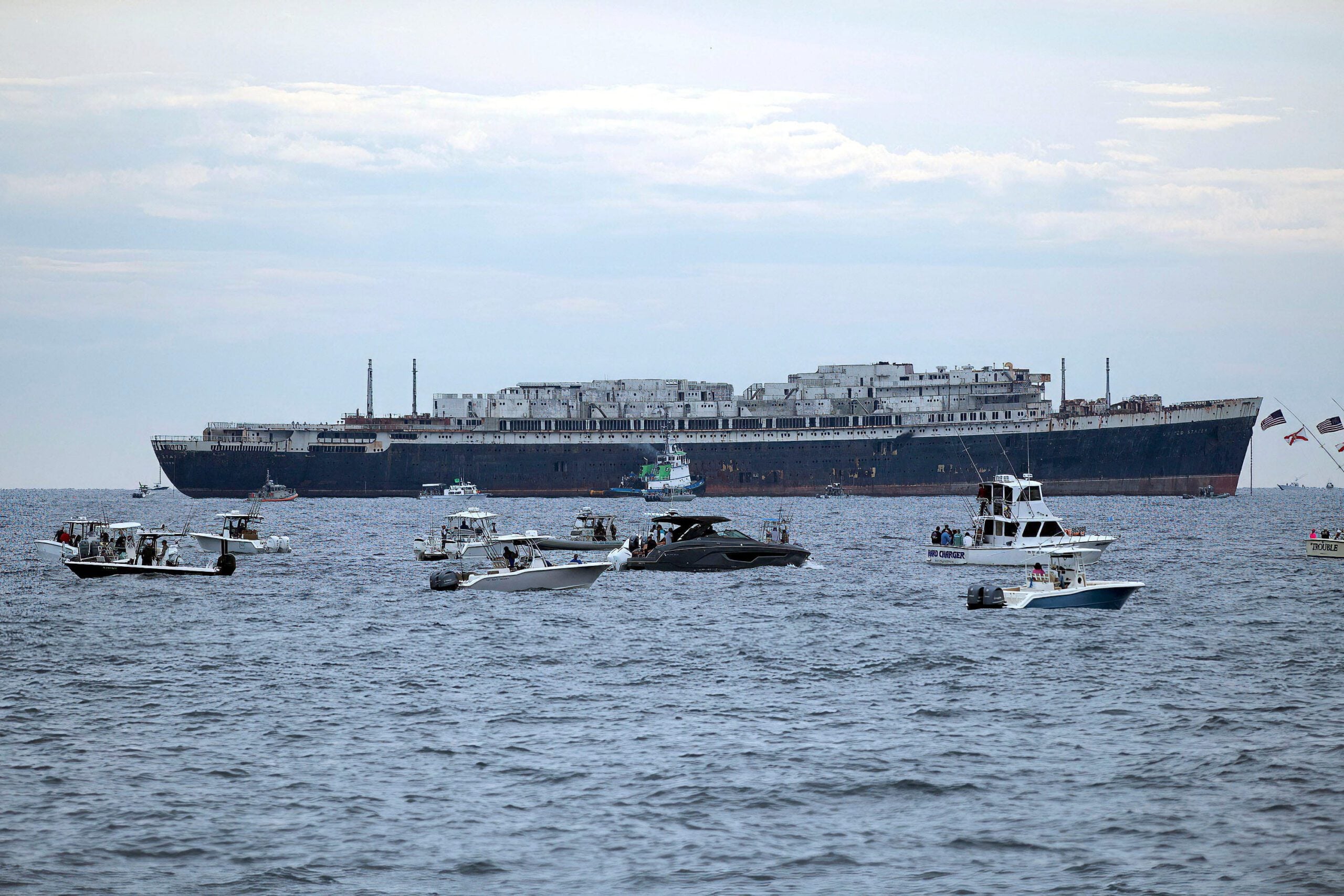
Hundreds of spectators gathered aboard nearby boats to witness the final moments of the ship that once held the title of the world’s fastest ocean liner.
Crews opened intake valves to allow Gulf waters to flood the vessel in a controlled sinking operation. The ship gradually submerged before rolling to port and sinking below the surface, eventually settling onto the seabed.
The deployment followed extensive work to prepare the former passenger liner for its new role, including environmental remediation and structural modifications designed to make the wreck safer for divers and marine life.
The SS United States joins more than 580 artificial reef sites in the Destin-Fort Walton Beach area, although none comes close to matching its scale.
“This sets Okaloosa County apart as a leader in the tourism industry worldwide and we could not be happier to see this project come to fruition,” said Okaloosa County Board Chairman Trey Goodwin.
New Life Beneath the Surface
Beyond its significance as a diving attraction, the ship will become a large-scale marine research site.
Scientists from the Woods Hole Oceanographic Institution, Dauphin Island Sea Lab and Louisiana State University will monitor biological, physical and chemical changes around the vessel as marine organisms begin colonizing its structure.
Researchers hope the project will provide new insights into how artificial reefs develop over time and support marine ecosystems.
“This is so much more than creating a new dive destination,” said Alex Fogg, natural resources chief for Destin-Fort Walton Beach. “It’s an opportunity to advance marine science on a scale we’ve never experienced before.”
For the SS United States, the deployment marks another chapter in a remarkable history.
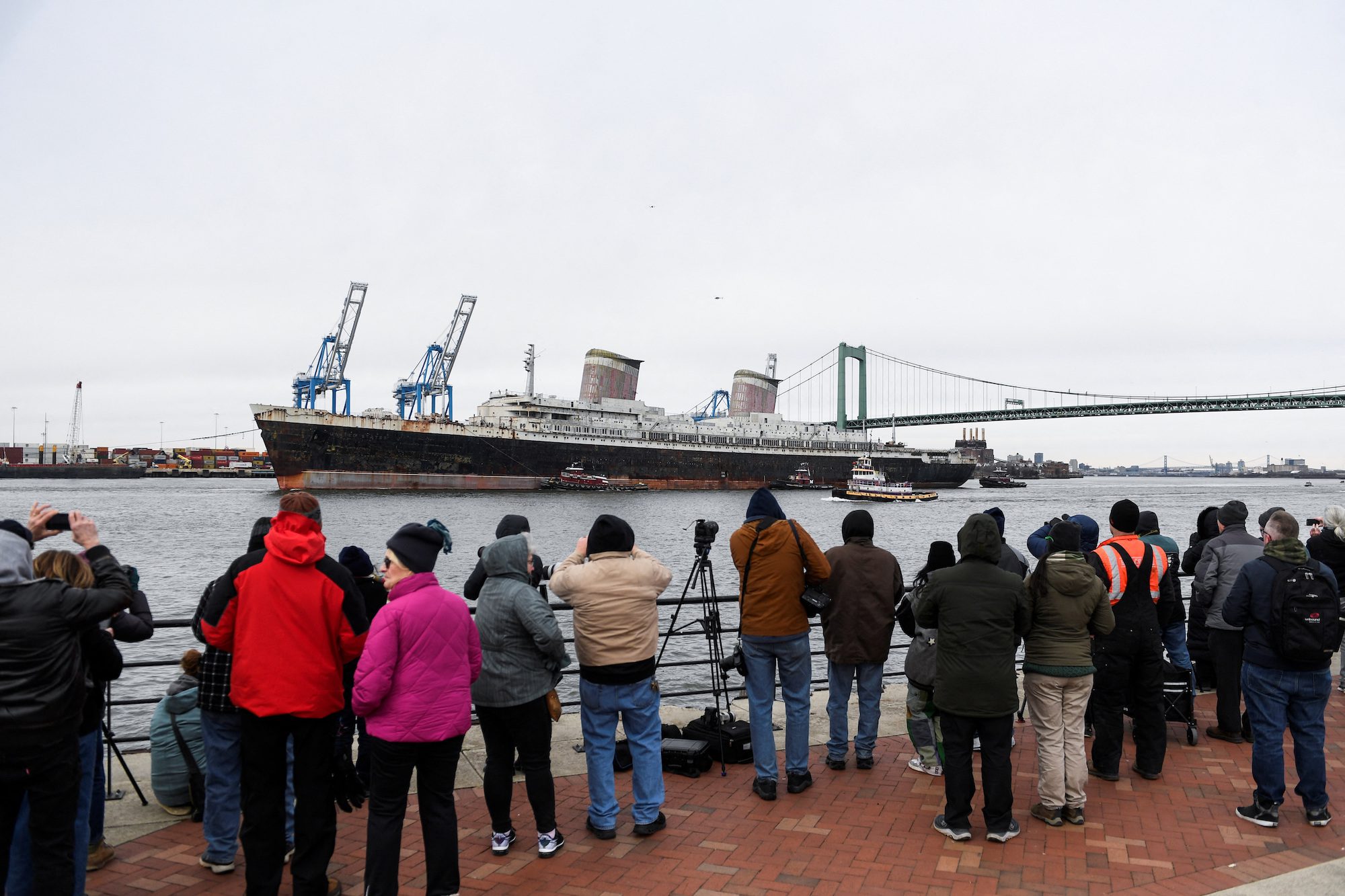
Built in Newport News, Virginia, the liner entered service in 1952 and set a transatlantic speed record on her maiden voyage that remains unbeaten by any ocean liner. After retiring in 1969, she spent decades laid up, including a long period on the Philadelphia waterfront, as preservation efforts struggled to secure her future.
Now, the former flagship has a permanent home beneath the Gulf.
A future shoreside museum and visitor experience, being developed with the SS United States Conservancy, will preserve the ship’s history and artifacts for visitors who may never venture underwater.
“Her legacy will live on,” said Conservancy Board Chair Susan Gibbs.
The artificial reef project was funded through tourism revenue and contributions from project partners.

 Join The Club