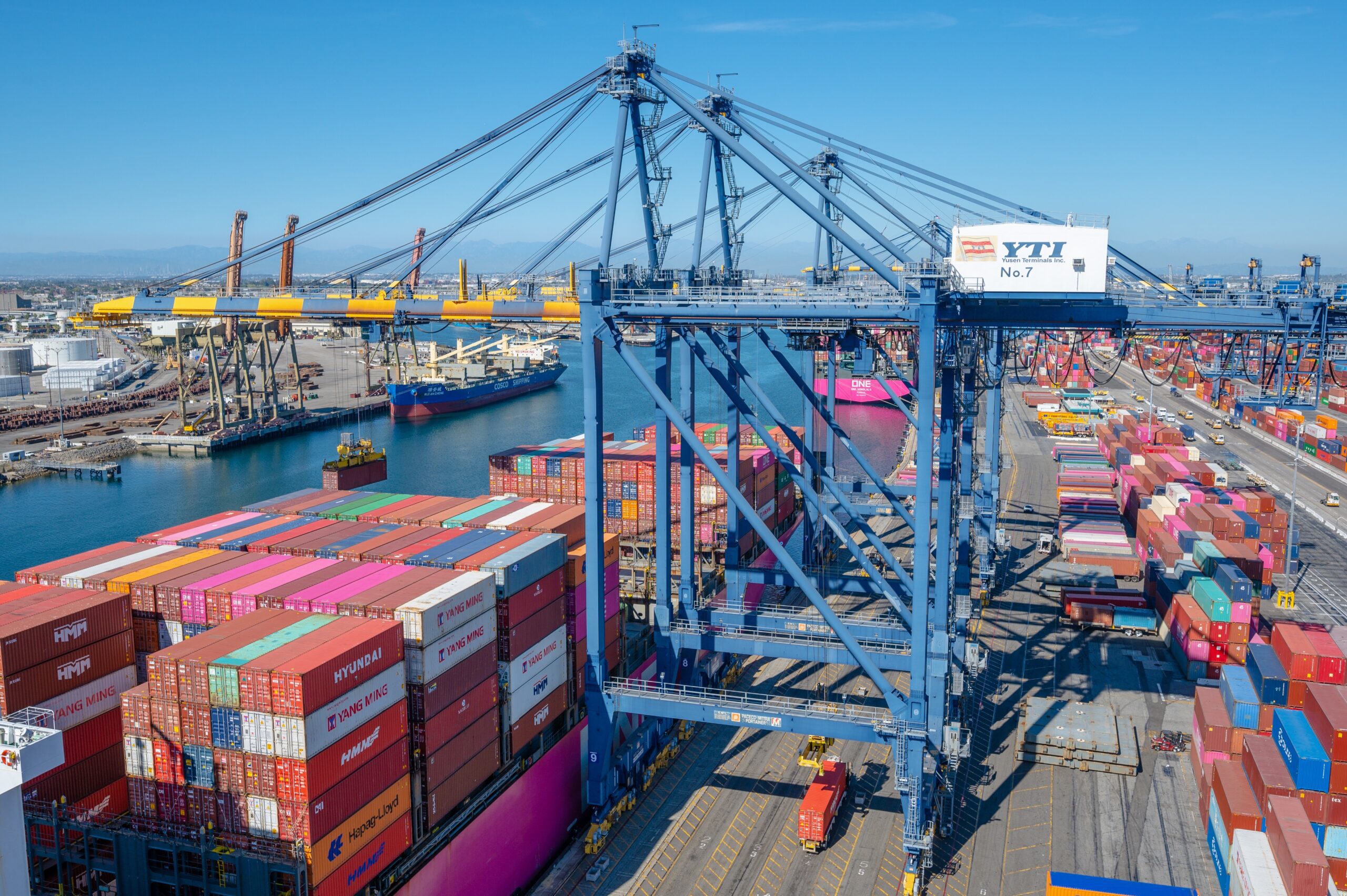
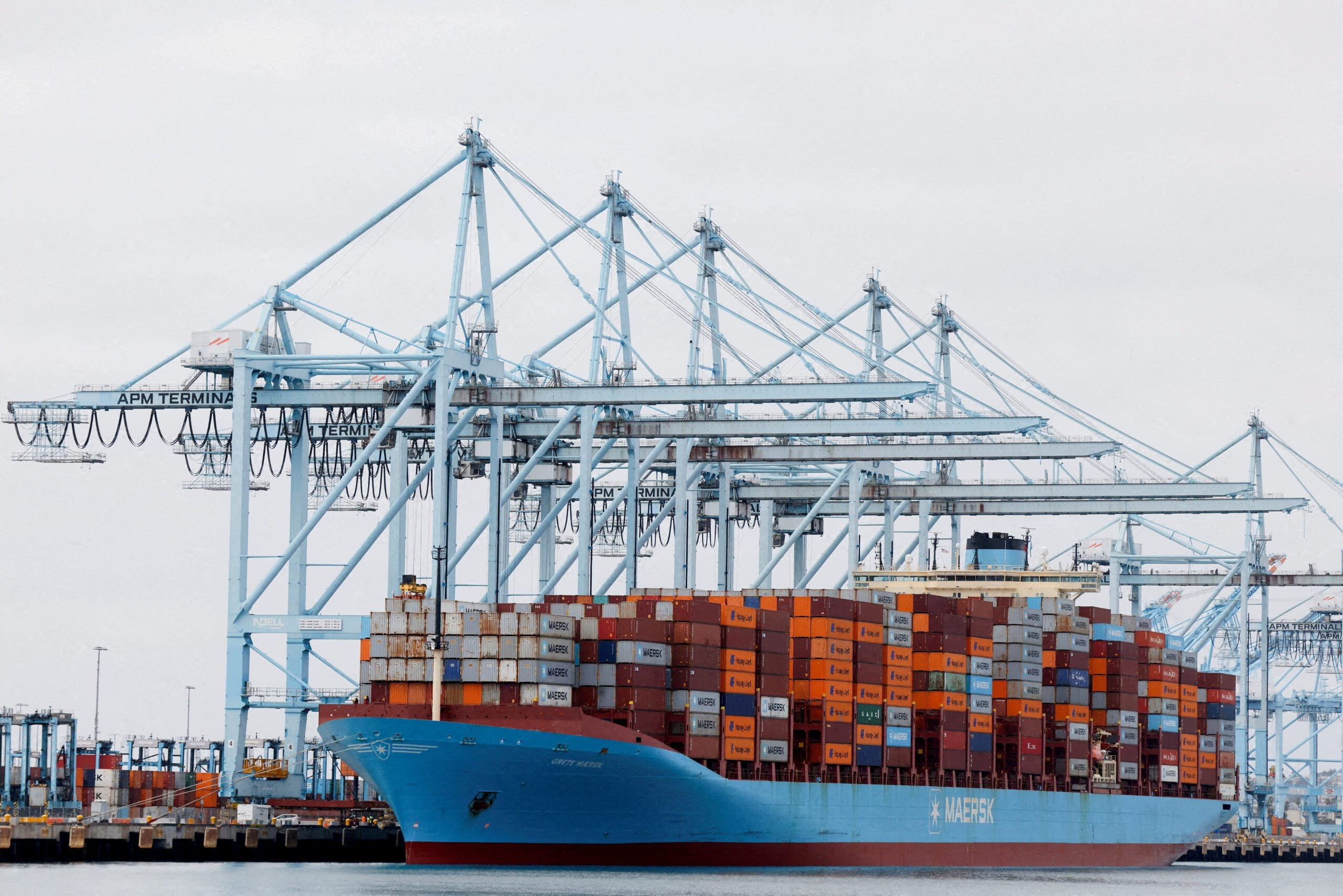
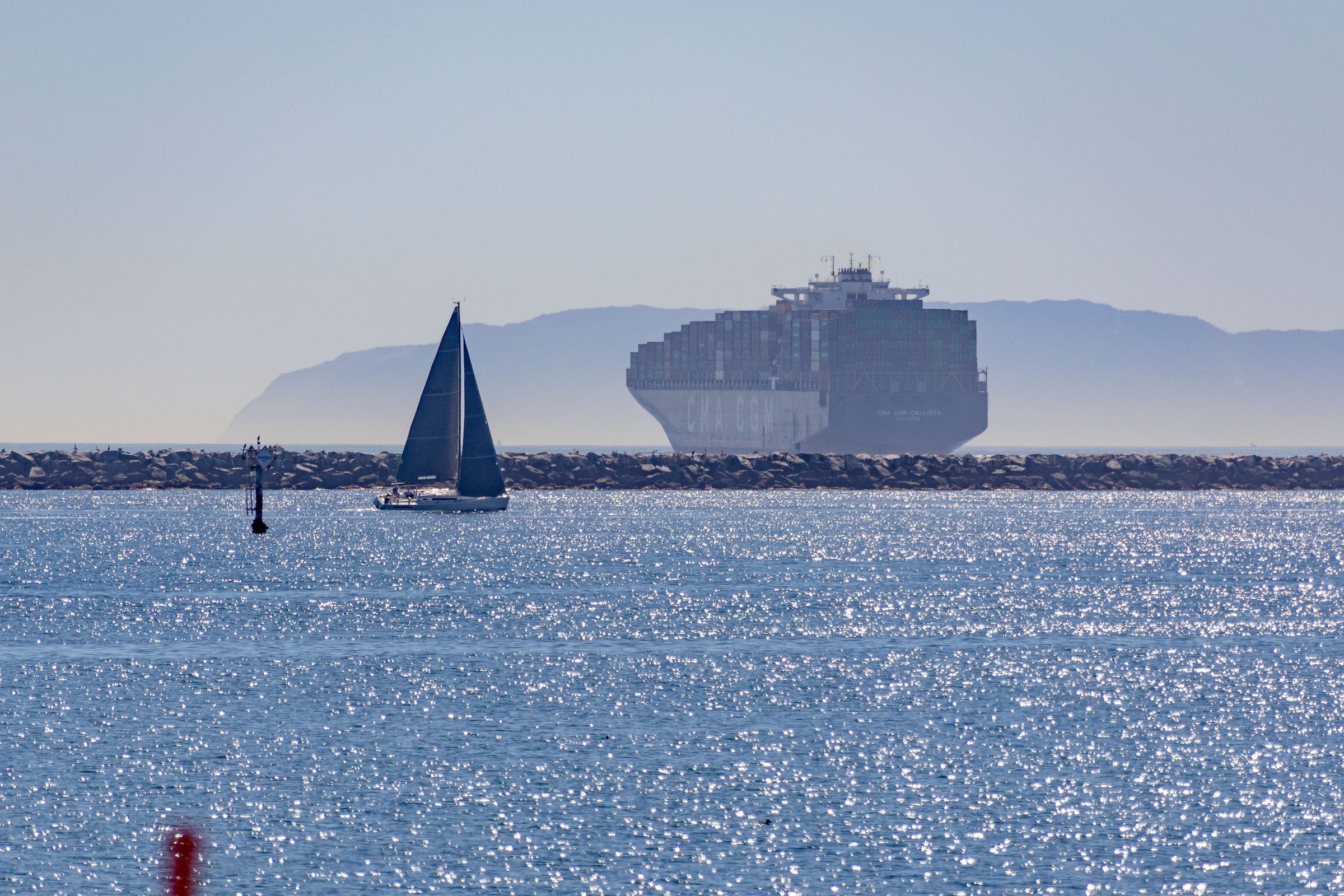
The Port of Los Angeles handled a record 1,026,872 twenty-foot equivalent units (TEUs) in October, marking its second-busiest month ever and extending the strongest five-month cargo run in the port’s 118-year history.
The October total followed September’s all-time record of 1,042,652 TEUs, marking the first time the nation’s busiest container port has surpassed 1 million units in consecutive months. Los Angeles has now crossed that threshold three times in 2026, another first.
“On the heels of September’s all-time record, October makes it our second-best month ever,” said Port Executive Director Gene Seroka during a media briefing. “No other U.S. port has handled 1 million units in a single month, and we’ve now done it three times this year, including back-to-back months for the first time ever.”
From June through October, the port processed nearly 5 million TEUs, its strongest five-month stretch on record.
“What’s remarkable isn’t just the record volume but our ability to sustain this level of activity month after month,” Seroka said in a statement Thursday.
Seroka attributed the historic cargo activity to continued consumer spending, retailers replenishing inventories, changes in trade policy and disruptions along other global shipping routes.
Loaded imports reached 538,620 TEUs in October, up 25% from a year earlier and 30% above the port’s five-year October average.
“This strength goes beyond holiday merchandise,” Seroka said. “We’re moving consumer goods alongside parts, components, and equipment destined for American businesses and manufacturers across the country.”
The port also handled a record 373,271 empty TEUs, surpassing the previous monthly record set in September. Ocean carriers have been repositioning equipment to Asia to accommodate additional shipments.
Exports, however, remain a weak spot. Loaded exports totaled 114,981 TEUs, down 7% from October 2025.
“Exports have now declined year over year in six of the first 10 months here in 2026, as American farmers and manufacturers continue to face headwinds in overseas markets,” Seroka said.
Through October, Los Angeles has handled 9,108,497 TEUs, 5% ahead of last year and 9% above its five-year average.
Seroka said November volumes are also shaping up to be strong, raising the possibility of another annual record.
“If December also delivers, I believe this could be the busiest year in our port’s 118-year history,” he said.
Strike Threat Adds to Growing Congestion
Despite the historic volumes, a potential labor disruption and mounting rail delays threaten to complicate cargo movements at the neighboring ports of Los Angeles and Long Beach.
The Pacific Maritime Association and International Longshore and Warehouse Union Local 26, which represents about 250 maritime watchmen at the ports, have extended contract negotiations through November 20.
The extension temporarily averts a walkout, but a strike remains possible if the two sides fail to reach an agreement.
Although the watchmen represent a small portion of the waterfront workforce, a work stoppage could have a much broader impact. Other ILWU locals, including longshore workers in Local 13 and marine clerks in Local 63, have indicated they would honor Local 26 picket lines.
A strike would come as both ports are already struggling with elevated intermodal container dwell times.
Recent port data showed approximately 9,500 rail-bound import containers at Los Angeles had been waiting nine days or longer for on-dock rail transportation. At Long Beach, another 5,063 containers faced similar delays.
Separate import dwell-time data from Los Angeles showed approximately 67% of containers moving through terminals within four days, while 11% remained five to eight days and 23% stayed nine days or longer.
Logistics provider C.H. Robinson has identified a shortage of intermodal railcars in Southern California as a contributing factor to the slowdown.
Trucking capacity is also under pressure.
“Port congestion at LA and Long Beach due to increased import volume and reduced driver capacity continues to be highly elevated,” said Paul Brashier, vice president of global supply chain at ITS Logistics.
“With congestion reducing the amount of containers a driver can execute daily, shippers should be prepared to add additional trucking capacity to navigate these conditions through Lunar New Year.”
Any labor disruption could further extend container dwell times and create additional challenges for importers moving goods inland.
China Trade Fuels Optimism for 2027
Despite the operational pressures, Seroka remains optimistic about cargo demand heading into next year.
After two visits to China and discussions with manufacturers, he said factories there are running at full capacity, with exporters anticipating strong shipments through the end of 2026 and into early 2027.
The temporary easing of U.S.-China tariff tensions has provided some relief for shippers, while the extension of the suspension of U.S. port fees targeting Chinese vessels has removed another near-term source of uncertainty.
Importers are also expected to accelerate shipments ahead of Lunar New Year, contributing to the elevated cargo flows.
Still, the outlook remains vulnerable to further changes in trade policy, including potential Section 301 tariffs, the direction of U.S.-China negotiations and renewed tensions surrounding advanced semiconductor technology.
There are also questions about how long American consumers can sustain the current pace of spending.
High energy and food prices continue to pressure household budgets, while rising consumer debt raises additional questions about demand heading into 2027. The Federal Reserve Bank of New York recently reported that U.S. credit card balances reached a record $1.29 trillion in the third quarter.
AI Infrastructure Adds Another Variable
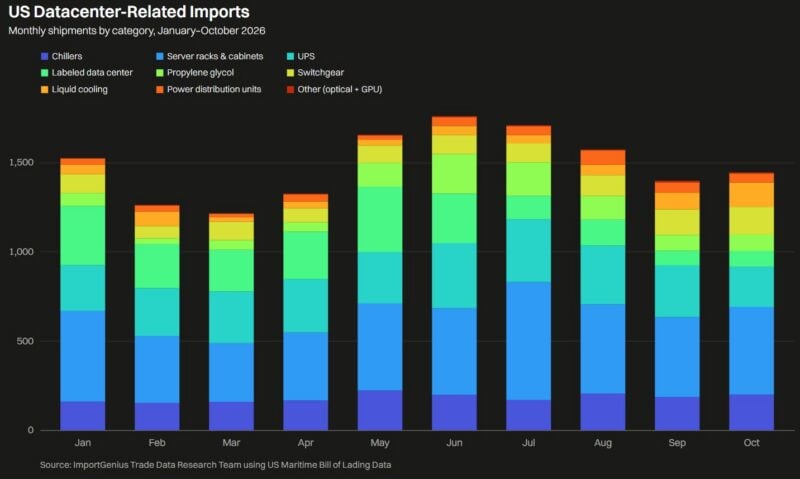
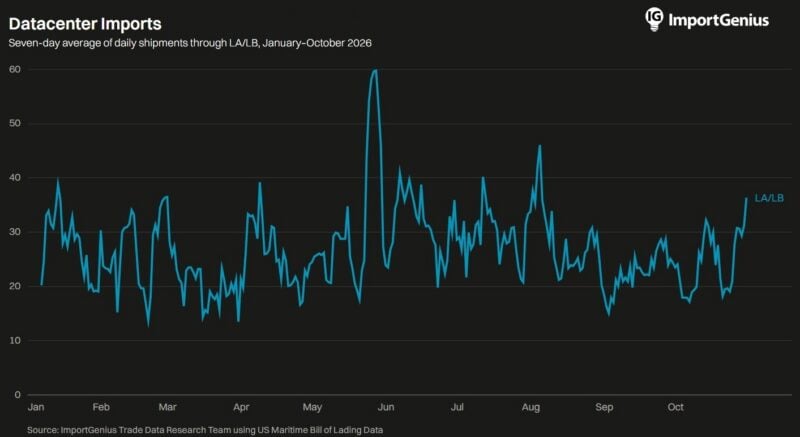
Another source of cargo demand—and uncertainty—is the rapid expansion of artificial intelligence infrastructure.
Trade data provider ImportGenius has been tracking shipments of data center components and infrastructure moving through Los Angeles and Long Beach as technology companies expand their computing capacity across the United States.
But questions about future projects, electricity availability and the political environment could influence how much equipment continues to move through the ports.
“The big players in the AI space have been competing largely on the capabilities of their models,” said Lynn Hughes, lead analyst for the trade research team at ImportGenius.
“Recent election results and limited grid capacity will cause investors in data centers to re-evaluate their exposure. But it’s very likely that the next area of competition is efficiency in training and inference.”
For now, the Port of Los Angeles is closing out 2026 with record cargo momentum and the prospect of its busiest year ever.
Whether that pace can continue into 2027 will depend not only on consumer demand and U.S.-China trade relations, but also on the ability of Southern California’s ports, railroads and trucking networks to keep freight moving.
By Laura Curtis Nov 7, 2026 (Bloomberg) –The union representing about 250 security workers at the US’s busiest ports agreed to continue negotiations on a new labor contract for two more...
A potential strike threatening operations at some of the busiest container terminals in the United States has been pushed back after the Pacific Maritime Association (PMA) and the International Longshore...
The ports of Los Angeles and Long Beach have identified liquefied natural gas (LNG) and methanol as the most viable alternative marine fuels for the near and medium term, with...
October 28, 2026
Total Views: 921
Get The Industry’s Go-To News
Subscribe to gCaptain Daily and stay informed with the latest global maritime and offshore news
— just like 106,075 professionals
Secure Your Spot
on the gCaptain Crew
Stay informed with the latest maritime and offshore news, delivered daily straight to your inbox
— trusted by our 106,075 members
Your Gateway to the Maritime World!
Essential news coupled with the finest maritime content sourced from across the globe.

 Join The Club