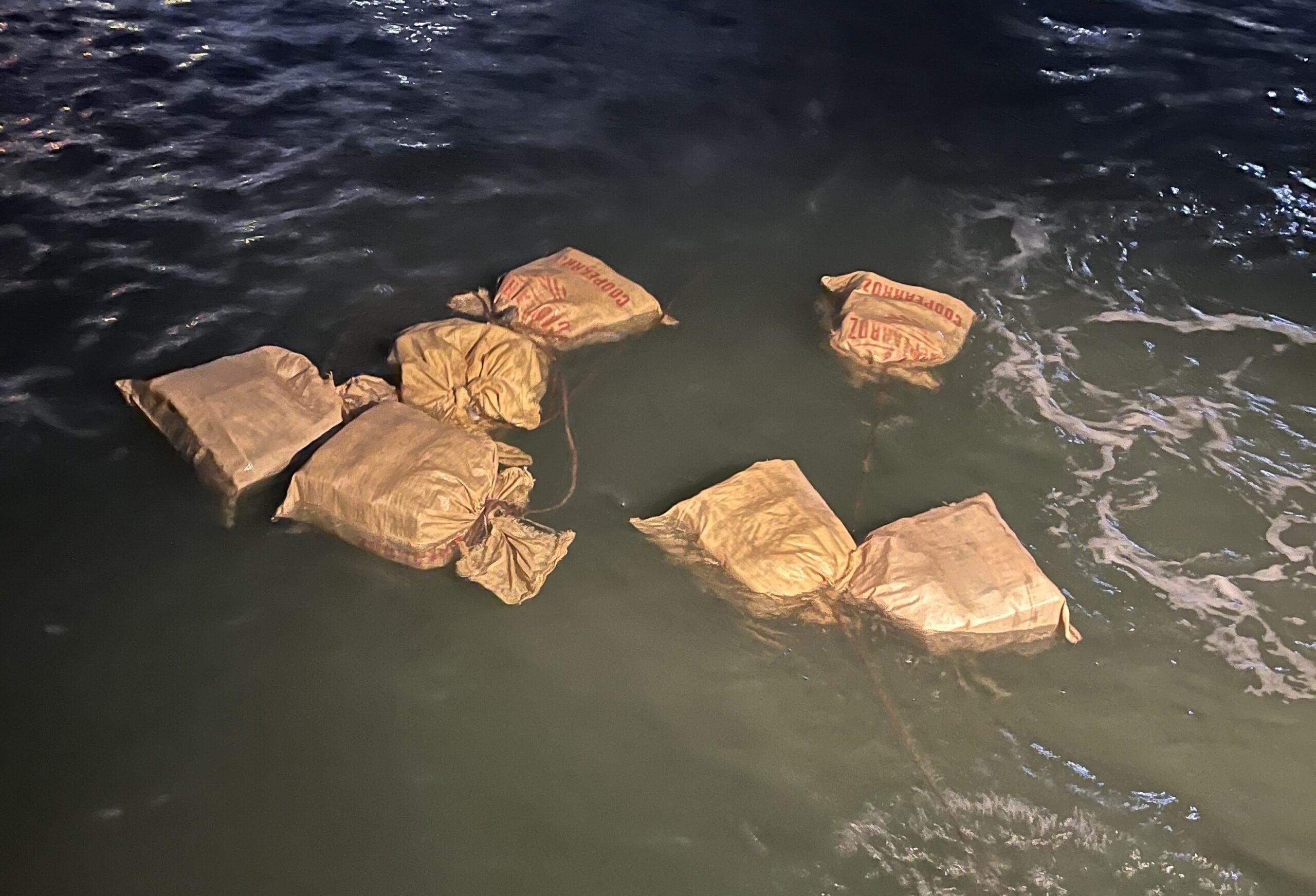
Spanish authorities have dismantled what they describe as the largest cocaine trafficking network operating in the Atlantic, delivering a major blow to a sprawling maritime smuggling empire that moved tens of thousands of kilograms of narcotics into Europe using high-speed “narcolanchas” capable of outrunning patrol vessels.
The year-long investigation, code-named Black Shadow, culminated in the arrest of 105 suspects across two operational phases and the seizure of more than 10.4 tonnes of cocaine, along with vessels, vehicles, and advanced communications equipment valued at millions of euros. Investigators estimate the network smuggled roughly 57 tonnes of cocaine into Europe in just the past year.
Authorities carried out 49 coordinated searches across Spain — from the Canary Islands to mainland ports — seizing 70 vehicles, 30 boats, six properties, three firearms, and more than €800,000 in cash, marking one of the most significant anti-narcotics operations in Spanish history.
A Maritime Criminal Empire
At the heart of the operation was a sophisticated maritime logistics network built around high-speed boats exceeding 40 knots, operating mainly at night from launch points along the Guadalquivir River and Spain’s southern coastline in Cádiz, Huelva, and Almería, as well as from the Canary Islands, Morocco, and Portugal.
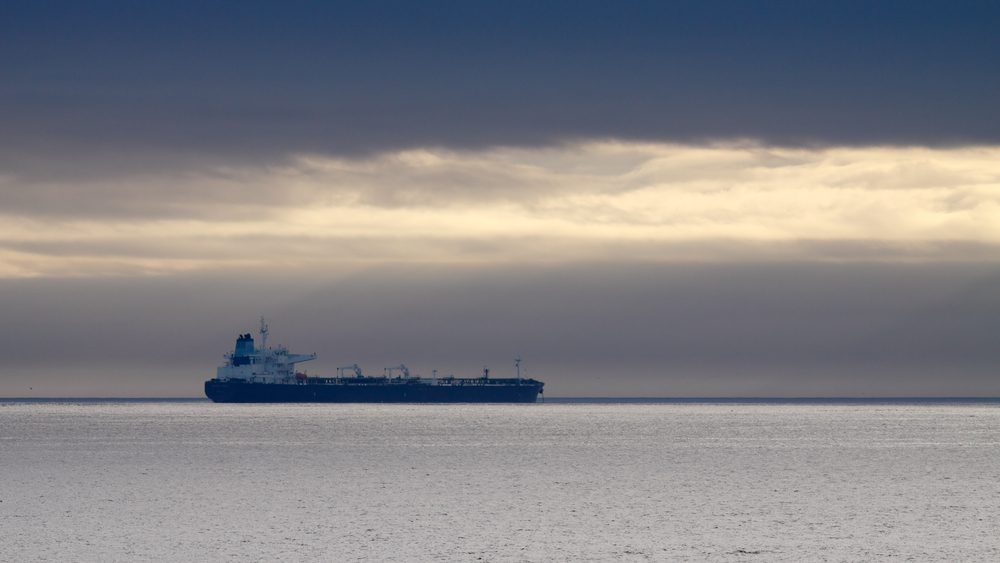
Smuggling runs were executed through carefully choreographed rendezvous operations with “mother ships” stationed offshore in the Atlantic, where cocaine was transferred before smaller vessels raced back to Spain.
To evade detection, the group relied on encrypted communications, satellite terminals, untraceable mobile phones, and coded language. Investigators uncovered floating maritime platforms that allowed crews to remain at sea for over a month at a time, conducting successive smuggling operations without returning to port.
The organization also operated its own fuel depots, consuming more than 100,000 liters of gasoline, while a network of support craft delivered fuel, food, communications gear, and supplies to vessels operating offshore.
Perhaps most troubling was the group’s extensive coastal surveillance network. Lookouts positioned along key coastal points tracked Spanish naval and air patrols in real time, feeding intelligence back to smugglers to enable evasive maneuvers.
Silencing Witnesses
Authorities also uncovered evidence of the group’s ruthless internal enforcement. Investigators found that the organization paid €12 million to the family of a crew member who died during smuggling operations, a payment intended to ensure silence and prevent cooperation with authorities.
International Coordination
The Black Shadow operation relied heavily on international cooperation, bringing together Spain’s National Police, the UK’s National Crime Agency, the U.S. Drug Enforcement Administration, Morocco’s General Directorate of National Security, EUROPOL, and the Maritime Analysis and Operations Centre on Narcotics, alongside authorities from Portugal, France, Colombia, and Cape Verde.
Portugal separately intercepted 6.6 tonnes of cocaine aboard a semi-submersible vessel linked to the network — a reminder of how deeply the organization had embedded itself into transatlantic drug routes.
Two-Phase Takedown
The first phase concluded in June 2025, producing 48 arrests and the seizure of 3.8 tonnes of cocaine, nearly 70 vehicles and vessels, six properties, and €100,000 in cash.
The second phase, completed in November 2025, focused on Spain’s Campo de Gibraltar region, leading to 57 additional arrests, the seizure of more than €700,000, and the capture of advanced surveillance and electronic warfare tools, including frequency jammers, satellite communications systems, and drone platforms.
Elite Spanish police tactical units participated in the raids, reflecting the scale, complexity, and risk of the operation.
A Maritime Front Line
Co-financed by the European Union’s Internal Security Fund, Black Shadow underscores both the industrial scale of modern maritime drug trafficking and the central role of coordinated maritime enforcement in disrupting it.
While Spanish authorities describe the takedown as a decisive blow to Atlantic smuggling networks, officials caution that trafficking routes remain highly adaptive — ensuring the maritime fight against narcotics remains far from over.
Editorial Standards · Corrections · About gCaptain

 Join The Club