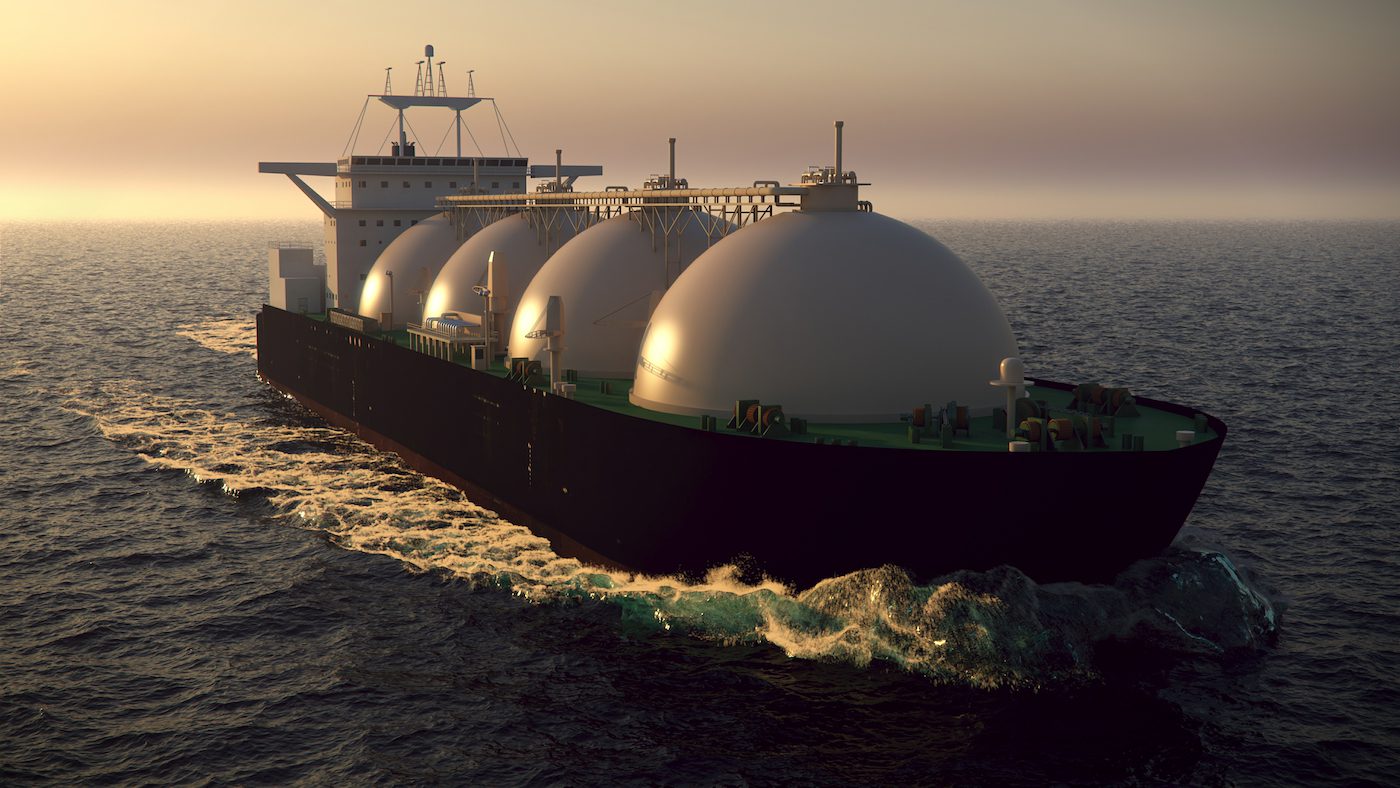
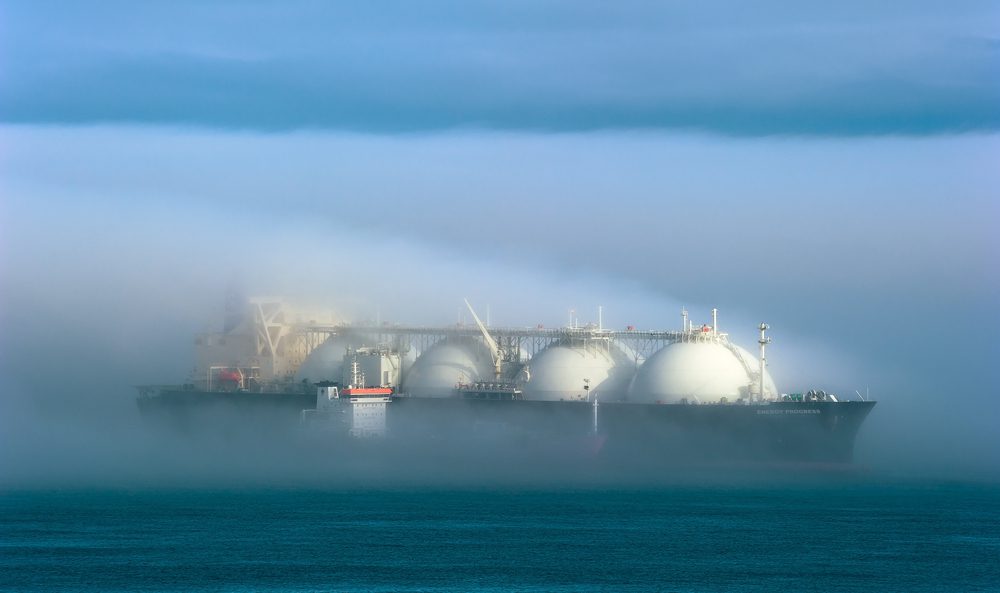
South Korean shipbuilder Samsung Heavy Industries and U.S. nuclear technology company Tesser Atomics have signed an exclusive agreement to develop a nuclear-powered LNG carrier intended for commercial service between the United States and Europe.
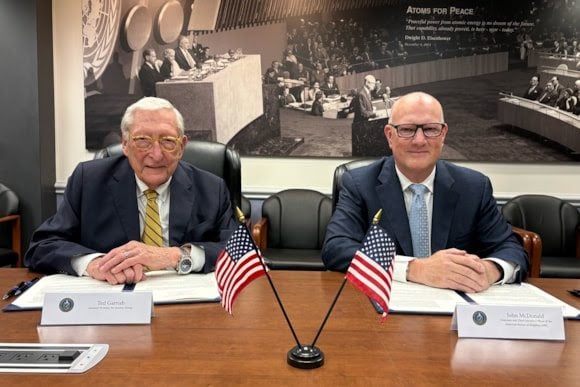
The memorandum of understanding, signed November 19, establishes Samsung Heavy Industries as the exclusive shipbuilding partner and Tesser Atomics as the exclusive reactor technology partner for the demonstration project, which aims to develop the world’s first nuclear-powered LNG carrier.
The collaboration brings together Samsung’s ship design and construction capabilities with Tesser’s advanced reactor technology as the companies work toward demonstrating nuclear propulsion on an established commercial trade route.
At the center of the project is Tesser’s Triton reactor, a compact fluoride-salt-cooled high-temperature reactor designed specifically for marine applications. The system uses TRISO nuclear fuel and low-pressure molten salt coolant, with a design that allows refueling while the reactor remains in operation.
The companies say the technology could provide the power needed to propel large oceangoing vessels without relying on conventional marine fuels.
“Demonstrating nuclear propulsion on an LNG carrier crossing the Atlantic would open new horizons for decarbonizing the shipping industry,” said Kyunghee Kim, Executive Vice President and Head of the Future Business Division at Samsung Heavy Industries.
The project builds on Norway’s NuProShip research program, which evaluated advanced reactor technologies for merchant vessels, and is being advanced through SFI SAINT, a research consortium led by the Norwegian University of Science and Technology (NTNU) and supported by the Research Council of Norway.
The Norwegian initiative is targeting several nuclear-powered vessel demonstrations in the early 2030s, including an LNG carrier project backed by shipowner Knutsen OAS.
Samsung Heavy Industries is no stranger to nuclear-powered LNG carrier development. In September 2025, the shipbuilder and the Korea Atomic Energy Research Institute secured Approval in Principle from ABS and the Liberian flag state for a separate LNG carrier concept powered by a 100-megawatt-thermal molten salt reactor.
The latest agreement represents another step toward moving nuclear propulsion beyond conceptual designs and into commercial demonstration.
However, significant hurdles remain. Nuclear-powered merchant ships face complex requirements involving reactor licensing, maritime safety, port access, crew training, insurance and liability.
The International Maritime Organization is currently working to modernize its regulatory framework for nuclear-powered ships, with adoption of a revised Nuclear Code and amendments to SOLAS Chapter VIII targeted for 2030.
The economics also remain uncertain. An ABS-supported study published in October found that a nuclear-powered LNG carrier could cost roughly 2.5 times as much to build as a conventional vessel, although lower fuel costs could improve its long-term economics.
For now, the Samsung-Tesser agreement remains a development partnership rather than a firm shipbuilding order. The companies have not disclosed a construction schedule, vessel specifications, project cost or financing arrangements.
Still, the project adds to growing efforts by shipbuilders, reactor developers and maritime regulators to determine whether nuclear propulsion can become a commercially viable alternative for deep-sea shipping.

 Join The Club