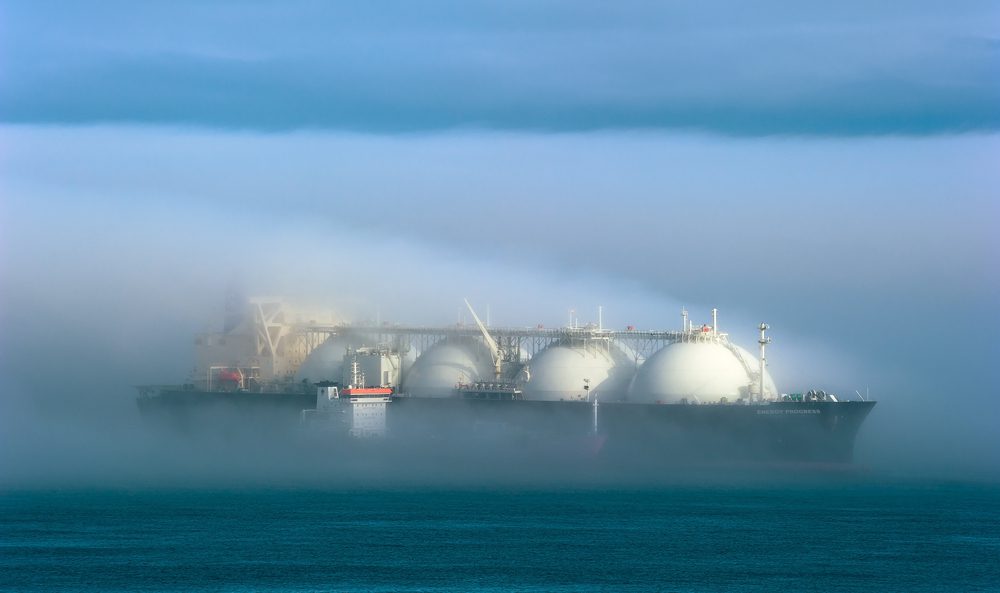
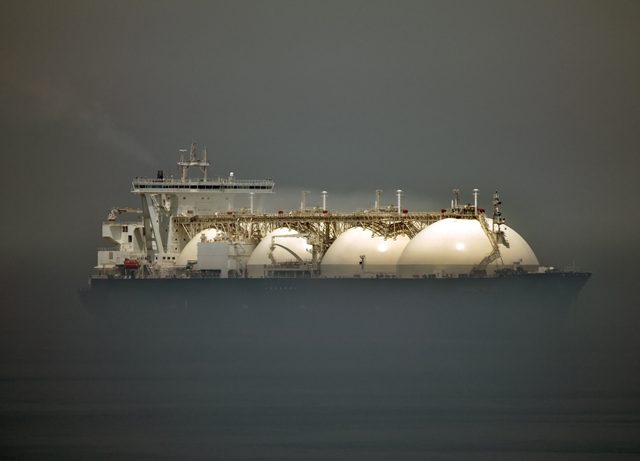
A nuclear-powered LNG carrier could cost roughly 2.5 times as much to build as a conventional vessel, but lower fuel costs could significantly change the economics over the ship’s operating life, according to a new study supported by the American Bureau of Shipping.
Presented at Gastech 2026, the study examined a 174,000-cubic-meter LNG carrier equipped with a 20-25 MWe high-temperature gas-cooled reactor, or HTGR, under development by Japan’s Blossom Energy.
ABS, Blossom Energy and an unnamed global shipping company compared the nuclear design with a conventional LNG-fueled newbuild, assessing vessel arrangement, propulsion systems and operating conditions under a range of potential regulatory penalty scenarios.
The biggest hurdle is the upfront cost. The study found that initial investment for the nuclear-powered vessel would be approximately 2.5 times that of a conventional LNG carrier.
Over the longer term, however, the reactor would substantially reduce fuel costs, potentially improving the economics over the vessel’s service life.
The study also looked at treating the reactor as a long-term energy asset rather than equipment permanently tied to a single ship. Under that model, the reactor could potentially be removed when the first vessel reaches the end of its operating life and reinstalled aboard a second vessel, increasing its residual value.
“Nuclear energy has the potential to fundamentally change the economics of commercial shipping, from vessel design to long-term operating costs,” said Patrick Ryan, ABS Senior Vice President and Chief Technology Officer.
“This study provides a quantitative basis for discussing nuclear propulsion in commercial shipping,” said Blossom Energy CEO Shimpei Hamamoto.
The latest work builds on several years of nuclear shipping studies focused specifically on LNG carriers.
In 2024, ABS and Herbert Engineering Corporation studied the integration of an HTGR into a 145,000-cubic-meter LNG carrier, examining heat and energy management, shielding, weight distribution and other design challenges.
That study found an HTGR-powered vessel could operate without conventional fuel combustion, while potentially allowing higher transit speeds. The reactor design evaluated at the time would require fuel replacement about every six years.
The concept also required major changes to the ship itself, including locating the reactor toward the stern, placing batteries in areas normally occupied by fuel tanks and reinforcing portions of the hull.
A year later, the Korea Atomic Energy Research Institute and Samsung Heavy Industries secured Approval in Principle for an LNG carrier powered by a small modular molten salt reactor.
The 100 MWth reactor concept was designed to operate for the vessel’s full service life without fuel replacement. ABS and the Liberian flag state issued the Approval in Principle at Gastech 2025.
ABS has since expanded its nuclear work into other ship types.
In July, ABS awarded Approval in Principle for a nuclear-powered 15,000 TEU containership concept developed with the Korea Research Institute of Ships and Ocean Engineering and KAERI. That vessel also uses advanced reactor technology intended for marine propulsion.
The growing number of studies and concept approvals reflects rising industry interest in nuclear propulsion as shipping weighs alternatives to conventional bunker fuels and faces tighter emissions requirements.
But commercial deployment still faces significant regulatory, safety, port access, crewing and public acceptance hurdles.
The latest study moves the discussion beyond whether nuclear propulsion can technically be installed aboard an LNG carrier and toward a more practical question: whether the higher cost of building one can be offset by decades of lower fuel expenses.

 Join The Club