By Ishika Mookerjee and Weilun Soon (Bloomberg) — Asian and Norwegian shipping dynasties are among investors offering support for modern-day sail technology that claims to have potential to slash the amount of fuel needed by vessels.
The family office of Norway-based shipping group Odfjell SE and Singapore-based Octave Capital, backed by storied conglomerate Tsao Pao Chee Group, supported a new $44 million fundraising round for bound4blue, a developer of wind propulsion systems, the company said on Tuesday.
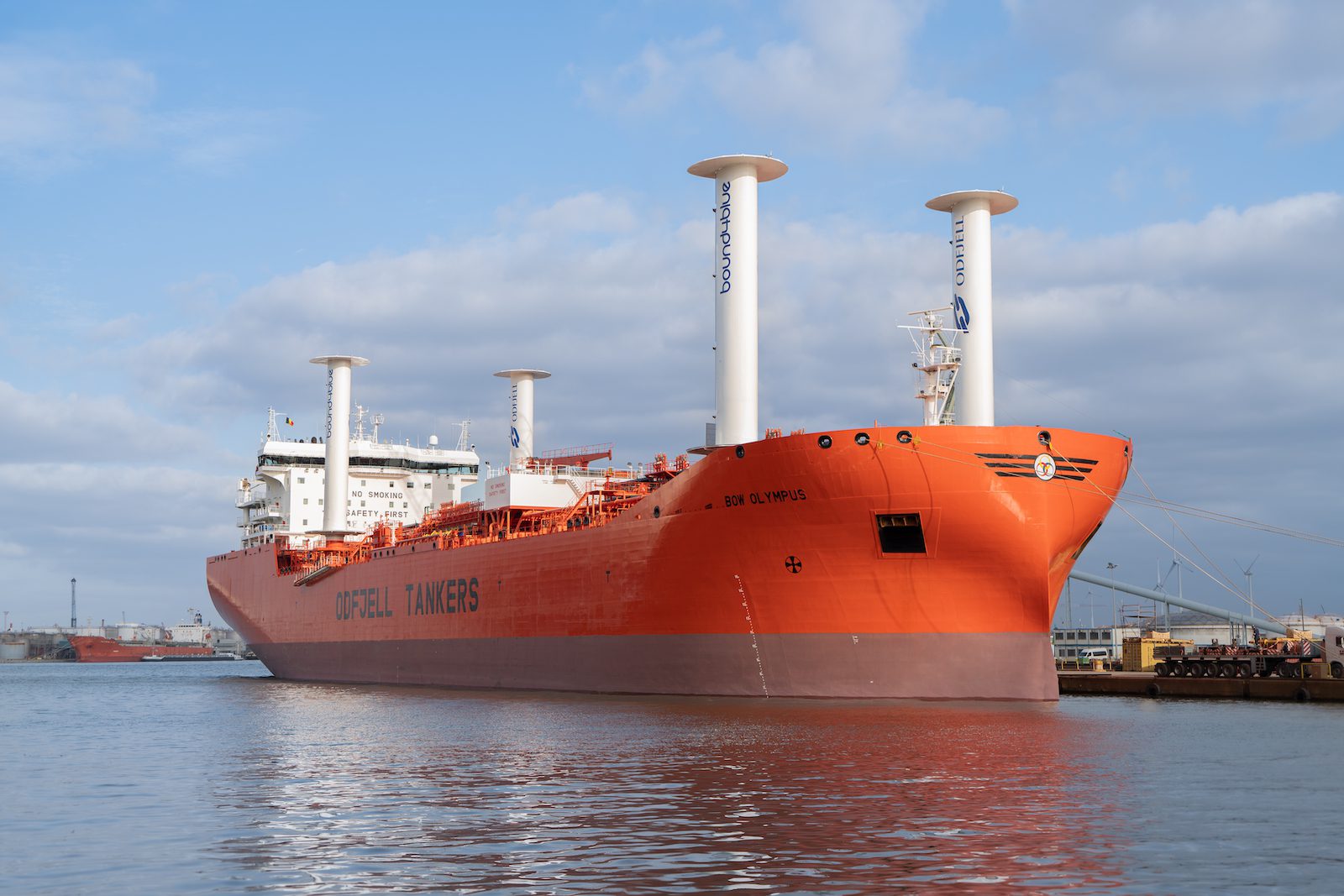
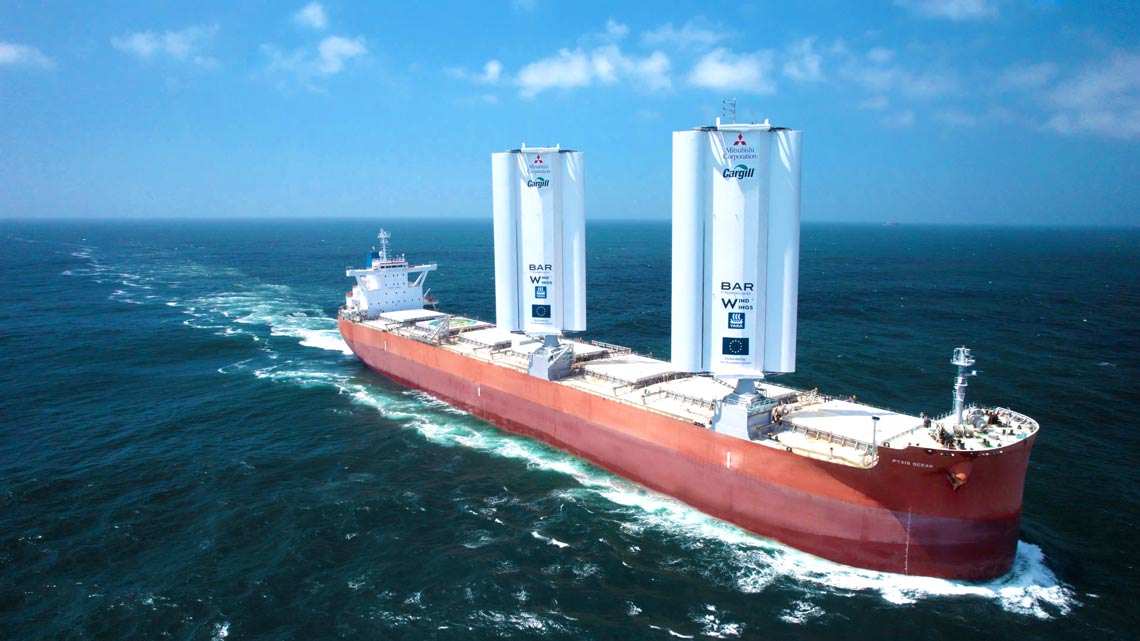
Spain-based bound4blue’s technology — tube-like structures up to 36 meters (118 feet) high — suck in wind during a vessel’s journey and use fans to create thrust, reducing emissions and cutting fuel consumption by as much as 40%, according to the firm. Maersk Tankers A/S and Eastern Pacific Shipping Pte. are among the developer’s customers, with the technology so far deployed on seven ships.
The fundraising, which also won backing from investors including ReOcean Fund, co-managed by the Prince Albert II of Monaco Foundation and Monaco Asset Management, will support plans to extend manufacturing capacity from Spain to China and other parts of Asia.
China, South Korea and Japan represent “almost 90% of the shipbuilding activity of the world, so it makes a lot of sense to expand the company there,” Chief Executive Officer José Miguel Bermúdez said in an interview. Manufacturing the equipment in China will “easily” bring total costs down by about 20-30%, he said.
Wind propulsion systems are a growing sector with several technologies being experimented with. “The adoption rate has the ability to accelerate because the limitations to implementation are very low,” said Jeremy Genin, managing director of ReOcean Fund. The fund is targeting a net internal rate of return of 15% to 20%.
bound4blue’s emphasis on potential benefits for fuel efficiency comes as nations waver on efforts to tackle shipping sector emissions, which accounted for almost 1.4% of total global greenhouse gas pollution in 2024, and more than aviation.
A move in October by the International Maritime Organization to postpone a vote on whether to impose a landmark carbon tax on vessels has threatened to curb the billions of dollars that had been flowing into efforts to clean up the maritime sector. Decarbonizing the global fleet would need investment of between $8 to $28 billion annually through 2050, according to a 2023 UN Trade and Development report.
The case for wind propulsion technology is “really anchored in fuel savings, not carbon prices,” said May Liew, Octave Capital’s CEO. “What we are looking at is reducing fuel consumption that delivers direct bankable operating savings,”she said.
© 2025 Bloomberg L.P.
Editorial Standards · Corrections · About gCaptain
This article contains reporting from Bloomberg, published under license.

 Join The Club