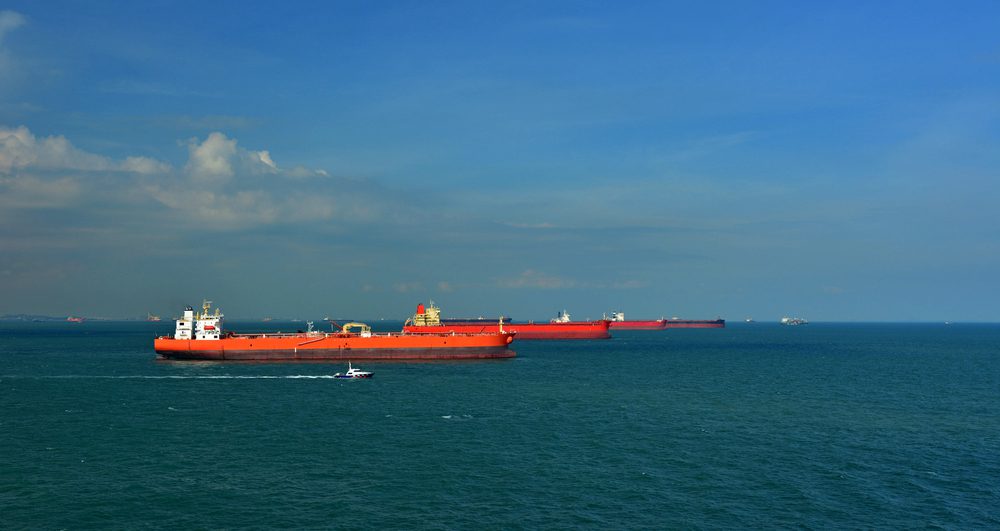
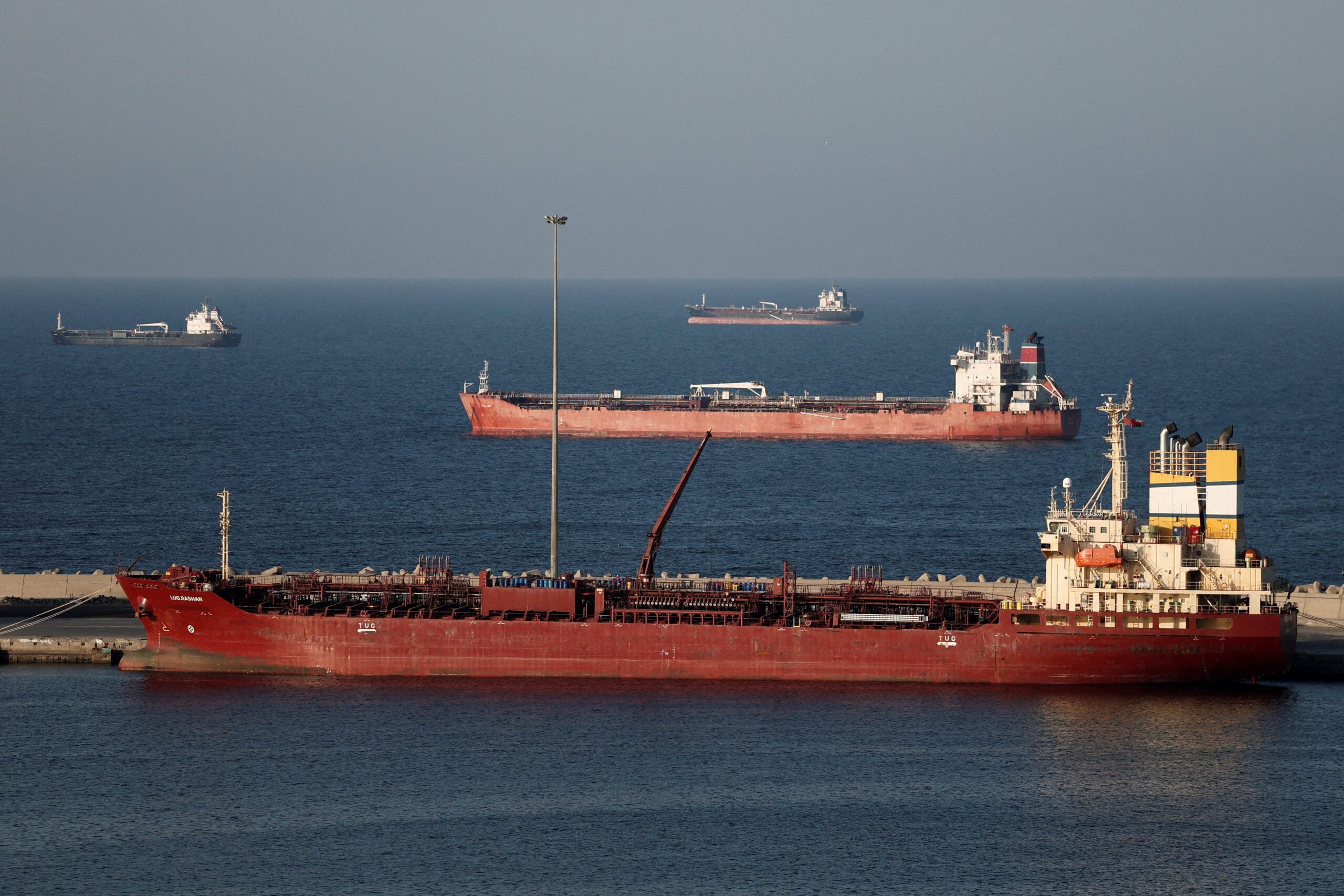
By Jonathan Saul and Dmitry Zhdannikov LONDON, March 23 (Reuters) – Top exporter Saudi Arabia has chartered an armada of ships to flood the market with additional oil, but in the process has driven freight costs so high refiners are reluctant to take the shipments.
That could leave the kingdom stuck with tens of millions of barrels in expensive ships at anchor when the coronavirus outbreak has destroyed oil demand and international prices have lost more than half their value compared with the start of the year.
Following the failure to persuade Moscow to support deeper output cuts at a meeting of the Organization of the Petroleum Exporting Countries and its allies, known as OPEC+ early this month, Saudi Arabia said it would increase output to record levels in a fight for market share.
Shipping industry sources say Saudi Arabia has booked as many as 25 supertankers and provisionally chartered another 15 vessels, to send oil to new and old customers to undercut Russia. Together the ships can carry 80 million barrels of oil – almost equivalent to a day of global demand.
The rush for ships sent tanker rates soaring, prompting the kingdom to tell its buyers it would abandon its usual policy of providing compensation for freight jumps, making Saudi’s deep discounts less attractive.
Several European majors and refiners are engaged in talks with Aramco to try to cut April crude purchases, four trading sources told Reuters, asking not to be identified because of the sensitivity of the issue.
Saudi Aramco declined to comment.
It has yet to be seen whether the world biggest oil company has miscalculated or has a winning strategy that will effectively deprive its rivals of many vessels.
Aramco traditionally stores crude inland at its own hubs, such as Ras Tanura, and in major Asian, U.S. and European consuming centres, where it has storage and pays relatively little compared to the current tanker rates.
Now it needs to store at sea.
“Floating storage is the only way to handle extra oil if the Saudis are testing what they have never done before – record exports of 10 million barrels per day,” a Western consultant who was briefed on Saudi policies said on condition of anonymity.
CONTANGO PLAY
Floating storage is usually dominated by the oil majors and trading houses, which charter ships to store oil they produce or buy cheaply from the market, betting they can resell at a profit when prices recover.
The strategy is known as a contango play, referring to the oil market structure when cargoes for short-term delivery are cheaper than those for later delivery.
It can earn players tens of millions of dollars, as in 2009 when more than 100 million barrels was held at sea.
But Riyadh’s chartering frenzy is unlikely to give it the benefits of such a contango play and could also lock out the traditional speculative players, who even at the best of times have to pay for storage, insurance and the cost of moving oil.
The rush for ships pushed tanker rates to record levels of more than $200,000 a day over the last 10 days. They are still above $100,000 a day, versus an average of around $40,000 a day over the last year.
According to traders’ estimates, the high freight rate environment requires a 12-month contango premium of at least $15 per barrel. On Monday, Brent’s 12-month future-to-prompt-month premium was around $10 per barrel.
STORAGE OUT OF NECESSITY
Oil traders will also have to pay a premium for time charters, or leasing for extended periods.
“Someone who was looking to take a time charter three weeks ago for possible storage would have paid around $30,000 a day and could have made a profit doing that or re-letting the tanker into the market for $200,000 a day,” Richard Matthews, head of research with ship broker E.A. Gibson, said.
“If someone wanted to take a VLCC (very large crude carrier) for even three months currently it will cost around $110,000 a day. The contango would probably only support $90,000 a day.”
Some traders are undaunted.
Trading house Glencore has chartered one of the world’s only two tankers able to carry 3 million barrels of oil for floating storage, while oil major Royal Dutch Shell has taken two VLCCs for sea storage because of the glut. (Additional reporting by Rania El Gamal in Dubai; editing by Barbara Lewis)
Saudi oil giant Saudi Aramco says the Strait of Hormuz disruption has become a stark reminder of how dependent the global economy remains on reliable energy supplies, with the company...
Saudi Arabia's crucial East-West oil pipeline, currently its only outlet for crude exports, was hit in an Iranian attack and other facilities in the kingdom were also targeted, an industry source told Reuters on Wednesday.
Talks between the United States and Iran were at risk of being derailed following Tehran's attacks on Saudi Arabian industrial facilities, two Pakistani sources with knowledge of the discussions told Reuters on Tuesday, as the hours before President Donald Trump's threat to unleash "hell" on the nation dwindled.
April 7, 2026
Total Views: 1008
Get The Industry’s Go-To News
Subscribe to gCaptain Daily and stay informed with the latest global maritime and offshore news
— just like 105,035 professionals
Secure Your Spot
on the gCaptain Crew
Stay informed with the latest maritime and offshore news, delivered daily straight to your inbox
— trusted by our 105,035 members
Your Gateway to the Maritime World!
Essential news coupled with the finest maritime content sourced from across the globe.

 Join The Club