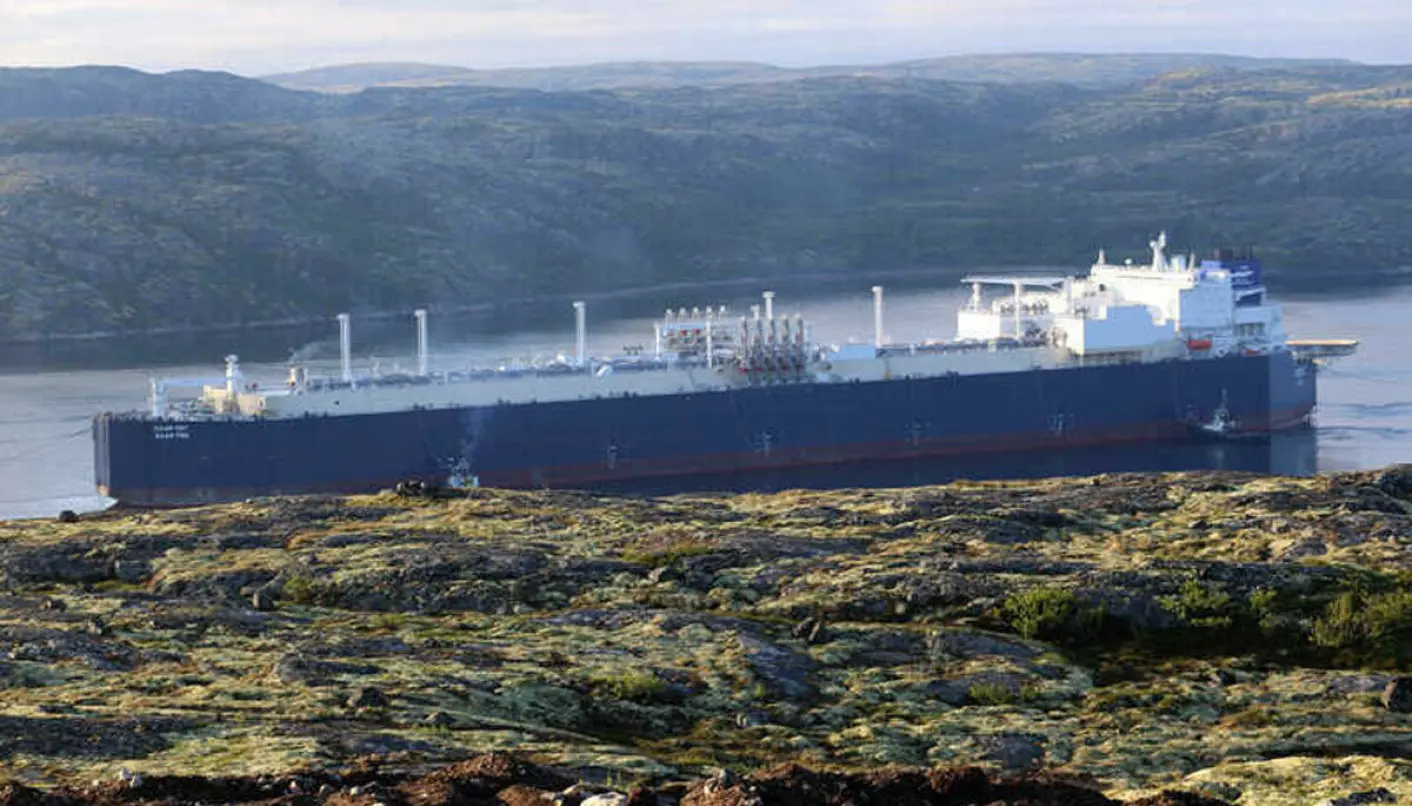
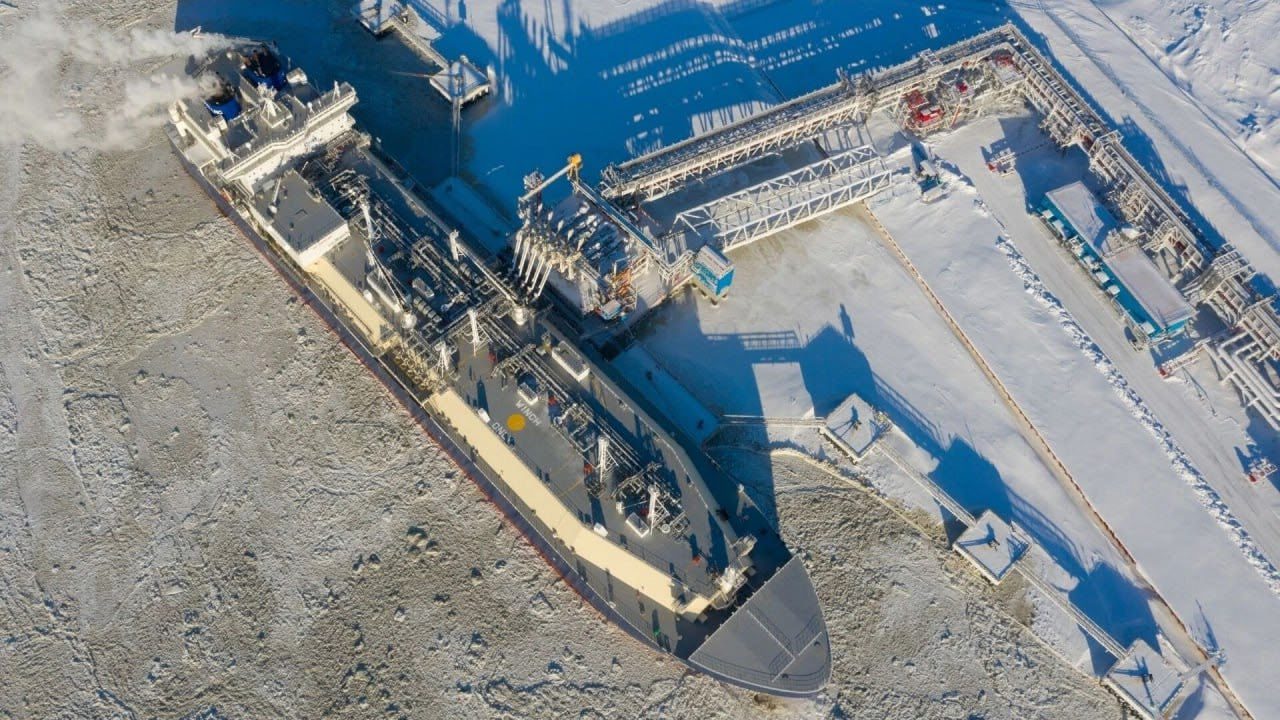
Russia’s newest liquefied natural gas carrier, the Arc7 ice?class vessel Alexey Kosygin, made its inaugural delivery to the Saam floating storage unit (FSU) on February 2, 2026 near the Arctic city of Murmansk.
The event marks a milestone for majority owner Novatek’s bid to expand winter operations in the Arctic seas, relieving some logistical pressures as the company aims to maintain a four?day turnaround between the Christophe de Margerie and Alexey Kosygin.
The arrival of Alexey Kosygin, assembled domestically in cooperation with SHI and designed to navigate the Arctic year round, gives Novatek’s fleet greater resilience during winter months. The vessel’s deployment is expected to allow Arctic LNG 2 a regular shuttle between the liquefaction plant on the Gulf of Ob and the Saam FSU for transfer to conventional carriers.
But while Alexey Kosygin’s first call at Saam reduces short?term winter logistics constraints, Russia’s broader LNG export ambitions face mounting challenges.
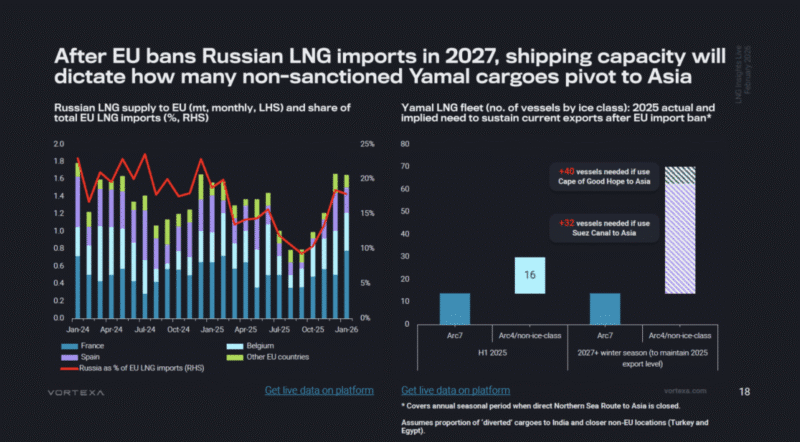
With a European Union ban on LNG imports from Russia scheduled for Jan. 1, 2027, Novatek will need to adjust to much longer transport routes to markets in Asia, as well as destinations such as Turkey and Egypt. That shift will drive a significant increase in overall tonne?miles and require a substantial expansion of the company’s tanker fleet.
Analysts estimate that Novatek will need between 32 and 40 additional conventional or low ice?class LNG carriers, depending on whether the vessels transit the Suez Canal or are routed around South Africa.
“This could be achieved via new charters or purchase of older/idle LNG vessels,” says Ashley Sherman, senior LNG analyst at Vortex. “Our modeling does account for a proportion of cargoes heading to closer non?EU locations (Turkey and Egypt), as well as India.”
Russia’s increased needs for LNG carriers following the upcoming EU import ban. (Source: Courtesy of Vortexa)
Where those vessels will come from remains unclear. Historically, Novatek has cobbled together a mixed fleet of conventional and low ice?class carriers serving Arctic LNG 2, currently consisting of nine ships, with another being converted into an FSRU. However, even with two Arc7 class vessels in service, the existing nine carriers are unlikely to be sufficient for support of Arctic LNG 2 exports beyond 2026.
Thus Novatek could find itself in a tight spot over the next 12 months as it seeks additional capacity to uphold export volumes without material winter constraints. Between Yamal LNG and Arctic LNG 2 Novatek may need to boost its effective LNGC capacity by close to 50 vessels to maintain planned output into winter 2027; a substantial order in a market already facing high demand for LNG tonnage.
Complicating matters further are emerging non?commercial headwinds, including a pending UK maritime services ban that could restrict access to shipyards. French yard Damen has stopped dry?dock work on Arc7 vessels entirely, leaving only Danish yard Fayard AS for major maintenance in Europe. Similarly, suppliers have curtailed the provision of spare parts, such as gas chromatographs, unless service providers guarantee they will not be installed on Arc7 ships.
These developments paint a mixed picture for Russia’s Arctic LNG projects. On one hand, the commissioning of Alexey Kosygin represents some progress in winter operational capability. On the other hand, the upcoming EU ban and the need for a dramatically expanded LNG fleet, compounded by tightening maritime services availability, present complex and costly challenges that Novatek must navigate in the years ahead.
Indian refiners have cut back Russian crude purchases for November delivery, as rising competition from China pushes up prices at a time when buyers can tap alternative shipments from the Middle East.
South Korea's presidential office on Wednesday dismissed a Ukrainian report that Russia has imported petroleum products from South Korean ports, calling the accusation inappropriate.
October 7, 2026
Total Views: 811
Get The Industry’s Go-To News
Subscribe to gCaptain Daily and stay informed with the latest global maritime and offshore news
— just like 106,746 professionals
Secure Your Spot
on the gCaptain Crew
Stay informed with the latest maritime and offshore news, delivered daily straight to your inbox
— trusted by our 106,746 members
Your Gateway to the Maritime World!
Essential news coupled with the finest maritime content sourced from across the globe.

 Join The Club