By Eva Brendel, Joe Wertz and Marilen Martin
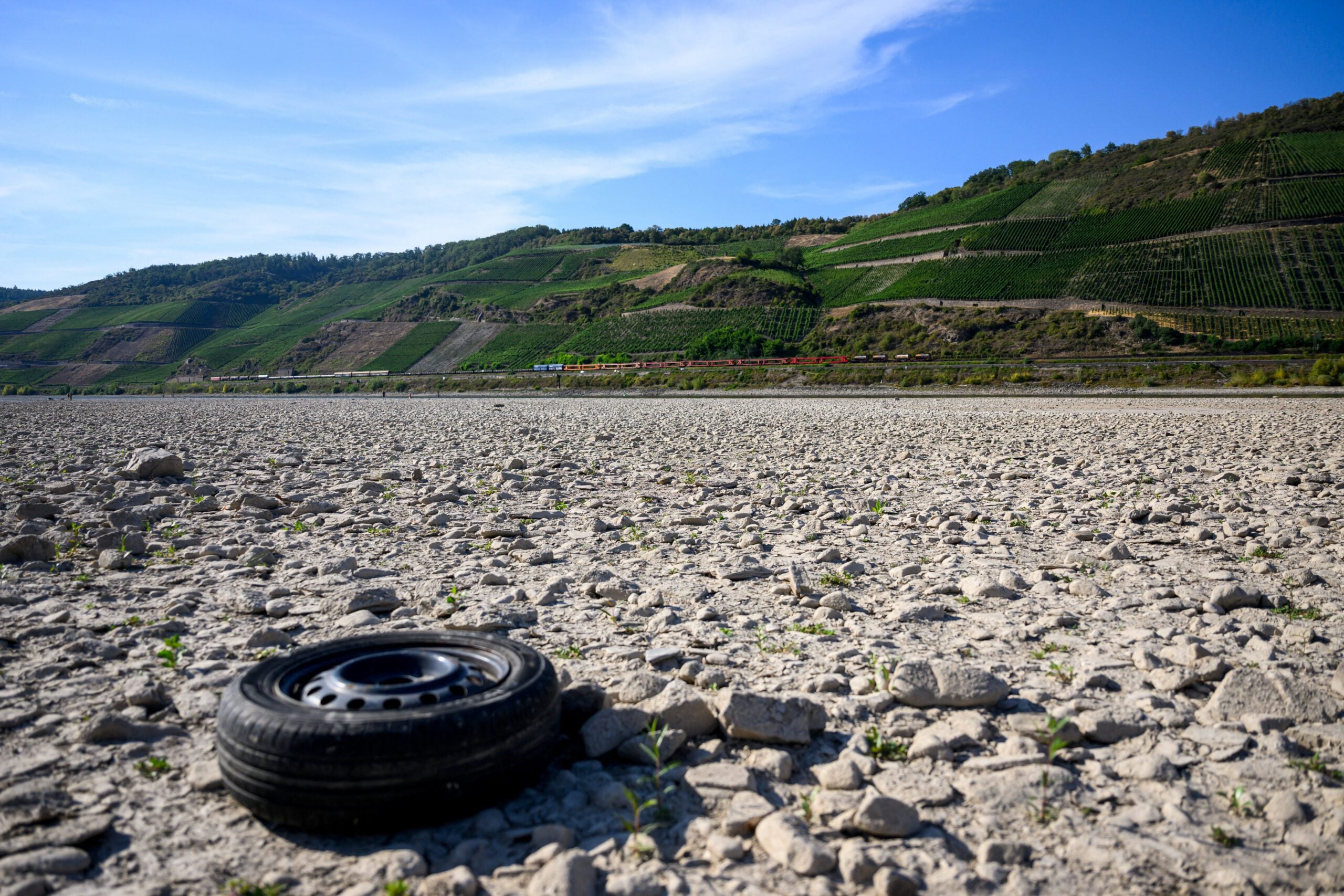
Aug 4, 2026 (Bloomberg) –Disruptions on one of Europe’s most important trade arteries are poised to intensify after the Rhine fell to the lowest on record ahead of the peak summer dry season, with conditions likely to worsen in the weeks ahead.
The barge clearance level at Kaub, a choke point for vessels heading to southern Germany and Switzerland, dropped as low as 21 centimeters (8.3 inches) overnight, the lowest since records began in 1880. It edged up slightly Tuesday morning, but is unlikely to offer lasting relief, as the Rhine typically bottoms out later in the summer. Forecasts already point to a drop to 17 centimeters by Saturday.
Across Europe, unusually low river levels are already disrupting trade, forcing curbs to nuclear power generation and exposing how vulnerable the region’s infrastructure remains to increasingly frequent droughts. For now, many companies are falling back on workarounds to prevent larger disruptions, but may struggle to do so if levels drop further.
Read More: Europe’s Key Rivers Are Drying Up as Extreme Heat Impact Widens
“The timing is particularly concerning,” said Rico Luman, senior sector economist for transport and logistics at ING Groep NV. Such shallow water levels this early in the season are not only a clear sign of mounting climate-related risks, but are affecting businesses that depend on the waterway for transport, he said.
Freight rates have risen sharply as barges reduce cargo loads to navigate the shallow river. The cost of shipping diesel from Rotterdam to Karlsruhe has climbed to the highest since Bloomberg began compiling the data in 2009.
Some of the workaround solutions implemented by companies in recent years have involved lowering shiploads, building up raw material inventories or switching to alternative means of transport. Such measures won’t eliminate the impact, but they can significantly reduce the damage, said ING’s Luman.
Over the longer term, greater resilience may require changes in vessel design, fleet composition and river infrastructure, he added.
Chemicals giant BASF SE said it’s monitoring the situation very closely after falling water levels caused some supply bottlenecks, while Shell Plc has shifted fuel deliveries from its Rhineland refinery to rail and truck. Lanxess AG has set up a crisis management team to deal with logistical disruptions, and Evonik Industries AG said the situation has impacted production at its Marl Chemical Park.
The Institute for the World Economy estimates that persistently low Rhine water levels could damp Germany’s gross domestic product by between 0.1% and 0.2% between July and September.
For now there is little relief in sight for the Rhine. Heat wave conditions have moved across the continent, spreading from western Europe to the southeast, where temperatures are set to rise 5C to 8C above normal through the end of the week, according to analysis from meteorologist Richard Martin-Barton at MetDesk.
Isolated thunderstorms are possible from France through Benelux countries into Germany, with more widespread rain and storms from Austria through the Czech Republic and Poland into Belarus, but much of mainland Europe is forecast to be relatively dry, said Martin-Barton.
Any rainfall will help the Rhine, but brief downpours are unlikely to quickly reverse this summer’s long-term water deficit. Dry soils will absorb much of it before it reaches the river, while persistent heat continues to increase evaporation and plant water use across the basin, said David Hannah, a professor of hydrology at the University of Birmingham.
Romania has resorted to extraordinary measures: The military detonated a rock formation in the Danube on Monday to redirect water toward the Cernavoda nuclear power plant after low water levels forced one of its two reactors offline. As a result, the water level at the plant increased by 2 centimeters from the previous day, instead of an expected 2 centimeter drop, the country’s defense minister said Tuesday.
In Hungary, the drought has disrupted energy supply. The country shut down its only nuclear power plant last weekend after low Danube water levels left insufficient cooling water for the reactors.
© 2026 Bloomberg L.P.

 Join The Club