The Trump administration’s emergency Jones Act waiver has delivered a windfall to U.S. refiners while doing little to lower fuel prices for consumers, according to a new analysis from the head of one of the country’s largest U.S.-flag tanker operators.
In a commentary released this week, Overseas Shipholding Group CEO Sam Norton argues the waiver has allowed refiners and fuel distributors to capitalize on soaring profit margins while foreign-flag tankers increasingly perform domestic voyages that would normally be reserved for U.S.-flag vessels under the Jones Act.
“It is hard to dispute who has benefited most from the ongoing conflict with Iran: the refiners and distributors that produce and move fossil fuels across the United States,” Norton wrote on LinkedIn.
The analysis comes as the administration faces mounting pressure from maritime labor unions, U.S.-flag operators and lawmakers to allow the emergency waiver to expire on August 16.
The administration invoked Section 501 of the Merchant Marine Act in March, citing national defense concerns following disruptions to global energy markets caused by the conflict with Iran and threats to shipping through the Strait of Hormuz. The waiver temporarily allows approved foreign-flag vessels to transport petroleum products and other energy cargoes between U.S. ports that would otherwise be restricted under the Jones Act.
While the waiver was intended to ease fuel supply constraints, Norton argues it has instead coincided with a dramatic increase in refining profits.
He points to the benchmark 3:2:1 crack spread—a widely used measure of refinery profitability—which he says has climbed from about 27% at the beginning of 2026 to roughly 45% in early June and as high as 70% to 75% in recent days. By many estimates, he said, ExxonMobil and Chevron are expected to report second-quarter earnings roughly three times higher than in the first quarter.
Meanwhile, U.S.-flag vessels have remained sidelined as foreign-flag ships continue to receive approval for domestic energy shipments.
“U.S.-flagged vessels have sat idle while lower-cost foreign-flag vessels perform domestic voyages under a continuing Jones Act waiver,” Norton wrote. “U.S. maritime jobs have suffered, and the long-term health of the broader U.S. maritime industry has been weakened on multiple fronts.”
Norton also questions whether the waiver has delivered the consumer benefits cited by supporters.
“So why do media and government officials focus so intensely on the supposed cost of the Jones Act—when the recent waiver has demonstrably failed to reduce gasoline or diesel prices—while paying far less attention to the windfall profits captured by oil companies?” he wrote.
The administration has argued that allowing foreign-flag tankers to supplement domestic shipping capacity would help stabilize fuel markets during the emergency. However, critics contend there is little evidence the waiver has meaningfully reduced prices at the pump.
The debate has continued as MARAD records reviewed by gCaptain show the agency continues approving domestic voyages involving crude oil, gasoline, diesel, jet fuel, naphtha and asphalt under the waiver. As of the agency’s July 13 report, MARAD had logged 170 approved voyages.
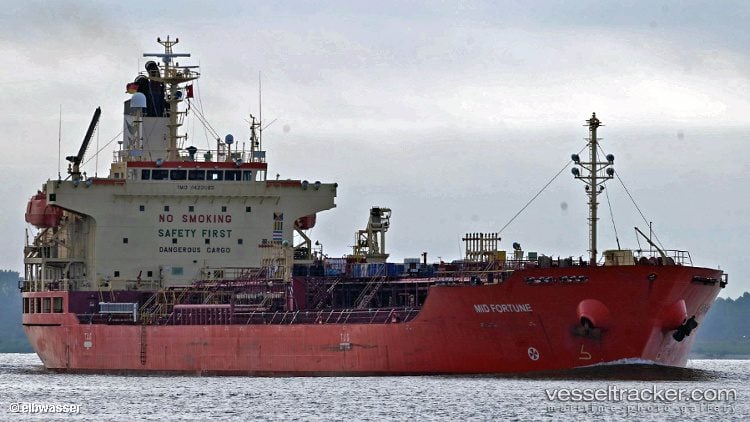
Among the vessels operating under the program is the Chinese-flagged Jin Zhou Wan, which has completed multiple coastwise voyages carrying asphalt between U.S. ports. Its continued operation prompted protests last week by members of the Seafarers International Union outside Marathon Petroleum’s refinery in Garyville, Louisiana, where the tanker was preparing another domestic shipment.
Maritime industry groups, including the American Maritime Partnership, the Seafarers International Union and U.S.-flag operators, have urged the administration to let the waiver expire, arguing the emergency conditions that justified its issuance have largely subsided and that continuing the program undermines the U.S. merchant marine.
Norton said the extended waiver now offers an opportunity to examine who has actually benefited from the policy.
“The current extended—and still continuing—Jones Act waiver creates a rare opportunity to identify the real winners and losers of a policy promoted as consumer relief but functioning, in practice, as a subsidy to the oil industry,” he wrote.
Whether the waiver reduced transportation costs for refiners is not disputed. The broader question—central to the growing debate—is whether those savings were ultimately passed on to consumers or retained by producers and distributors as refining margins climbed to some of their highest levels of the year.

 Join The Club