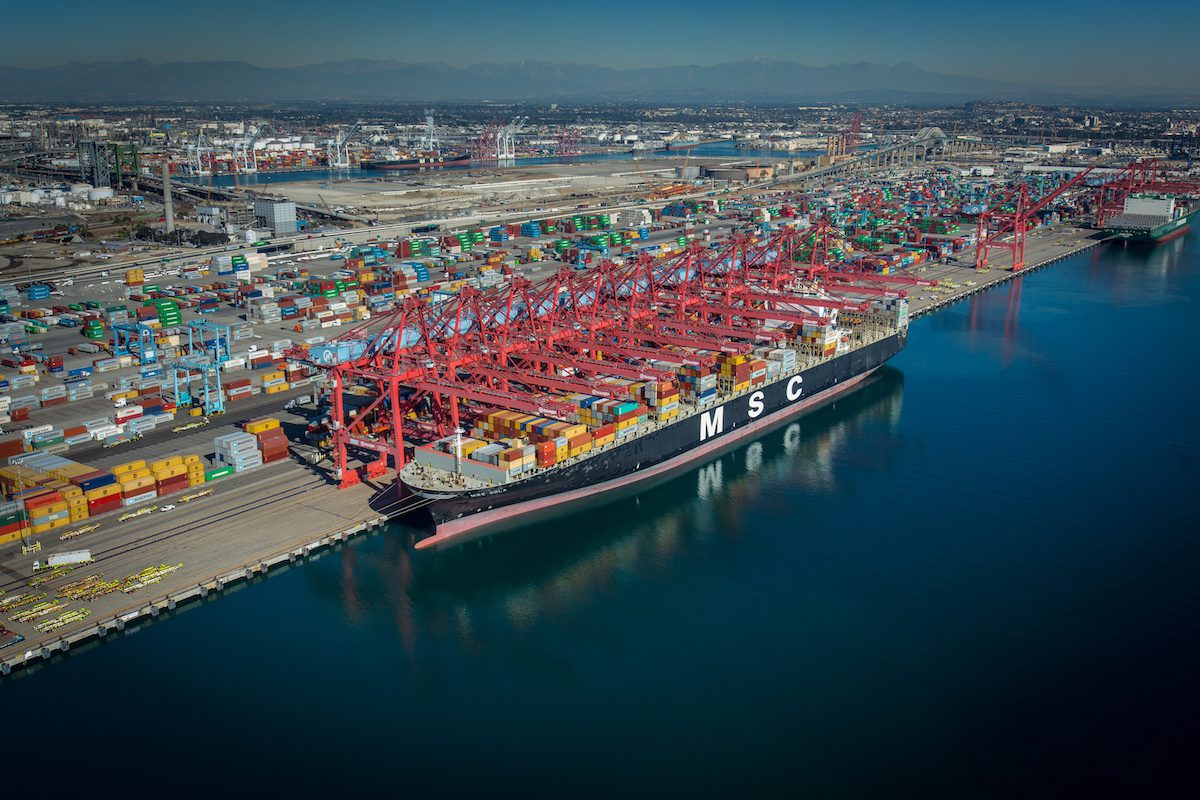
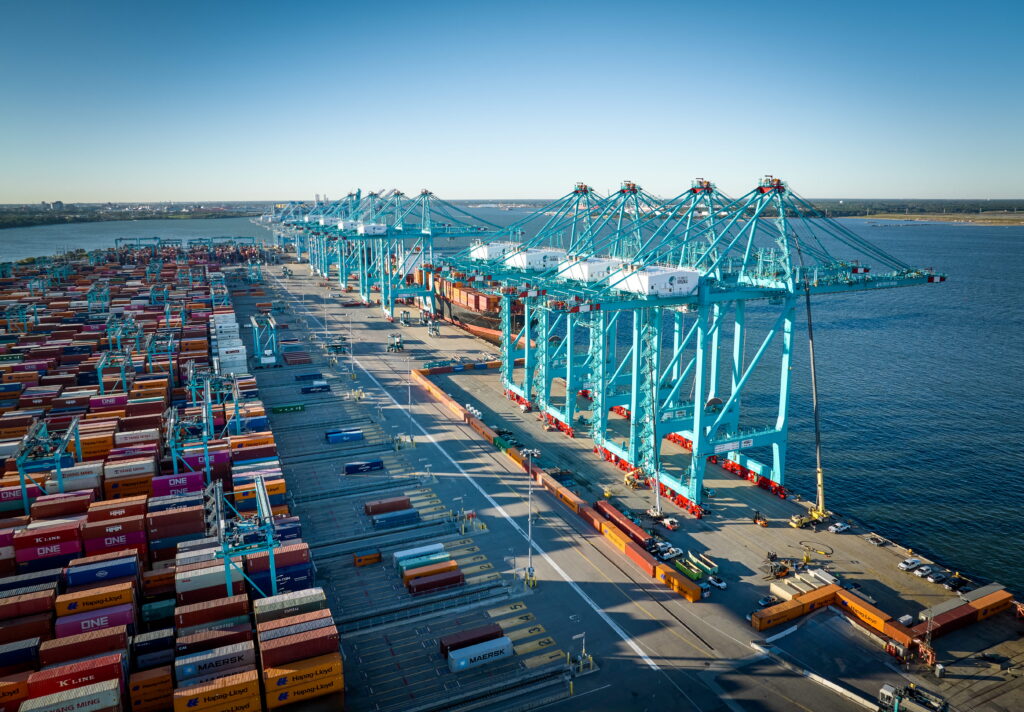
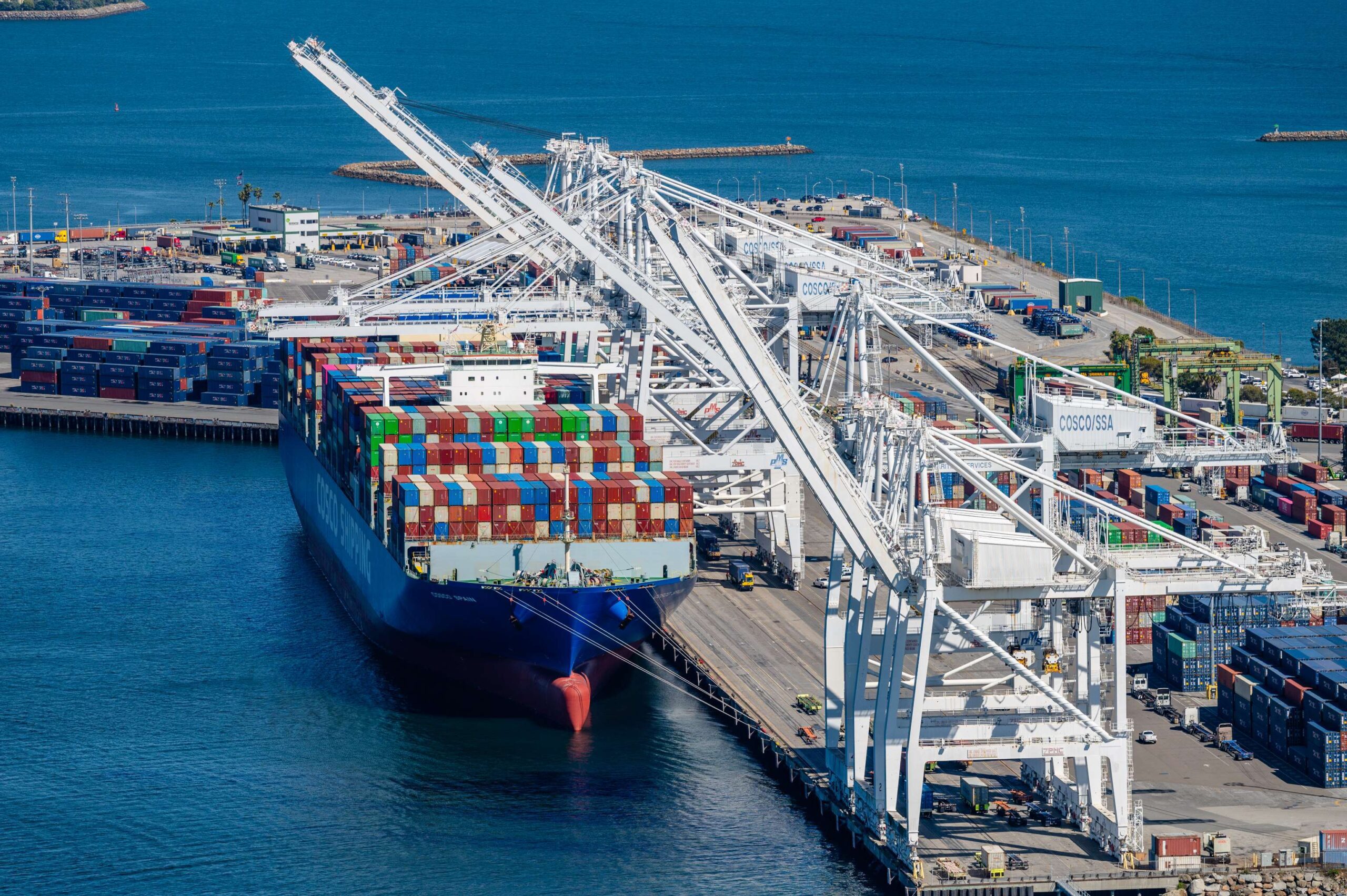
File Photo: TTI’s Pier T terminal at the Port of Long Beach. Photo: Port of Long Beach
The Port of Long Beach closed out its 2018 fiscal year having handled 8,000,929 twenty-foot equivalent units (TEUs) during the previous 12 months.
This figure represents a new annual record and is 10.7 percent increase over fiscal year 2017.
“We are poised to break our calendar year record at the end of December,” said Port of Long Beach Executive Director Mario Cordero. “Despite the tariffs imposed by Washington and Beijing, international trade is showing resilience, and at our Port we are providing a conduit for commerce that’s efficient for our customers and getting their cargo to destinations faster, saving them money.”
“The Port of Long Beach moved 701,204 TEUs last month, the second-busiest September in our 107-year history,” said Long Beach Harbor Commission President Tracy Egoscue. “That’s a good thing for our economy. Trade flowing through the Port of Long Beach supports 1.4 million jobs across the United States, including more than 300,000 jobs in Southern California.”
September’s total volume was flat, with a slight decrease of 0.1 percent compared to September 2017. Imports decreased 2.5 percent to 357,301 TEUs compared to the previous year. Exports were down 3 percent to 121,561 TEUs, while empties increased 5.9 percent, to 222,343 TEUs.
At 8 million TEU, the Port of Long Beach ranks as the second busiest container port in the United States behind the neighboring Port of Los Angeles, which handled 9.3 million TEU in 2017.
The Port of Long Beach’s fiscal year runs from October 1 to September 30.

 Join The Club