The National Transportation Safety Board (NTSB) has determined that a simple but critical error by a harbor pilot led to a tanker striking a refinery pier during an early-morning undocking maneuver in California.
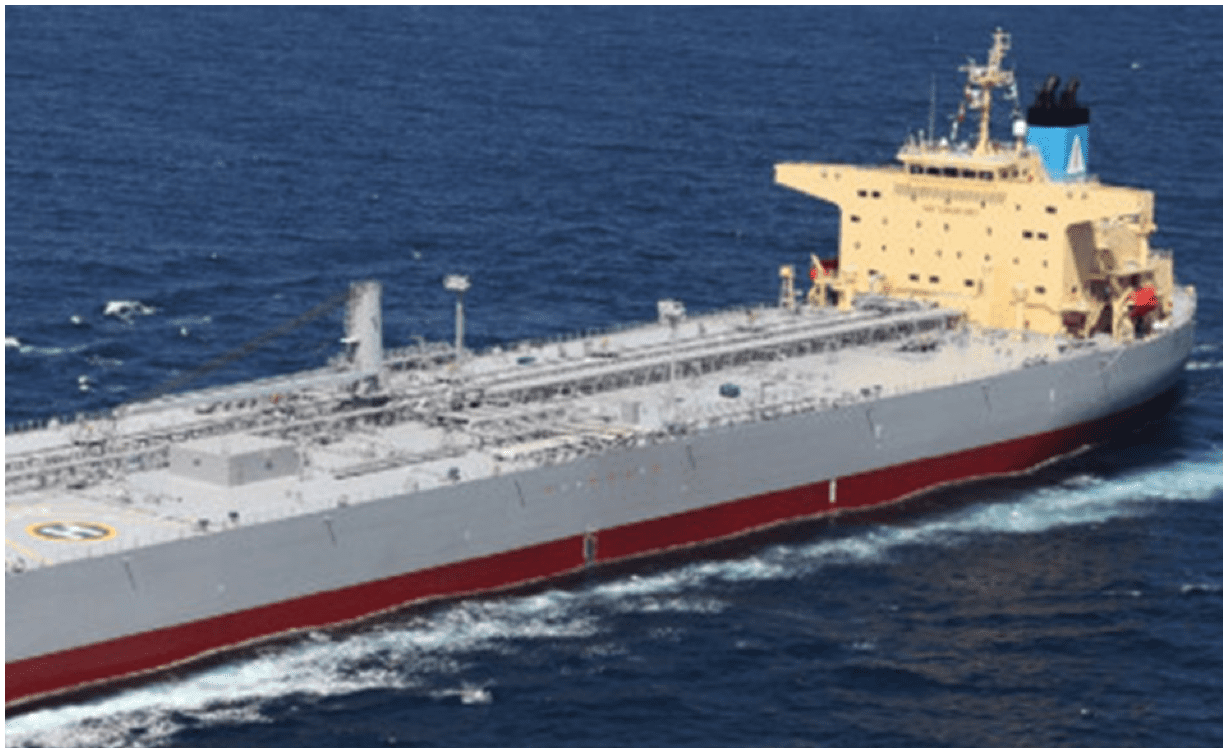
The incident occurred on October 14, 2024, when the 820-foot crude oil tanker Platanos was departing the Martinez Refining Company Wharf in the Carquinez Strait. At about 0412 local time, the vessel’s port quarter struck a concrete dolphin and fender structure, causing more than $500,000 in combined damage. No injuries or pollution were reported.
According to the NTSB, the accident was caused by the pilot mistakenly transposing the positions of two assist tugs on his reference card and then issuing commands intended for one tug to the other.
The maneuver itself was routine. Two tractor tugs were positioned on the tanker’s starboard side—one forward and one aft—to help pull the vessel off the dock against a roughly 1.9-knot ebb current. The pilot’s plan called for the stern to be pulled away faster than the bow to counter the current and safely clear the pier.
Instead, the reversed tug commands had the opposite effect.
“The bow [was] rapidly pulled away from the pier, causing the stern of the ship to move toward the pier,” investigators found, ultimately leading to the allision.
Voyage data recorder evidence shows the situation deteriorated quickly. Just seconds after the pilot ordered increased pull from what he believed was the aft tug, the vessel’s stern closed the remaining distance and struck the pier.
The master did recognize the developing risk and warned the pilot that the stern was “too close” roughly 30 seconds before impact. But by then, the window to correct the maneuver had effectively closed. Investigators concluded there were no practical actions the bridge team could have taken at that point to prevent the contact, particularly given the confusion over tug positions and limited visibility in darkness.
The NTSB found no mechanical issues with the vessel or tugs, and weather conditions were favorable. The investigation instead focused on human factors, describing the error as a classic “slip or lapse” during a routine task.
The pilot—who had more than three decades of experience and was highly familiar with the berth—had written the tug positions incorrectly on a handheld “radio card” used for quick reference while maneuvering from the bridge wing. That error led to an incorrect mental model of how the ship would respond to tug inputs.
Investigators noted the pilot had only about 4.5 hours of sleep prior to the early-morning operation, and the incident occurred during a circadian low period between 0300 and 0500. While fatigue could have contributed to a lapse in attention, it was not determined to be the direct cause.
Damage to the Platanos included a hull penetration above the waterline into a pump room void space, along with buckling and cracking along the port side. Pier damage consisted of concrete spalling and structural cracking to the dolphin and fender system.
The vessel was able to proceed to anchorage following the incident.
The NTSB concluded that the probable cause was the pilot’s transposition of tug positions and the resulting incorrect commands issued during the undocking maneuver.
The full report can be found on the NTSB website.
Editorial Standards · Corrections · About gCaptain

 Join The Club