The Pentagon’s rollout of Project Freedom is being presented as the first step toward reopening the Strait of Hormuz. But the details emerging behind those early transits point to something far narrower: a tightly controlled workaround—not a reopening of one of the world’s most critical shipping lanes.
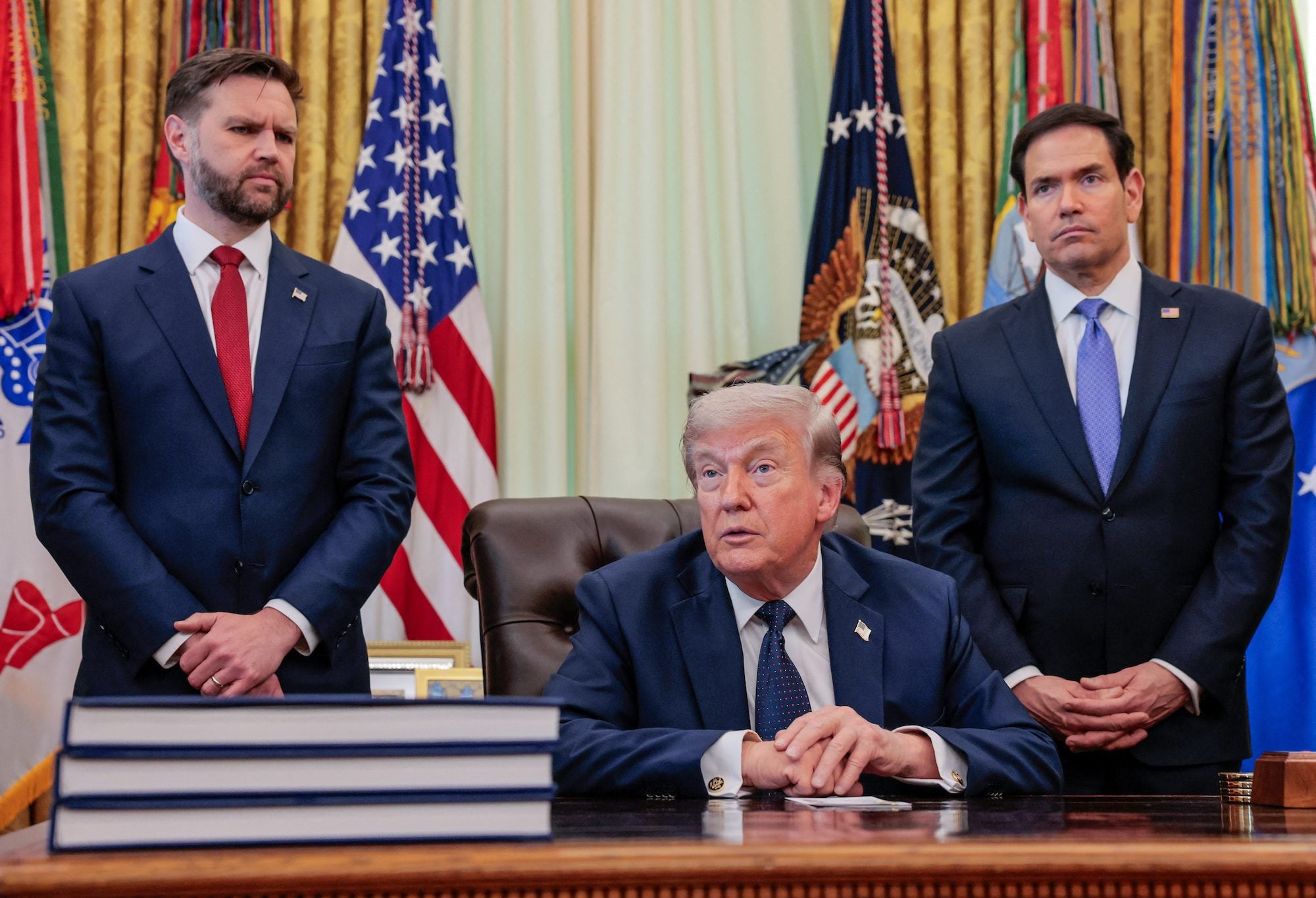
While President Donald Trump framed Project Freedom as a humanitarian effort to assist stranded vessels, Defense Secretary Pete Hegseth has cast the operation as a defensive mission to counter Iranian aggression and restore freedom of navigation through a critical global chokepoint.
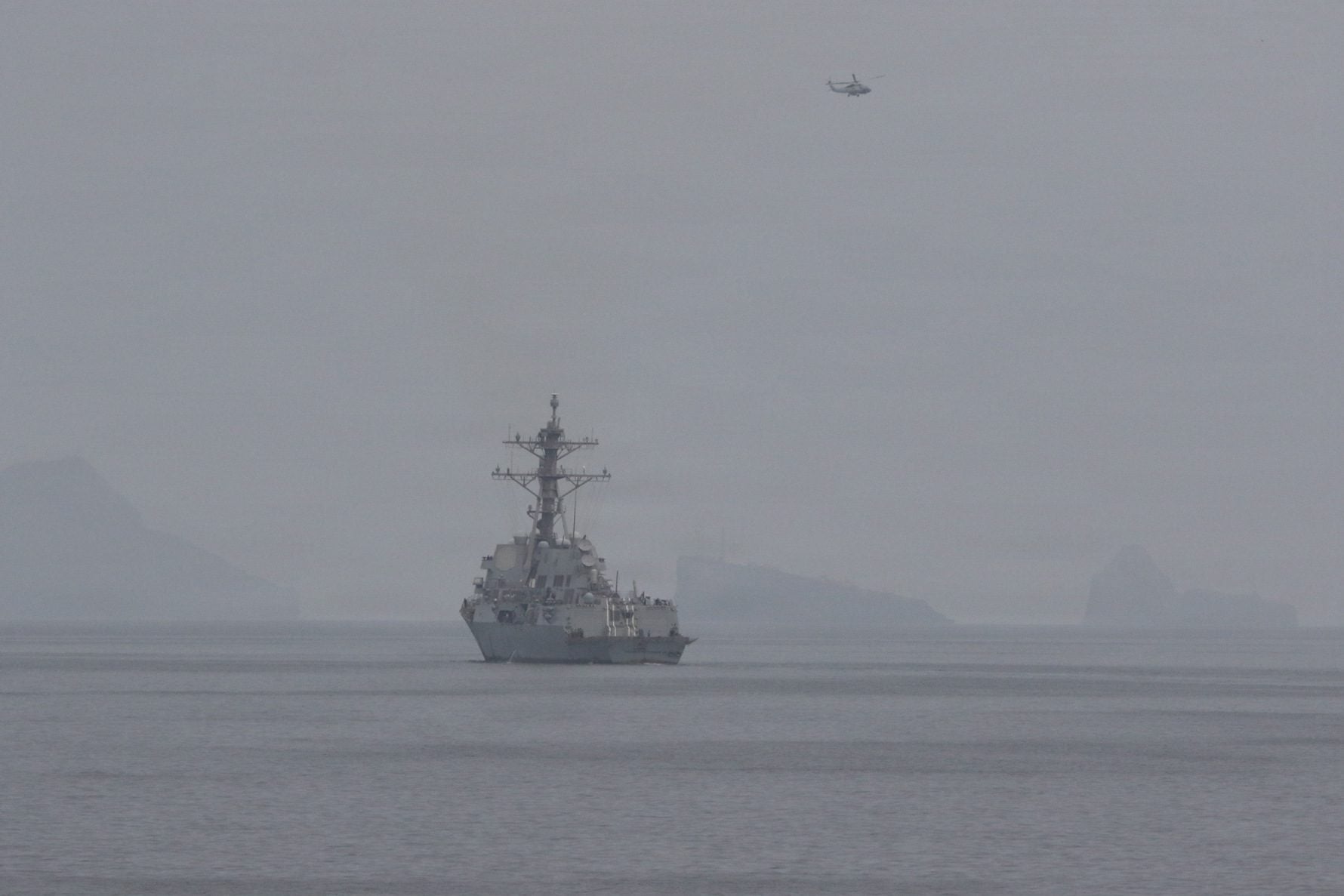
On Tuesday, Hegseth said the mission is designed to “restart the free flow of commerce,” confirming two U.S.-flagged vessels had transited the Strait under the protection of American destroyers.
“[Iran] said they control the strait — they do not. So, American ships led the way, commercial and military, shouldering the initial risk from the front — as Americans always do. Right now, hundreds more ships from nations around the world are lining up to transit,” he said.
Hegseth added that U.S. Central Command and partner nations are working with shipowners, operators, and insurers to “let them know it’s safe to move out of the gulf.”
Standing alongside Hegseth, Air Force Gen. Dan Caine said there are currently more than 1,500 vessels and about 22,500 mariners still inside the Gulf.
“Project Freedom is designed to protect commercial shipping and help restore the flow of commerce through the strait and sustain freedom of navigation,” Caine said. “Centcom has established an enhanced security area on the southern side of the strait that is now protected by U.S. land, naval and air assets to help defeat further Iranian aggression against commercial shipping.”
On Monday, Maersk confirmed that the U.S.-flagged roll-on/roll-off vessel Alliance Fairfax, operated by its U.S.-based subsidiary Maersk Line, Limited, successfully exited the Persian Gulf under U.S. military escort. The vessel is one of two that U.S. Central Command said had transited the Strait, and one of five U.S.-flagged ships that had been effectively stranded in the Gulf since the crisis began in February.
But rather than signaling a broader reopening, the details of those transits point to highly coordinated, one-off extractions of stranded vessels—not the start of a broader return to commercial traffic.
Guidance from the Joint Maritime Information Center makes clear that vessels are not advised to use traditional Traffic Separation Scheme that has historically underpinned normal shipping flows. A May 4 advisory maintains the regional threat level at “CRITICAL” and directs ships choosing to transit toward a southern route through Oman’s territorial waters within a U.S.-backed “enhanced security area.”
The advisory is blunt: the main shipping lanes are now deemed “extremely hazardous” because mines in the area have yet to be fully identified or cleared.
In effect, the guidance sidelines the Strait’s core transit corridor, replacing it with a narrow, improvised passage that relies on military oversight, coordination with local authorities, and constant vigilance. For one of the world’s busiest maritime chokepoints—typically handling roughly a fifth of global oil flows—this is far from a return to normal.
In practical terms, the Strait can no longer operate as a high-capacity, two-way shipping lane, but rather a constrained corridor where movements are controlled, limited, and heavily dependent on military support.
Jakob Larsen of BIMCO said Monday the broader industry has received no formal guidance on how Project Freedom would operate beyond these initial movements and warned that the underlying risk environment has not improved.
“The overall security situation for the shipping industry is currently unchanged,” Larsen said.
Even if security conditions stabilize along that southern route, its confined nature and the need for coordination make it structurally incapable of handling typical volumes. BIMCO warned in an April 23 advisory that “these routes cannot safely accommodate the normal volumes of shipping through the Strait of Hormuz,” referring to the southern Oman route and the Iranian-controlled route to the north of the TSS.
It’s also unclear whether the Trump administration’s insurance backstop played a role in the recent transits, raising new questions about whether the program has been activated in any meaningful way in the absence of large-scale U.S. naval escorts.
While the successful escort of vessels like Alliance Fairfax demonstrates that the United States can move ships through the Strait under heavy protection, it also highlights the resource intensity required, reinforcing that these transits are exceptional rather than repeatable at scale.
The fragile security picture was further underscored by a reported explosion and fire aboard the South Korean-operated cargo ship HMM Namu while transiting the Strait, highlighting the persistent risks facing commercial vessels elsewhere in the Gulf even as U.S.-escorted movements begin.
South Korea’s government said it is investigating whether the incident was the result of an attack, though no casualties were reported and the cause of the engine room fire remains unconfirmed. The episode is likely to reinforce industry concerns that conditions remain too dangerous for a broader return of traffic.
In a post Monday, President Donald Trump said Iran had “taken some shots” at vessels involved in the operation, including a South Korean cargo ship, and claimed U.S. forces had already destroyed several Iranian fast boats, adding that aside from the South Korean vessel there had been “no damage going through the Strait.”
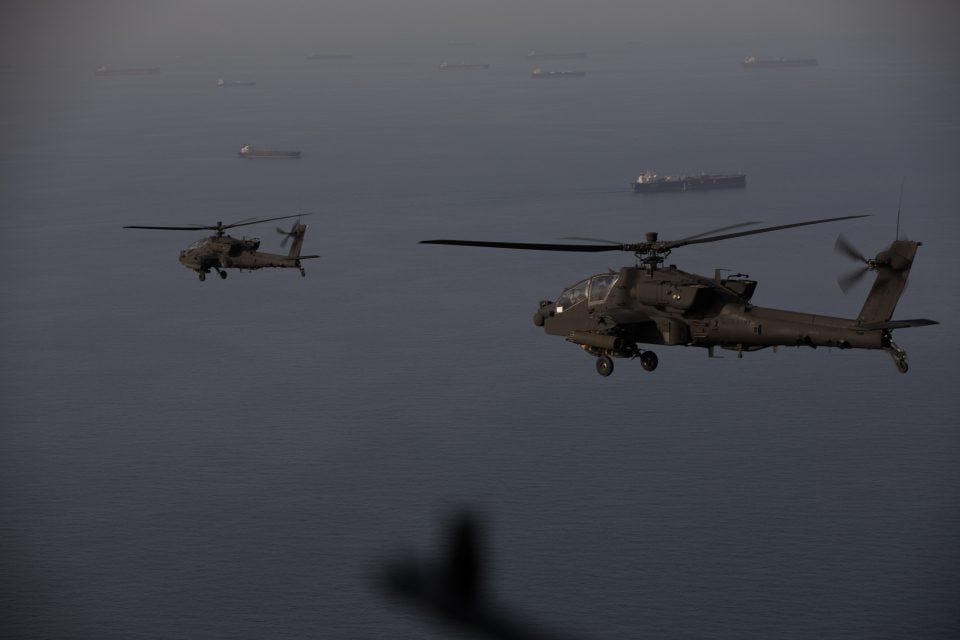
In an effort to reassure the shipping, Caine said more than 100 aircraft are now providing continuous overwatch in the region, while roughly 15,000 U.S. service members support the operation across sea, air, and land domains.
“Commercial vessels that transit through the area will see, hear and frankly, feel U.S. combat power around them,” he said.
For now, the two U.S.-flagged transits stand less as a turning point than as a proof of concept—demonstrating what can be done under extraordinary conditions, but whether it can be scaled to a level that meaningfully restores traffic remains highly uncertain.
Editorial Standards · Corrections · About gCaptain

 Join The Club