LNG bookings average one per day as Canal positions itself as key alternative for disrupted Middle East energy flows
By Lori Ann LaRocco – LNG transits through the Panama Canal continue to tick up as the disruption on the Strait of Hormuz continues.
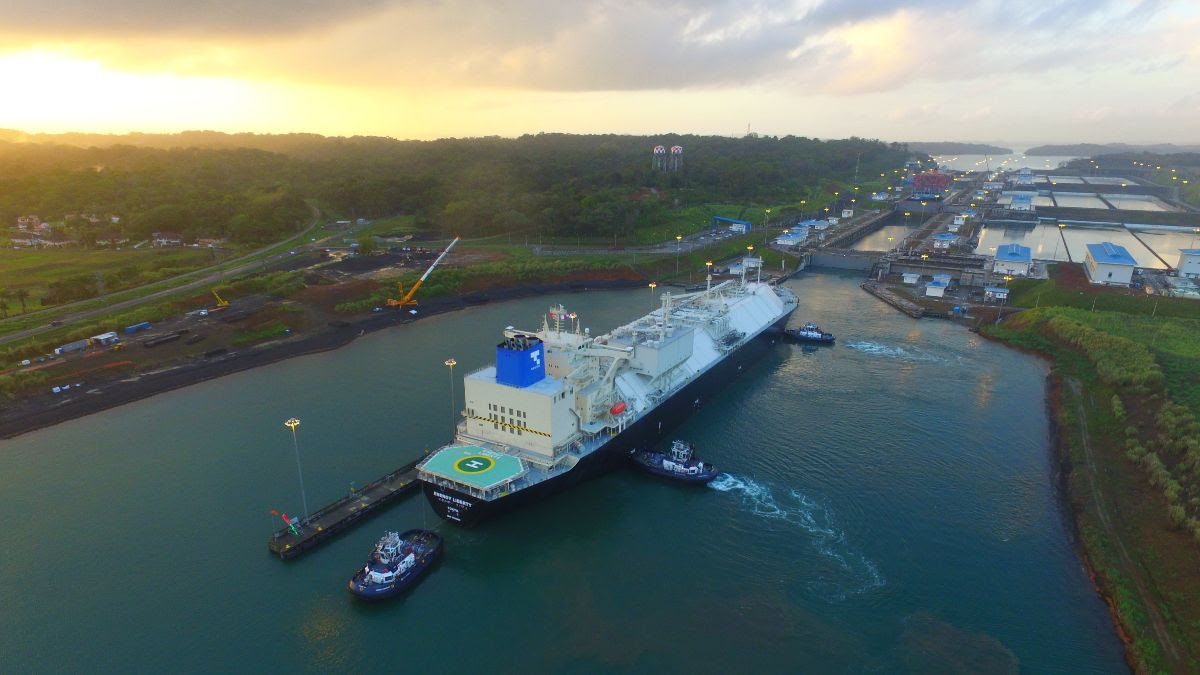
In a statement to gCaptain, the Panama Canal Authority detailed the latest information on upcoming LNG reservations from April 1 through April 13.
“Our reservation system reflects, on average, one LNG vessel booked daily. Around 65% of these vessels are southbound (towards the Pacific), and the remaining 35% are northbound. These dynamics reflect a surge in the LNG market aligned with recent activities in the Middle East.”
This new data comes on the heels of Ricaurte Vasquez, Administrator for the Panama Canal Authority, saying the Canal could become a key alternative for the transport of goods and energy if disruptions like the Strait of Hormuz continue, as discussed at the Connecticut Maritime Association (CMA) Shipping Conference and Expo 2026.
The Authority told gCaptain it is well positioned to accommodate any LNG surge in the short term. The ACP said the January reinstatement of exclusive advanced access booking for LNG from 30 and 15 days before the scheduled transit date will further support LNG carriers operating in these volatile market conditions.
“America may have the most molecules, but it still has to move them to markets,” said Kevin Book, managing director of ClearView Energy. “The disruption is in the Middle East, but the impacts are global. And global dynamics affect prices.”
Ship owners say the energy trade is resilient, and owner/operators will continue to find a way to make sure the trade moves.
“We are seeing trade lanes diversify, with more products moving from the US Gulf to Australia and Europe,” said Jake Scott, chief operating officer of Easterly Clear Ocean. “We are also seeing more product to California.”
Scott added the tanker day rates are a reflection of two capacity crunch events. The first is the lengthening of trade routes. The second is the added capacity required to transport Venezuelan oil, which is no longer sanctioned.
As a result, prices for Very Large Crude Carriers (VLCCs) have skyrocketed. VLCC Kalamos was fixed at a record-breaking $770,000 per day on March 6, 2026.
“The truth is there’s not a lot of capacity left,” said Smith. “When you tack on the length of time it takes to build a new tanker, which is three years, it puts stress on capacity. Then you look at the age of the fleet. 20 percent of the fleet is going to be over 20 years old. Oil majors tend to like ships 15 years and newer. So, this puts further stress on the fleet.”
Looking ahead, Smith said the capacity crunch for the tanker market could be further exacerbated if the ownership of Iranian oil changes hands.
“You’ve got a couple million barrels a day of Iranian crude that would now go on the non-sanctioned fleet, which is already constrained. The question is who is going to have access to them?” said Smith. “No one knows right now. So, I think you’re going to see day rates at high levels for an extended period because we continue to shrink the available tonnage that’s out there.”
Easterly Clear Ocean currently owns nine chemical tankers and two offshore construction vessels.
“Day rates have surged to extreme levels driven by disruptions and reduced effective vessel supply,” said Jelle Vreeman, an independent shipbroker. “While flows into Northwest Europe remain firm, the price boost is primarily due to ton-mile expansion and fleet dislocation rather than a pure demand increase. This will stay a while as long as the Strait remains closed.”
The Panama Canal opened to LNG carrier transits in 2016 with the construction of the Panama Canal’s expanded “neopanamax” locks.
Updated: March 20, 2026 (Originally published March 18, 2026)
Editorial Standards · Corrections · About gCaptain

 Join The Club