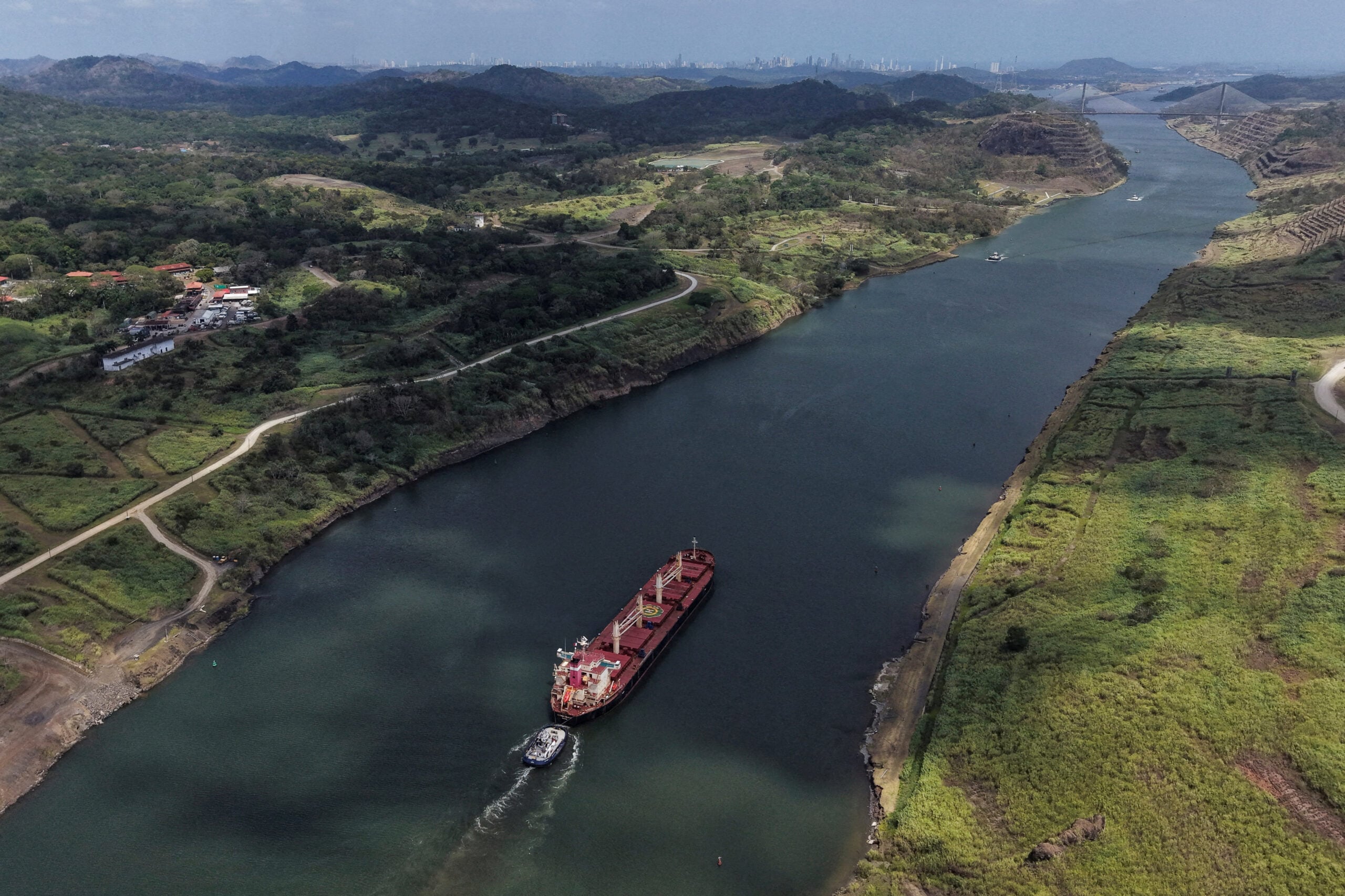
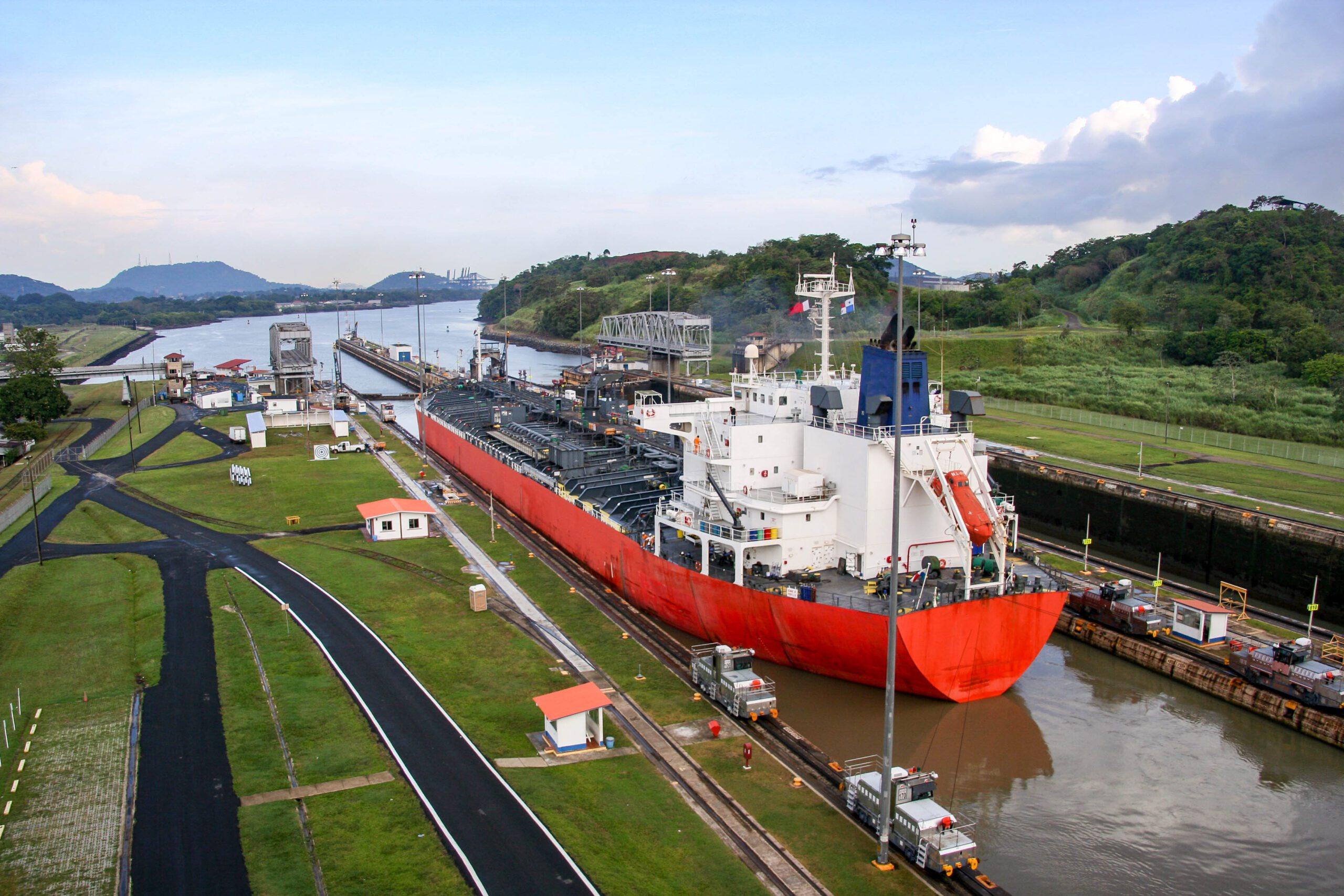
The Panama Canal marked its 112th anniversary over the weekend with vessel traffic on the rise, even as officials prepare for a strengthening El Niño that is again putting pressure on the waterway’s freshwater supply.
The canal, which opened on August 15, 1914, recorded 10,623 deep-draft vessel transits during the first ten months of fiscal year 2026, up 6.1% from 10,010 during the same period last year, according to the Panama Canal Authority (ACP).
The increase amounts to 613 additional transits between October 2025 and July 2026, reflecting stronger demand for the route following the severe drought-related restrictions that disrupted canal operations in 2023 and 2024.
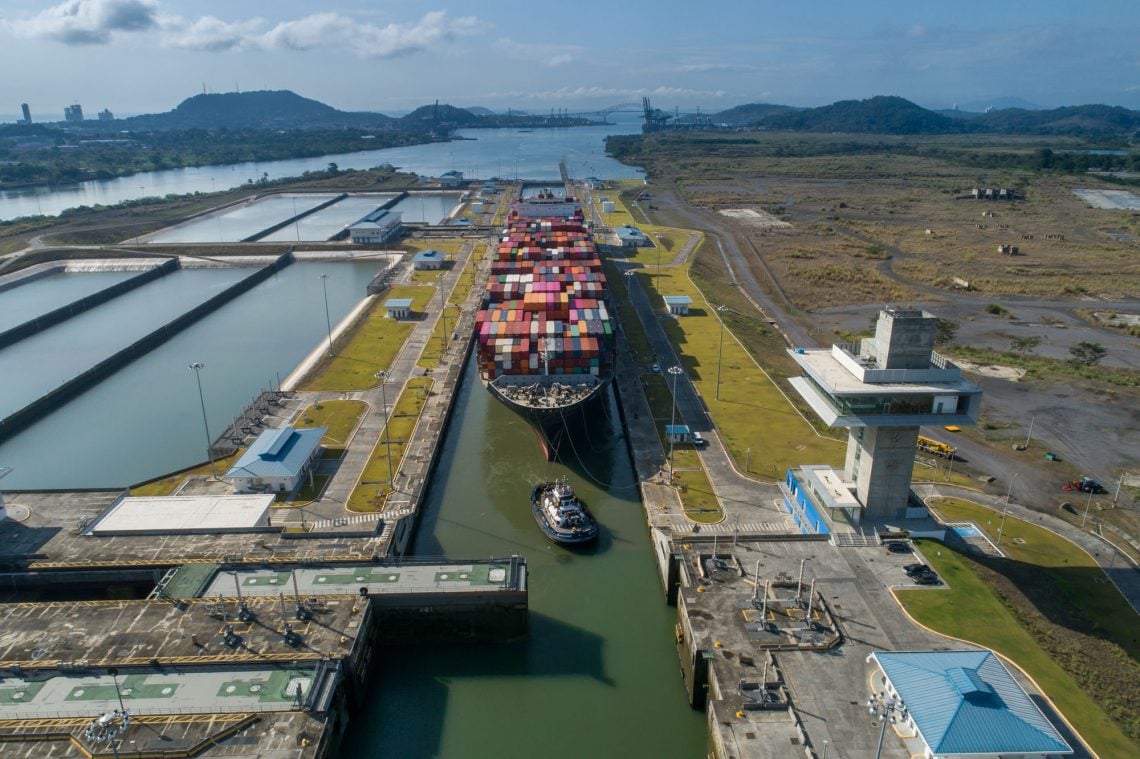
Of the vessels transiting during the period, 2,990 used the Neopanamax locks and 7,633 were Panamax vessels.
The anniversary comes just weeks after the canal marked another major milestone: ten years since the opening of its expanded locks in June 2016.
More than 31,000 vessels had transited the expanded locks as of May, with the Neopanamax operation now accounting for more than half of the canal’s total revenues.
From Canal to Logistics Platform
The ACP is also using the anniversary to highlight a broader transformation of the waterway under its 2025–2035 strategic vision.
The plan aims to move the Panama Canal beyond its traditional role as a ship transit route and develop it into a broader logistics, energy and maritime services platform.
Among the projects under development are container transshipment terminals at Corozal on the Pacific side and Telfers on the Atlantic side, designed to increase Panama’s container handling capacity and connectivity with global shipping networks.
The canal is also pursuing an Energy Corridor centered on an approximately 76-kilometer pipeline connecting terminals on the Atlantic and Pacific coasts. The proposed system would transport propane, butane and ethane across the isthmus, creating an alternative route for energy cargoes without requiring vessels to pass through the locks.
The projects are intended to increase the economic value generated by ships and cargo moving through Panama while creating new sources of revenue beyond canal tolls.
Today, the Panama Canal connects 180 trade routes and approximately 1,920 ports in 170 countries. The ACP estimates that cargo moving through the waterway represents about $444 billion in annual trade value and roughly 3% of global maritime trade.
El Niño Brings Water Concerns Back Into Focus
Despite stronger traffic, water availability is once again emerging as the canal’s most immediate operational challenge.
The ACP has begun tightening draft restrictions at the Neopanamax locks as Gatun Lake levels decline amid a strengthening El Niño.
The maximum authorized draft, which stood at 49.5 feet in early July, was reduced to 49 feet on July 24 and 48.5 feet on August 15. It will fall again to 48 feet on August 26 and 47.5 feet beginning September 3.
The restrictions remain considerably less severe than those imposed during the historic 2023-24 drought and, so far, have not required the canal to reduce its number of daily transit slots.
But officials are taking measures earlier this time around.
The canal began implementing water-saving measures at its locks in late 2025 and used relatively favorable conditions during this year’s dry season to build reserves in the Gatun and Alhajuela reservoirs.
The ACP has also expanded use of the Neopanamax locks’ water-saving basins, used simultaneous lockages for smaller vessels, deployed interior lock gates to reduce water consumption and limited hydroelectric generation at Gatun Dam to conserve freshwater.
The preparations reflect lessons learned from the 2023-24 drought, when historically low Gatun Lake levels forced the canal to sharply reduce daily transits and impose deeper draft restrictions. The resulting vessel backlog pushed up shipping costs and forced some carriers to seek alternative routes.
The longer-term challenge is driving another major infrastructure project: the proposed Rio Indio reservoir, which the ACP views as critical to securing sufficient water for both canal operations and Panama’s population.
The canal said it continues to closely monitor lake levels and climate forecasts and will make additional operational adjustments if necessary.
“Responsible water management remains a strategic priority for the Panama Canal,” the ACP said.
More than a century after the first ship crossed the isthmus—and a decade after the canal was expanded for a new generation of larger vessels—the challenge is increasingly not whether ships want to use the route, but whether Panama can secure enough water to keep them moving.

 Join The Club