The National Transportation Safety Board (NTSB) has issued a safety alert calling for increased awareness and improved training for land-based firefighters tasked with responding to fires aboard vessels in U.S. ports. The alert comes after several NTSB investigations found that insufficient preparation has resulted in firefighter deaths and injuries, as well as ineffective firefighting efforts during recent marine casualties.
“Land-based firefighters often lack the necessary training and familiarity with vessel layouts and fire protection systems to effectively fight in-port vessel fires. They also may be unaware of how to use the structural fire protection built into most commercial vessels,” the NTSB stated.
The NTSB recommends that fire departments serving ports develop comprehensive training plans, referencing National Fire Protection Association (NFPA) guidance, and work in advance with local ports to conduct vessel familiarization tours and coordinated drills. Coordination with the U.S. Coast Guard and learning from past vessel fires are also advised.
The safety alert references three major vessel fires where land-based firefighter injuries were linked to insufficient marine firefighting training. In the 2023 fatal fire aboard the Grande Costa D’Avorio in Newark, New Jersey, two firefighters died after becoming lost in a smoke-filled garage deck. The NTSB investigation found that the Newark Fire Division’s lack of marine vessel firefighting training resulted in an “ineffective response, led to the firefighter casualties, and contributed to the severity of the fire.” The fire was exacerbated when carbon dioxide from the vessel’s fire protection system was released while firefighters engaged the blaze, allowing more oxygen in and intensifying the fire.
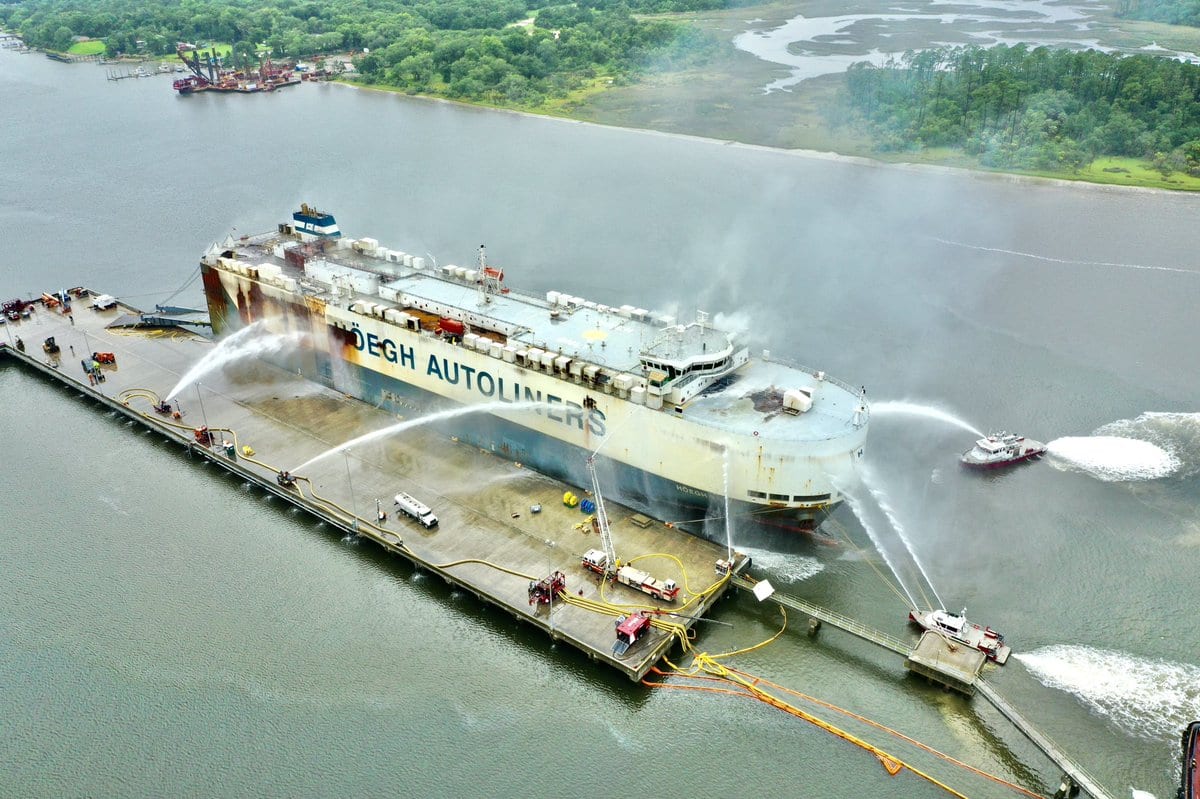
In another incident, the 2020 fire aboard the Norwegian-flagged Höegh Xiamen in Jacksonville, Florida, shoreside firefighters were injured in an explosion after entering cargo decks with fire hoses. The NTSB’s investigation found delayed fire detection, lack of immediate emergency contact information, and improper battery securement in used vehicles as contributing factors. The agency determined that “ineffective oversight of longshoremen” and delayed deployment of fire suppression systems increased the severity of the fire, which ultimately destroyed the vessel and its cargo, valued at $40 million.
The NTSB also cited the 2022 engine room fire aboard the passenger vessel Spirit of Norfolk, where timely evacuation prevented injuries, but lack of required fire detection and extinguishing systems allowed the fire to grow unchecked. Communications challenges between unified command and firefighting teams further hampered the response. The NTSB recommended that the Coast Guard require retrofitting of fire detection and fixed gas extinguishing systems on certain small passenger vessels and urged improvements in contingency planning for maritime firefighting.
These findings highlight the need for specialized training, procedural reforms, and regulatory updates to address the unique challenges of vessel fires in U.S. ports.
The full NTSB safety alert is available online.

 Join The Club