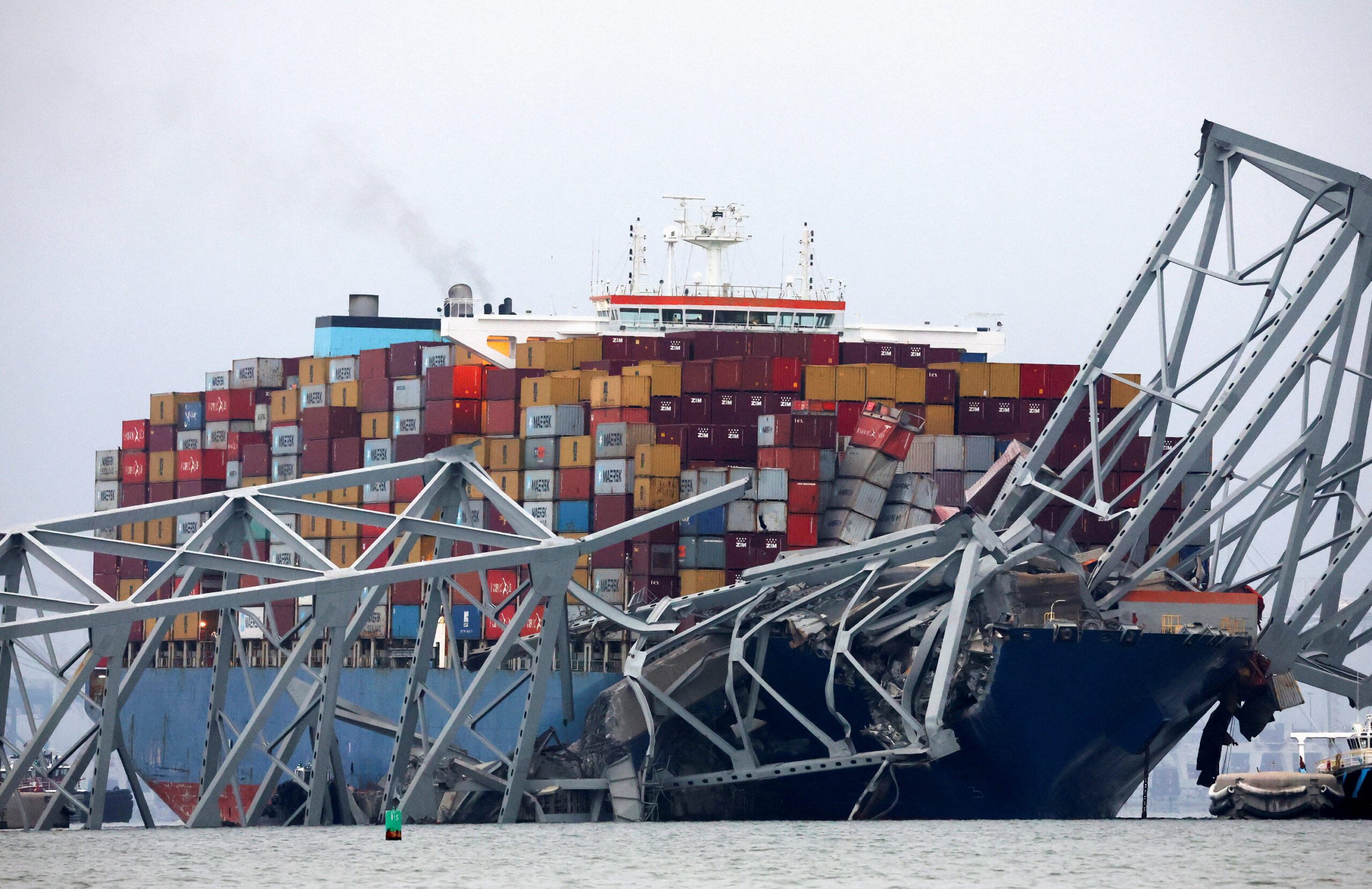
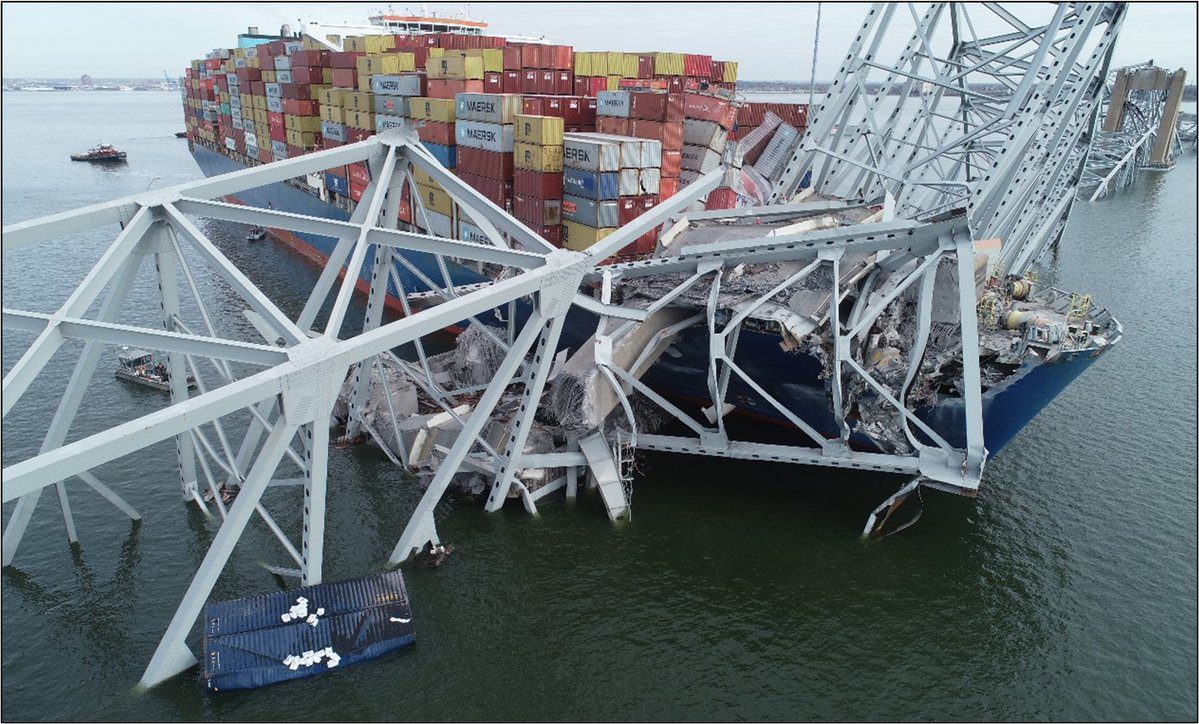
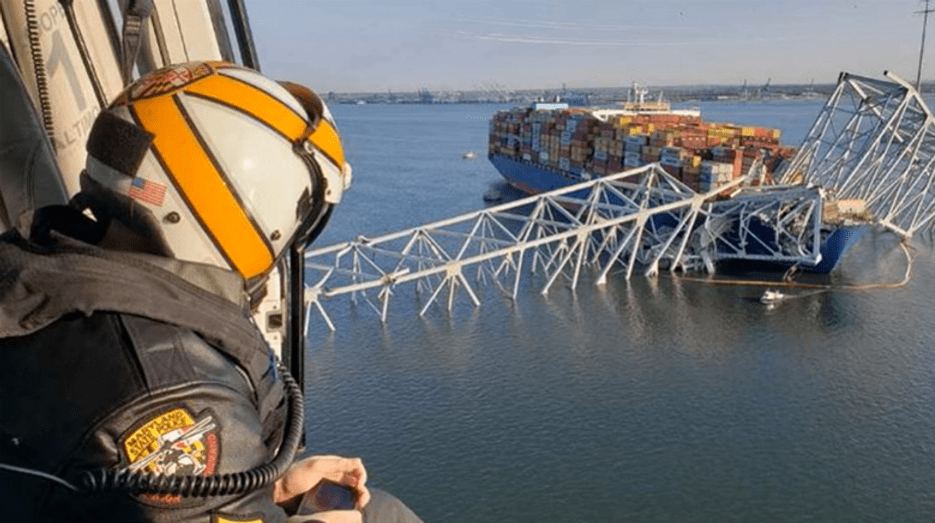
Federal prosecutors have brought criminal charges against the foreign ship management companies and a technical superintendent tied to the catastrophic collapse of Baltimore’s Francis Scott Key Bridge, marking a major escalation in the legal fallout from one of the most devastating U.S. maritime infrastructure disasters in decades.
The Justice Department announced Tuesday that Singapore-based Synergy Marine Pte Ltd, Chennai-based Synergy Maritime Pte Ltd, and technical superintendent Radhakrishnan Karthik Nair have been indicted on charges including conspiracy to defraud the United States, obstruction, false statements, and failing to immediately notify the U.S. Coast Guard of a known hazardous condition aboard the containership Dali.
Prosecutors allege the defendants knowingly operated the Singapore-flagged vessel with unsafe modifications that contributed to the blackout sequence that caused the Dali to strike the Francis Scott Key Bridge on March 26, 2024, killing six construction workers and collapsing a critical transportation artery across Baltimore Harbor.
According to the indictment, the economic damage from the casualty is estimated at more than $5 billion.
The government alleges the Dali suffered two power losses within four minutes while departing the Port of Baltimore. Investigators say a loose wire in a high-voltage switchboard likely triggered the first blackout, but the vessel’s backup systems had allegedly been altered in ways that undermined critical redundancies.
Shipbuilder Blames Operator Modifications for ‘Dali’ Blackout That Brought Down Key Bridge
Federal prosecutors claim the operators relied on a flushing pump to supply fuel to two of the ship’s generators even though the pump was not designed to automatically restart after a blackout. As a result, the generators allegedly lost fuel supply following the initial outage, causing a second blackout that left the ship without propulsion or steering in the moments before impact with the bridge.
The indictment also accuses Synergy and Nair of misleading National Transportation Safety Board investigators during the casualty probe, including alleged false statements about the use of the flushing pump.
In addition to the criminal conspiracy charges, the two corporate defendants face misdemeanor environmental charges under the Clean Water Act, Oil Pollution Act, and Refuse Act tied to pollution released into the Patapsco River, including oil, cargo containers, and bridge debris.
The criminal case builds on findings from the NTSB’s investigation released late last year, which concluded that a single improperly secured signal wire caused the initial electrical failure aboard the nearly 1,000-foot containership.
The NTSB found that a wire-label band interfered with proper insertion of a signal wire into a terminal block, creating an inadequate electrical connection that eventually disconnected and triggered the blackout.
Investigators also identified broader operational and design issues, including the use of the flushing pump as a fuel service pump and the vessel’s engine shutdown configuration tied to low cooling-water pressure.
In response to to the findings, HD Hyundai Heavy Industries (HHI), the shipbuilder behind the M/V Dali, alleged the vessel’s owner and operator bypassed critical built-in redundancies after delivery by replacing automatic fuel supply pumps with a non-redundant flushing pump not designed to automatically restart after a blackout. According to HHI, those modifications violated classification rules and directly contributed to the second blackout that left the ship without propulsion or steering moments before the fatal collision with Baltimore’s Francis Scott Key Bridge.
The disaster triggered sweeping safety recommendations across the maritime and bridge infrastructure sectors, including calls for enhanced redundancy standards for large vessels, expanded use of thermal imaging for electrical maintenance, and nationwide reviews of bridge vulnerability to vessel strikes.
The collapse shut down access to the Port of Baltimore for weeks, disrupted regional supply chains, and forced more than 34,000 vehicles per day onto detour routes. Bridge replacement costs are estimated between $4.3 billion and $5.2 billion, with completion expected around 2030.
The FBI, Coast Guard Investigative Service, and EPA Criminal Investigation Division are investigating the case. Prosecutors emphasized that the indictment is an accusation and that all defendants are presumed innocent unless proven guilty in court.

 Join The Club