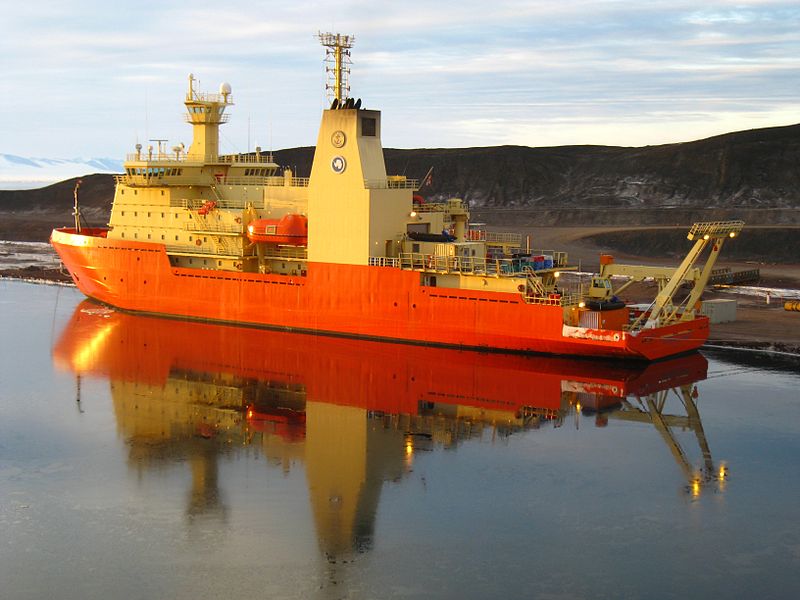
The National Science Foundation (NSF) intends to terminate the lease of the research icebreaker Nathaniel B. Palmer in fiscal year 2026, according to the NSF’s budget request to Congress.
The decision comes as part of the agency’s efforts to prioritize support for the three year-round Antarctic stations—McMurdo, Amundsen-Scott South Pole, and Palmer—which the NSF operates on behalf of the U.S. government through the U.S. Antarctic Program (USAP).
In response, more than 170 researchers have sent a letter to NSF leadership and Congress urging them to reconsider.
“The United States Antarctic Program has had at least one dedicated research vessel operating in the Southern Ocean since 1968,” the letter states. “There’s no replacement for a dedicated research vessel that can access remote sea ice-covered regions of Antarctica and that allows sampling of the full depth of the ocean and coastal regions on land.”
Scientists also highlighted geopolitical concerns, noting that other nations including China, Korea, Japan, Britain, and Australia are increasing their marine capabilities in Antarctic waters while the U.S. appears to be scaling back.
The Palmer, completed in 1992, is a 308-foot ice-class vessel capable of breaking three feet of level ice at three knots. It accommodates 39 scientists and staff and is operated under a long-term charter from Offshore Service Vessels LLC of Louisiana.
The vessel was named after Nathaniel B. Palmer (1799-1877), a sea captain whom some historians credit with the discovery of Antarctica.
The scientific community is calling not only for the vessel’s lease to be maintained but also for “continued forward-looking development of the next generation of Antarctic research vessels that will continue US leadership, scientifically and geopolitically, in the high southern latitudes.”

 Join The Club