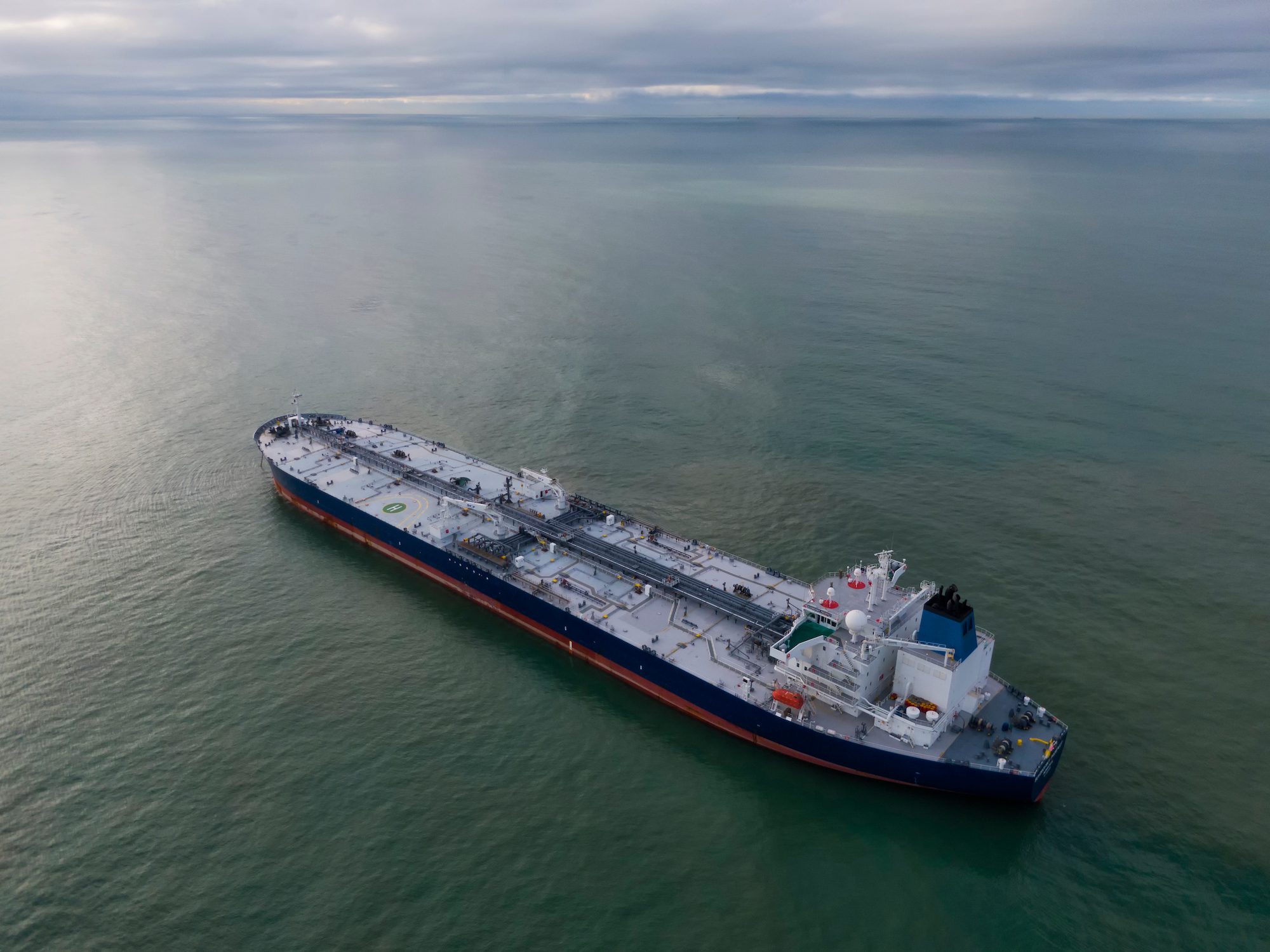
Qatari shipping company Nakilat, the world’s largest owner of LNG carriers, along with Qatari LNG producers Qatargas, RasGas and engine manufacturer MAN Diesel and Turbo, have announced plans to re-power a 266,000 m3 Q-Max vessel using a dual fuel LNG system.
The control of greenhouse gas and exhaust gas emissions is a high priority in today’s shipping industry. In-step with current and future emissions regulations, MAN Diesel and Turbo has made technical advancements to the low speed diesel engine to have flexibility in utilizing either heavy fuel oil, or liquefied natural gas (LNG) – a much cleaner-burning fuel source, within its proprietary ME-GI (M-Type Electronically Controlled – Gas Injection) engine. Once converted, this Q-Max vessel will feature the world’s first low-speed marine diesel engine to be converted to use LNG as a fuel.
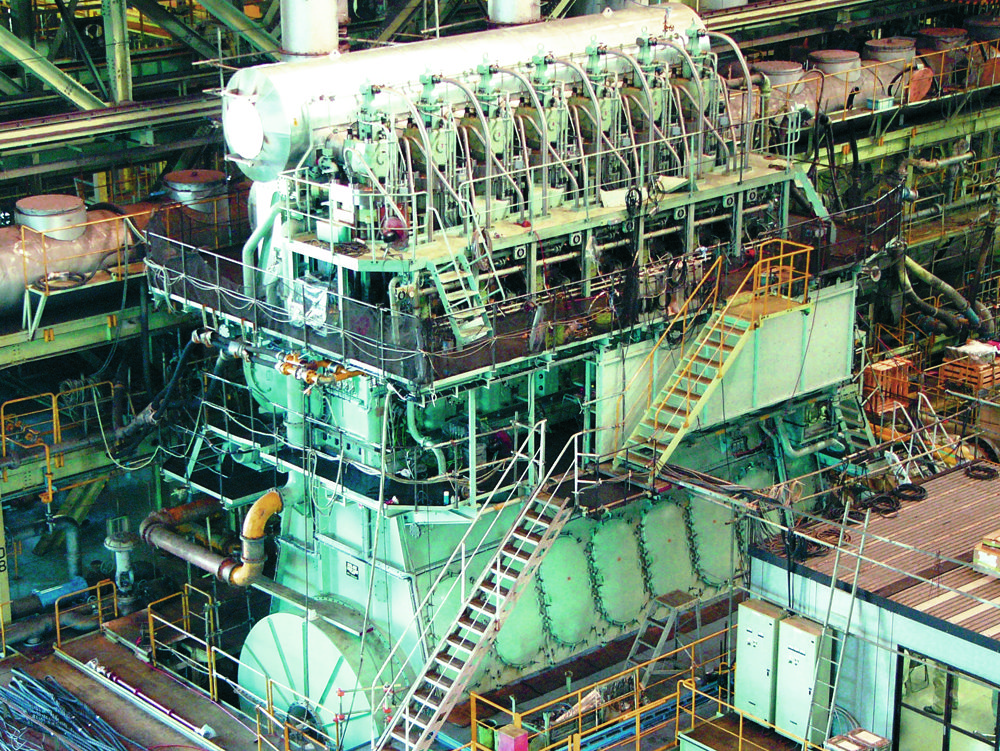
The specific engines to be converted will be a pair of MAN’s S70ME-C engines, such as the one pictured below:
MAN B&W Diesel 7S70ME-C, Image: MAN
Evaluation of the proposed ME-GI design for the Q-Flex and Q-Max vessels has concluded in a high confidence level with regards to safety and reliability of the propulsion system.
Shipyard operator Nakilat-Keppel Offshore & Marine (N-KOM) will complete the ship’s conversion utilizing MAN Diesel and Turbo’s ME-GI systems at its Erhama Bin Jaber Al Jalahma Shipyard facilities in Qatar’s Port of Ras Laffan.
So far the use of LNG as a bunker fuel source in the LNG shipping industry has been applied to conventional steam driven LNG carriers and more recently to Dual or Tri-Fuel Diesel Electric LNG ships with low pressure injected, medium speed four-stroke diesels.
The use of ME-GI as an alternative will allow a cleaner fuel technology with a significant reduction in environmental emissions, cleaner burning engines with potential to increase mean time between maintenance, provide flexibility of fuel supply to react to market changes and reduced bunkering activities which in turn will offer operations and marine risk reduction.
Qatar appears to have loaded its first liquefied natural gas cargo after the widening conflict in the Middle East forced it to halt fuel production and declare an unprecedented force majeure to buyers.
President Donald Trump said Tuesday he has directed the U.S. government to provide political risk insurance and financial guarantees for maritime trade transiting the Persian Gulf, while signaling that U.S....
A shipowner’s once-in-a-generation wager on oil tankers has made it so powerful that it controls an overwhelming majority of supertankers that can collect American oil next month.
February 26, 2026
Total Views: 1785
Get The Industry’s Go-To News
Subscribe to gCaptain Daily and stay informed with the latest global maritime and offshore news
— just like 106,151 professionals
Secure Your Spot
on the gCaptain Crew
Stay informed with the latest maritime and offshore news, delivered daily straight to your inbox
— trusted by our 106,151 members
Your Gateway to the Maritime World!
Essential news coupled with the finest maritime content sourced from across the globe.

 Join The Club