Honolulu-based carrier Matson, Inc. says it absorbed $6.4 million in port entry fees in the first three weeks of U.S. and China imposing reciprocal charges on each other’s vessels before reaching a suspension agreement.
The port entry fees began on October 14 when both the United States and China simultaneously implemented measures targeting each other’s shipping. China’s actions were described as “retaliatory countermeasures targeting U.S.-linked ships” designed to mirror U.S. port charges.
The standoff ended quickly when Presidents Trump and Xi Jinping reached a trade and economic deal announced on October 30, with the suspension becoming effective November 10.
Matson offers two expedited services from China to the U.S., including the China – Long Beach Express (CLX) and Matson Asia Express (MAX).
As of November 4, Matson had already accumulated the $6.4 million in fees over the roughly three-week period, the company said.
In its third quarter 2025 earnings report released November 4, Matson reported net income of $134.7 million, or $4.24 per diluted share, down from $199.1 million in the same period last year. Consolidated revenue fell to $880.1 million from $962.0 million year-over-year.
Chairman and CEO Matt Cox acknowledged the difficult operating environment, stating that “Matson’s Ocean Transportation and Logistics business segments performed well in a difficult environment marked by continued uncertainty and volatility arising from tariffs and global trade.”
The company’s China service bore the brunt of the turbulence, with container volume decreasing 12.8 percent year-over-year in the third quarter. Cox noted that “the Transpacific tradelane experienced a muted peak season compared to the elevated demand levels last year due to businesses advancing cargo in the late second quarter and early third quarter ahead of U.S. tariff deadlines.”
Looking ahead to the fourth quarter, Cox said the company expects “a more stable trading environment for our customers in the fourth quarter as a result of a reduction in uncertainty regarding tariffs, port entry fees, global trade, and other geopolitical factors due to the trade and economic deal between the U.S. and China announced on October 30th.”
However, Matson anticipates fourth quarter 2025 consolidated operating income to be approximately 30 percent lower than the $147.5 million achieved in the fourth quarter 2024. The company expects its China service customers “to be cautious on inventory levels and work through previously purchased inventory” in the near term.
The one-year suspension of port fees agreed to by both countries represents a pause rather than a permanent resolution, leaving uncertainty about what happens when the suspension expires in November 2026.
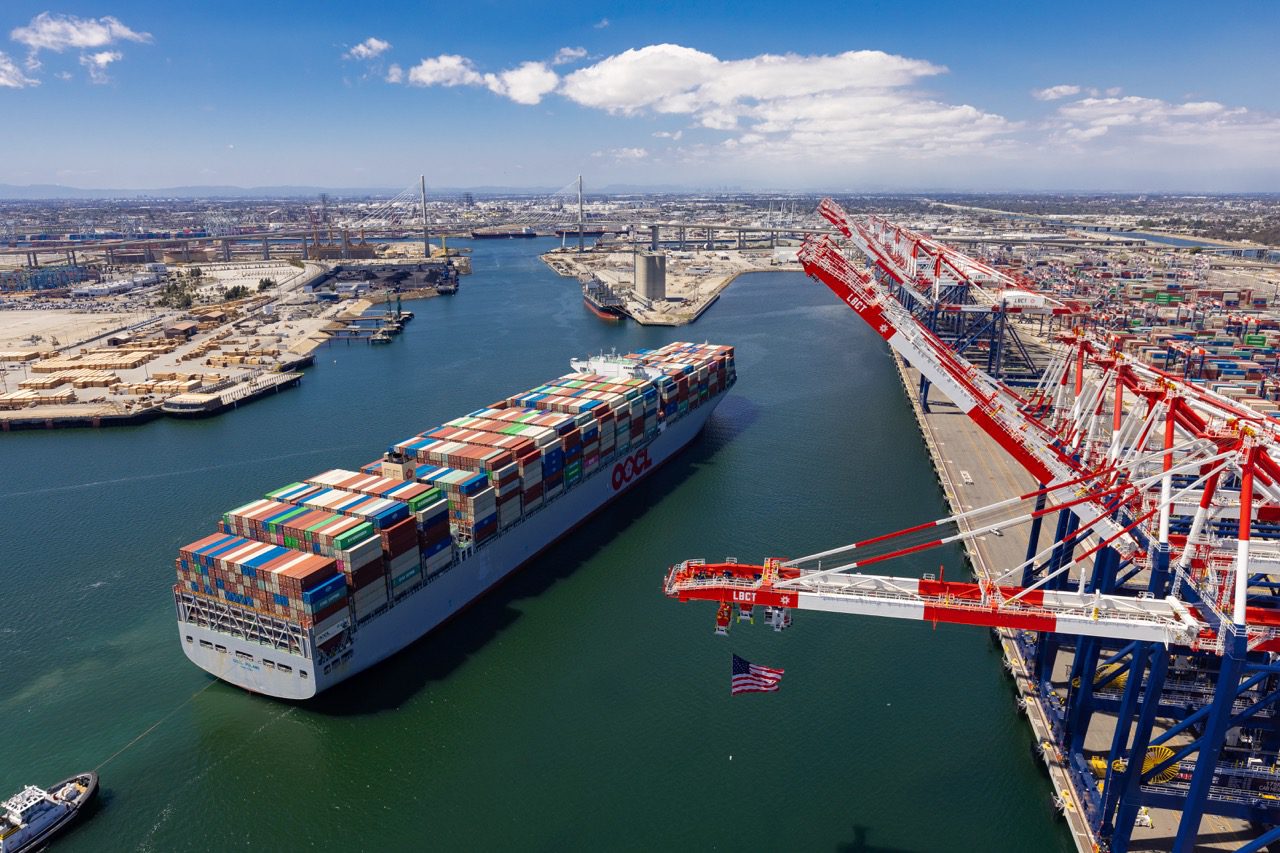
The impact on Chinese carriers was anticipated to be far more severe. According to HSBC forecasts, COSCO could face approximately $1.5 billion in annual port fees, representing 74 percent of its projected 2026 operating profit, while Orient Overseas Container Line faces an estimated $654 million in fees, equivalent to 65 percent of its forecasted earnings.

 Join The Club