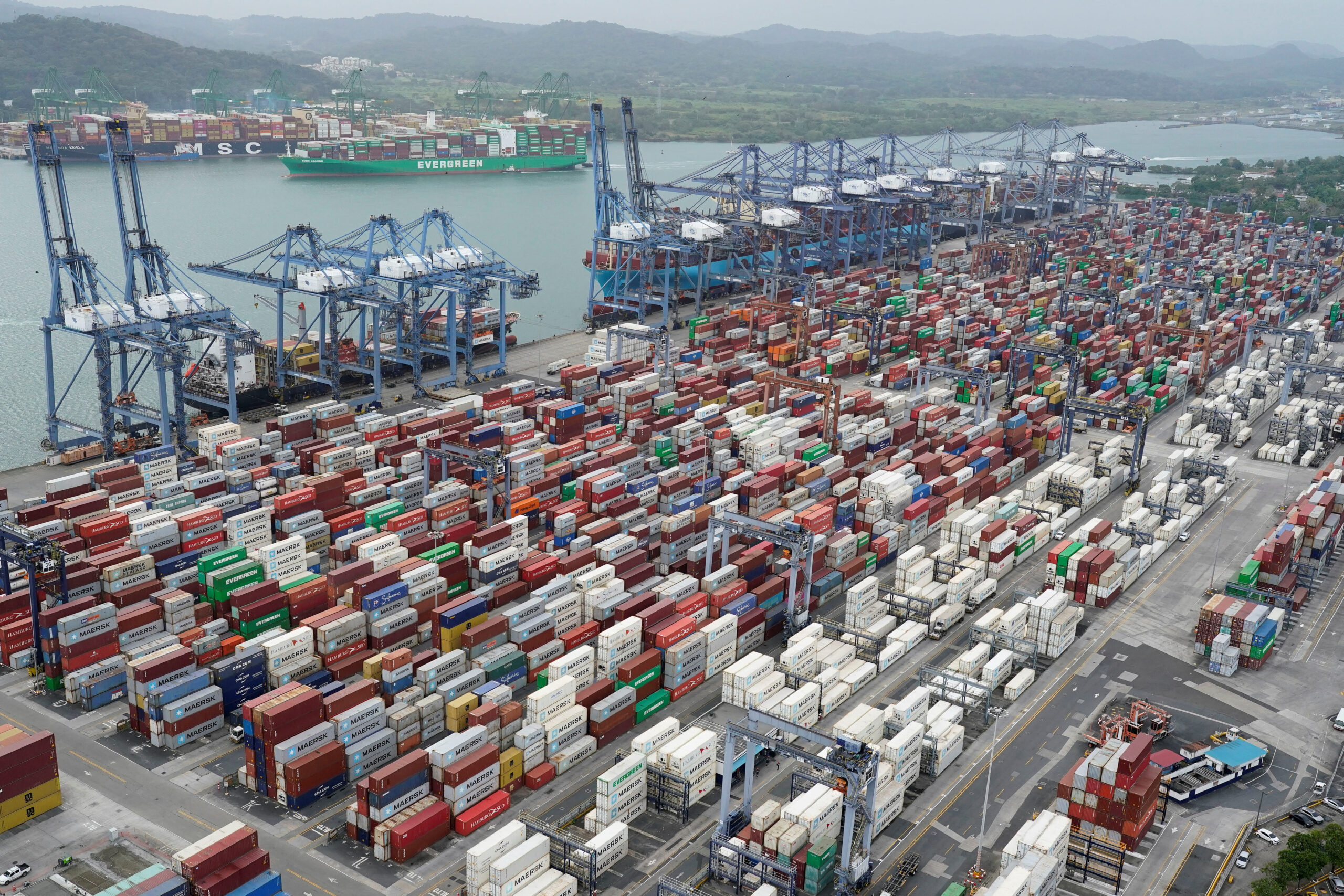
APM Terminals has begun temporary operations at Panama’s Port of Balboa on the Pacific side, launching an 18-month stabilization phase designed to restore container movements while maintaining the continuity of one of the world’s most critical logistics hubs.
APM Terminals operates as an independent business unit within shipping conglomerate A.P. Moller – Maersk Group. The Danish shipping giant’s involvement follows Panama’s official cancellation of port concessions held by Panama Ports Company, a subsidiary of Hong Kong-based CK Hutchison, which had operated the Balboa and Cristobal terminals for more than two decades. The Supreme Court ruling was published in Panama’s official gazette on Monday, finalizing the legal annulment and clearing the path for APM Terminals to assume control.
“During this initial stabilization phase, our responsibility is to ensure that Panama maintains the continuity and reliability of its logistics hub, while safeguarding cargo and protecting the safety of all the workforce,” said Marliz Bermudez, CEO of APM Terminals Panama. “This process requires speed and precision so that the port can progressively resume operations once the system installation is completed.”
The transition comes at a sensitive moment in U.S.-China competition over global trade routes. The ruling, issued in late January, has been characterized as a win for Washington, particularly as President Donald Trump has sought to curb Chinese influence over the Panama Canal, which handles approximately 5% of global maritime trade.
APM Terminals faces significant operational challenges during the stabilization phase. Among the most critical tasks is the deployment of the Navis N4 terminal operating system, widely used across global terminals, and training the existing workforce on the new platform. The company will also conduct comprehensive asset diagnostics, including inventory and assessment of cranes, equipment, and systems to identify existing issues and define short-term operational plans.
“We recognize the challenge the company has taken in this unprecedented process, yet we remain fully committed to Panama,” Bermudez added. “We will work closely with our customers, authorities, and employees to ensure they receive clear and timely information on the progress of this stabilization phase.”
The Panama Maritime Authority has taken possession of both ports by decree to ensure uninterrupted operations, according to Alberto Aleman Zubieta, head of the technical team overseeing the transition. The government is presenting separate contracts for the Port of Balboa and the Port of Cristobal to the AMP Board of Directors, rather than a single contract for both facilities.
While APM Terminals assumes control at Balboa, TIL Panama, part of Swiss shipping giant Mediterranean Shipping Company, will run operations at Cristobal. Panamanian President Jose Raul Mulino has indicated that these arrangements will remain in place while the state develops a new long-term concession framework to be awarded in the future.
The workforce will be incorporated through an employer-substitution process, with APM Terminals emphasizing that their expertise will be essential to ensuring safe and orderly continuity of operations. Direct communication channels will be established for shipping lines, customers, suppliers, and transport operators to track cargo status and receive operational updates throughout the transition.
The developments mark a dramatic shift in control of strategic infrastructure adjacent to the Panama Canal, with implications that extend far beyond the terminals themselves into the broader geopolitical landscape of hemispheric trade and influence.
Editorial Standards · Corrections · About gCaptain

 Join The Club