Updated: February 16, 2026 (Originally published February 9, 2026)
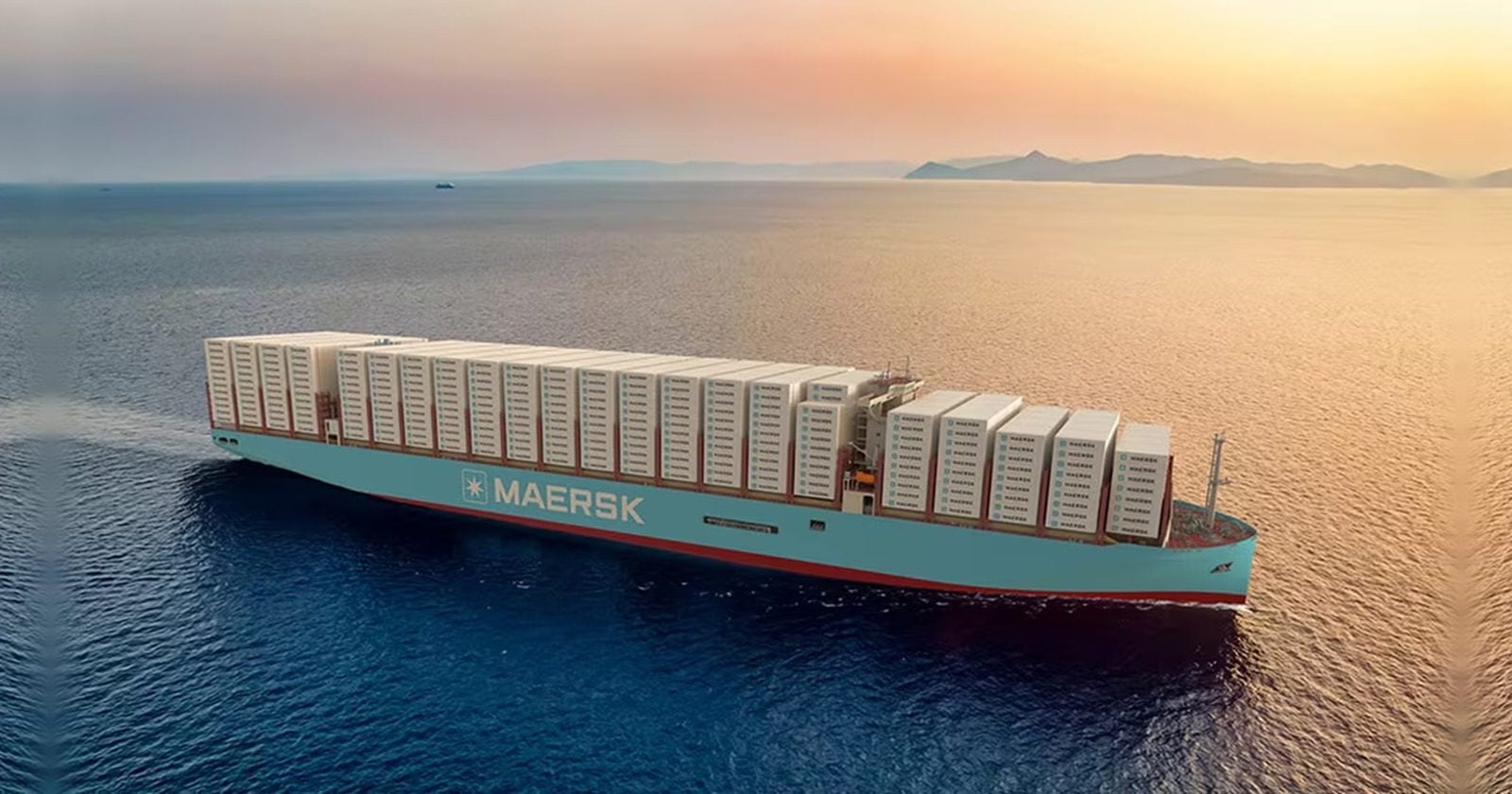
A.P. Moller – Maersk A/S has placed an order for eight large containerships at New Times Shipbuilding Co. Ltd., doubling down on fleet flexibility as volatile freight markets and excess capacity continue to pressure the container sector.
The agreement covers eight 18,600-TEU ships scheduled for delivery in 2029 and 2030. At 366 meters long and 58.6 meters wide, the vessels are smaller than today’s ultra-large container ships, which now stretch close to 400 meters.
“Deployment flexibility has been a key factor in our decision-making,” said Anda Cristescu, Maersk’s Head of Chartering & Newbuilding. “Although these vessels are large, they offer greater flexibility than the largest ships currently being built, giving us more deployment options across both our current and future network.”
The ships will be fitted with dual-fuel engines capable of running on conventional bunker fuel or liquefied gas, allowing Maersk to hedge against uncertainty as the industry works toward lower-emission fuels and longer-term decarbonization targets.
The order comes at a challenging moment for Maersk’s Ocean division. The carrier reported a negative $153 million EBIT in Q4 2025—its first quarterly loss in years—despite an 8% increase in volumes, as freight rates remained under pressure from persistent global overcapacity.
Maersk expects global container demand growth of just 2–4% in 2026 and has issued wide EBIT guidance ranging from a $1.5 billion loss to a $1.0 billion profit, reflecting uncertainty around fleet growth and the timing of any sustained reopening of Red Sea trade routes.
With the latest deal, Maersk now has 33 vessels on order. Four are scheduled for delivery later in 2026, and the company has already begun taking delivery of new tonnage, including Tangier Mærsk, the first of six 9,000-TEU methanol-capable vessels.
By opting for ships smaller than the industry’s biggest megamax designs, Maersk is signaling a preference for operational agility over sheer scale—an approach shaped by shifting trade patterns, geopolitical disruption, and ongoing uncertainty around global routing through the Red Sea and Suez Canal.
Editorial Standards · Corrections · About gCaptain

 Join The Club