Don’t Miss Your Daily Briefing for the Maritime Industry
Join the leading maritime news network
— trusted by our 107,412 members
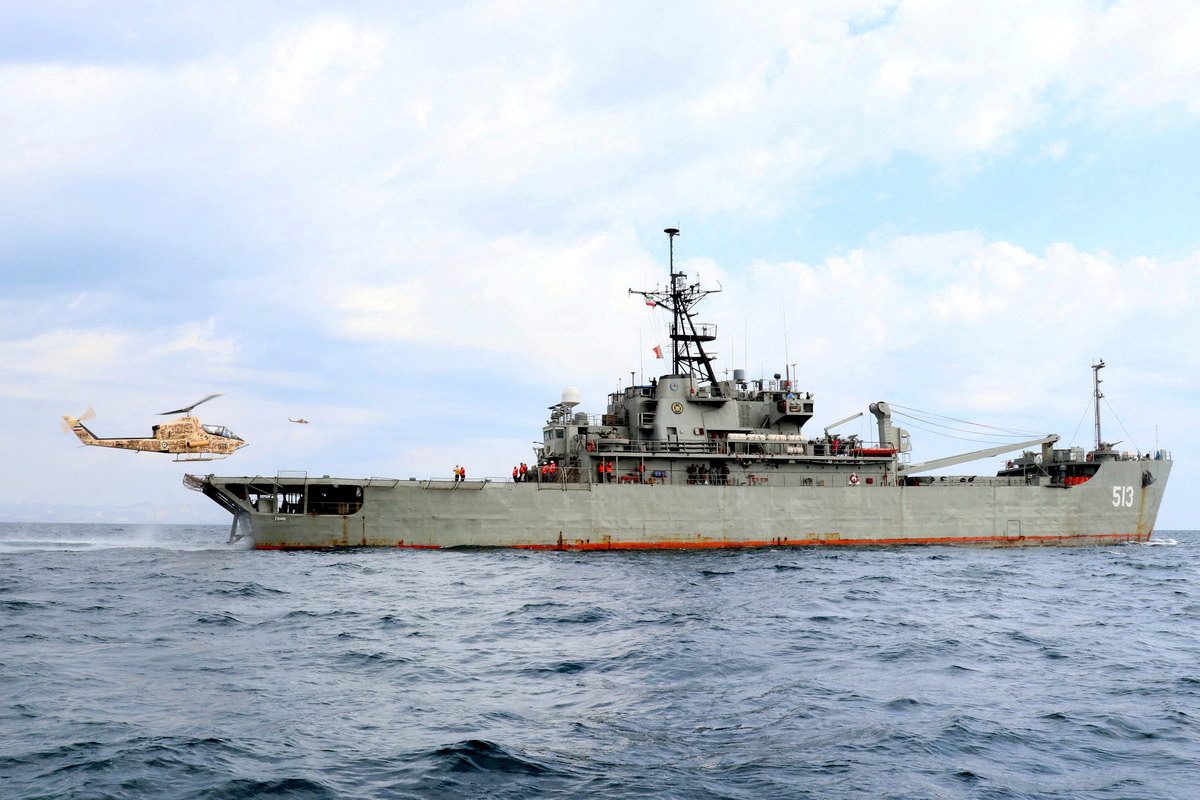
An Iranian military ship takes part in an annual drill in the coastal area of the Gulf of Oman and near the Strait of Hormuz, Iran, in this picture obtained on December 31, 2022. Iranian Army/WANA (West Asia News Agency) via REUTERS
Iran Says It’s Closing Parts of Hormuz Strait as US Talks Resume
Feb 17, 2026 (Bloomberg) –Parts of the Strait of Hormuz, one of the world’s most important oil-shipping lanes, will be closed for “several hours” on Tuesday as part of Iran’s military drills, state TV in the Islamic Republic reported.
The drills, announced previously, come as Iran and the US start a second round of negotiations in Geneva. Oil reversed losses on the news, with Brent trading 0.1% higher to $68.74 a barrel as of 11:22 a.m. in London.
“The main transit routes of the Strait of Hormuz are under the control of the IRGC Navy, and Iran has no red lines when it comes to safeguarding security in this region,” state TV said, refering to the Islamic Revolutionary Guard Corps.
Shortly beforehand, Iran’s Supreme Leader Ayatollah Ali Khamenei stepped up his warnings that the US will suffer if it strikes the Middle Eastern country, as President Donald Trump has repeatedly threatened if the sides can’t reach a deal.
Read More: GLOBAL PREVIEW: US-Iran Talks in Geneva – What’s at Stake?
“They keep saying: ‘We sent a warship towards Iran,”’ Khamenei said. “Well, a warship is certainly a dangerous weapon, but more dangerous than a warship is the weapon that can sink this warship to the bottom of the sea.”
Iran and the US are meeting for a second round of nuclear talks in Switzerland as they seek to avert another conflict following June’s attacks on the Islamic Republic by Washington and Israel.
The talks in Geneva, mediated by Oman, started at around 10:30 a.m. local time, Iran’s state broadcaster said. The last round of talks, held in Oman on Feb. 6, lasted for about seven hours, with both sides describing them as “good.”
Iranian officials have expressed willingness to discuss their nuclear-enrichment activities, but have tied any concessions to the potential easing of American sanctions.
Meanwhile, both sides have increased their military presence in the region. The US is deploying a second aircraft carrier to the region amid warnings of a possible strike on Iran if talks — which could drag on for weeks — fail to produce a compromise. The IRGC began drills around the Strait of Hormuz on Monday that were focused on delivering a “decisive” response to security threats.
Oil markets are closely watching the talks for signs of disruption to supply from the Persian Gulf or potential sanctions relief for the Islamic Republic, whose crude is off limits for most buyers. Brent is up almost 13% this year, largely because of the US-Iran tensions and the prospect of a war in the oil-rich region.
The Revolutionary Guard is monitoring the strait continuously and plans to unveil additional equipment soon to boost its military capacities there, Navy commander Alireza Tangsiri said, according to the semi-official Mehr news agency.
Iranian Foreign Minister Abbas Araghchi met the head of the United Nations’ atomic watchdog — the IAEA — in Geneva on Monday to discuss “proposals” he’ll present at his talks with US officials, it added.
Araghchi also met with his Omani counterpart Badr Albusaidi to present Iran’s latest position for him to convey to the US side, it said.
The US team is led by Middle East envoy Steve Witkoff and President Donald Trump’s son-in-law Jared Kushner. Trump said on Monday that Iran wants to make a deal and that he’ll be indirectly involved in the discussions.
Israel is pushing for the negotiations to include limits on the range of Tehran’s ballistic missiles, but Iran has so far dismissed that as a red line.
During a visit to Tel Aviv on Monday, US Republican Senator Lindsey Graham said Washington was “weeks, not months” away from a decision between diplomacy and military action against Iran.
“We are negotiating with our finger on the trigger,” Jalal Dehqani Firouzabadi, the head of Iran’s Strategic Council on Foreign Relations, told the semi-official Iranian Students’ News Agency. “Iran is making every effort to prevent war, and diplomacy is part of that effort, but has no hesitation in defending itself.”
The U.S. Coast Guard is quashing the latest rumor on tankers looking to reposition to the Atlantic and Pacific trades instead of staying in the Middle East.
Early on Thursday, in some tanker circles, the was chatter of tanker owners looking to register with the Coast Guard to be eligible to trade in the U.S.
The maritime security environment across the Persian Gulf, Strait of Hormuz, and Gulf of Oman remains at a “CRITICAL” threat level, according to the latest advisory issued Thursday by the Joint...
As the Trump administration considers temporarily waiving the Merchant Marine Act of 1920, commonly know as the Jones Act, to address surging fuel prices during the Middle East conflict, U.S. shipping interests...
3 hours ago
Total Views: 478
Get The Industry’s Go-To News
Subscribe to gCaptain Daily and stay informed with the latest global maritime and offshore news
— just like 107,412 professionals
Secure Your Spot
on the gCaptain Crew
Stay informed with the latest maritime and offshore news, delivered daily straight to your inbox
— trusted by our 107,412 members
Your Gateway to the Maritime World!
Essential news coupled with the finest maritime content sourced from across the globe.

 Join The Club