India’s Coast Guard has broken up an international oil-smuggling network in a coordinated sea-air operation roughly 100 nautical miles west of Mumbai, marking a high-profile enforcement move just days after New Delhi agreed to halt Russian oil purchases under a new U.S. trade deal.
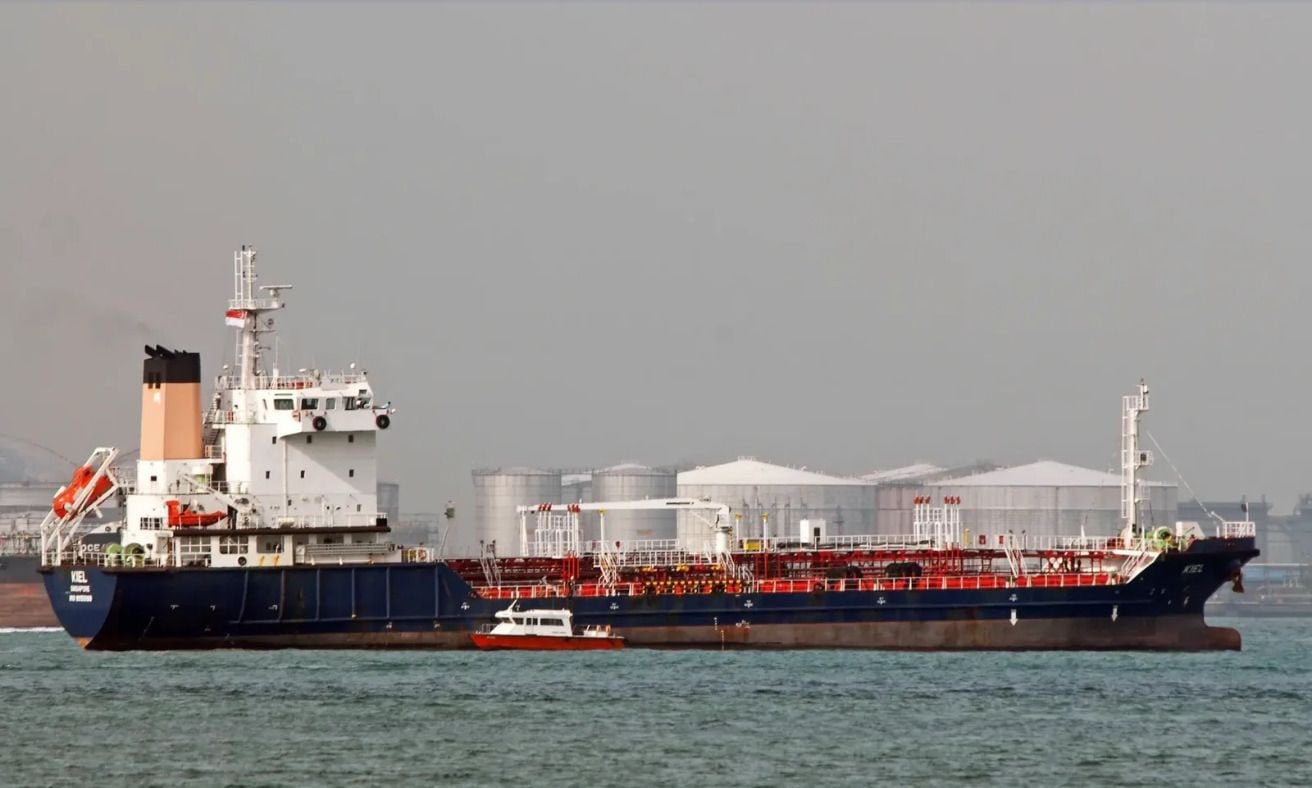
The February 6 operation targeted vessels suspected of conducting mid-sea transfers in international waters, a common tactic used to move discounted oil while evading duties and obscuring cargo origins. According to the Indian Coast Guard, three suspect vessels were intercepted following what it described as technology-enabled surveillance and data-pattern analysis.
“Acting on tech-enabled surveillance and data-pattern analysis, #ICG intercepted three suspect vessels,” the Coast Guard said in a statement, adding that sustained searches, electronic data checks, and crew questioning revealed a wider international handler network.
The vessels—described as frequently changing names and identities—are now being escorted to Mumbai for further legal action. The Coast Guard said the operation reinforced India’s role as a net provider of maritime security and a defender of the rules-based international order.
The timing is notable. Just days earlier, President Donald Trump announced a trade agreement cutting U.S. tariffs on Indian goods from 50% to 18% in exchange for India committing to halt Russian oil purchases and reduce trade barriers.
“Delighted that Made in India products will now have a reduced tariff of 18%,” Prime Minister Narendra Modi said in a social-media post following the announcement.
Under the deal, India agreed to purchase more than $500 billion in U.S. energy—along with technology and agricultural products—and to move toward eliminating both tariff and non-tariff barriers, according to Trump.
India imports roughly 90% of its crude oil needs, and discounted Russian barrels have played a major role in containing import costs since Moscow’s 2022 invasion of Ukraine. Recent data, however, shows a clear slowdown. Russian oil imports fell to about 1.2 million barrels per day in January and are expected to decline to around 1 million bpd in February and 800,000 bpd in March.
The Coast Guard action also comes amid an expanding global crackdown on shadow-fleet operations. The same day as India’s announcement, U.S. forces completed a 10,000-nautical-mile pursuit by seizing the sanctioned crude tanker Aquila II in the Indian Ocean after tracking it from the Caribbean.
“The Department of War tracked and hunted this vessel from the Caribbean to the Indian Ocean,” the department said, describing the seizure as part of a broader enforcement campaign. The interception marked the eighth tanker seized by U.S. forces in recent weeks following Trump’s mid-December declaration of a “complete blockade” on sanctioned oil tankers tied to Venezuela.
Pressure is also building in Europe. In late January, fourteen European nations issued a rare joint warning to the maritime industry, calling for strict compliance with international navigation and safety rules. The directive warned that vessels operating under multiple or unclear flags could be treated as ships without nationality—a signal that more aggressive inspections and detentions may be coming.
Taken together, India’s operation underscores a shift in global enforcement—from paperwork and sanctions lists to physical interdiction at sea. As more governments align trade policy with maritime enforcement, the operating environment for shadow-fleet tankers is becoming riskier, more fragmented, and far less predictable.
Editorial Standards · Corrections · About gCaptain

 Join The Club