By Weilun Soon, Grant Smith, Nicholas Lua, Julian Lee and Alex Longley (Bloomberg) — Ships continue to turn away from the southern end of the Red Sea, after Yemen’s Iran-backed Houthi rebels announced an embargo on Saudi exports through the Bab el-Mandeb Strait, a narrow channel that has become a lifeline for oil exports since the beginning of the US-Israeli war with Iran.
Tracking data shows two Asia-bound vessels appear to be heading north toward the Suez Canal — a diversion that could add 30 days of sailing time in some cases — while others have paused their journeys. No crude oil tankers have been seen transiting Bab el-Mandeb since the Houthis emailed shipowners earlier this week to tell them not to cross, although it’s possible some have done so with their transponders turned off.
A disruption to traffic through the Red Sea would pile pressure onto global oil markets, which have been roiled by renewed hostilities in the Gulf and the effective collapse of a ceasefire between the US and Iran. Brent futures have already spiked more than 30% this month, passing $95 a barrel.
At the port of Yanbu, the main conduit through which Saudi Arabia has been able to continue its oil exports, just two of the seven berths used to export oil were occupied on Wednesday morning, according to tracking data — although the European Union’s naval force in the Red Sea has advised merchant vessels to turn off their transponders if they called at ports in the Kingdom.
“Middle East risk has become a two-chokepoint problem,” Standard Chartered analysts including Emily Ashford wrote. “The cost of moving barrels is likely to increase while the risk persists.”
To keep its oil flowing to market, Saudi Arabia has shipped barrels across the breadth of the country to its western coast and on to global markets. In the days before the Houthi threat, the kingdom had exported record volumes of crude from its terminals on the Red Sea, shipping out 5.9 million barrels a day from the two terminals at Yanbu in the week up to July 17, according to tanker tracking compiled by Bloomberg.
The announcement of an embargo by the Houthis threatens that flow. The militants have previously attacked merchant ships in the southern Red Sea, forcing vessels to divert around the area. The group hasn’t struck a ship since September last year, however, according to the EU.
On Tuesday, oil tanker industry executives said shipping companies had become more cautious about calling at the Saudi Red Sea port, though it was too early to say if that would impact chartering fees and, crucially, loadings.
The EU advised merchant vessels linked to Saudi Arabia and the US to avoid transiting near Yemen.
As in the Strait of Hormuz, ships’ attempts to disguise their positions to avoid attack makes it difficult to accurately track movements in the region. However, there are signs that ships approaching the Gulf of Aden from the Indian Ocean are stalling on their journeys as owners assess whether to transit. At least six crude oil tankers destined to load crude at Yanbu have turned back or paused in the Arabian Sea, near the eastern approach to the Bab el-Mandeb Strait, vessel tracking data show.
On Tuesday, a Greek-owned Suezmax, the Amazon, which departed Yanbu with more than 1 million barrels of crude, switched its destination to the Suez Canal. The tanker is meant to deliver its cargo to India, shipping fixtures show. It is owned by Dynacom Tankers Management, one of the owners that carried on sailing into the Persian Gulf at the start of the Iran war, but which has seen several of its vessels hit in both Hormuz and the Black Sea in recent days.
Dynacom didn’t immediately respond to a request for comment.
Ships carrying liquefied petroleum gas and various volumes of crude oil have also either u-turned or paused their journeys, tracking data shows.
One vessel, Xin Long Yang, has since reverted to its original route after earlier heading north, and is now sailing toward Bab el-Mandeb.
“The escalation of violence between the US and Iran now threatens even those few Middle Eastern crude barrels that have been able to bypass Hormuz,” Braemar analysts including Henry Curra wrote. “Unless the chaos in the Middle East can be resolved quickly, we are likely to see a re-emergence of our ‘urgency premium’ for freight.”
The Houthi militant group in Yemen is ready to attack shipping from positions near the Bab el-Mandeb strait at the southern end of the Red Sea, according to the Joint Maritime Information Center, a global monitoring body for naval security.
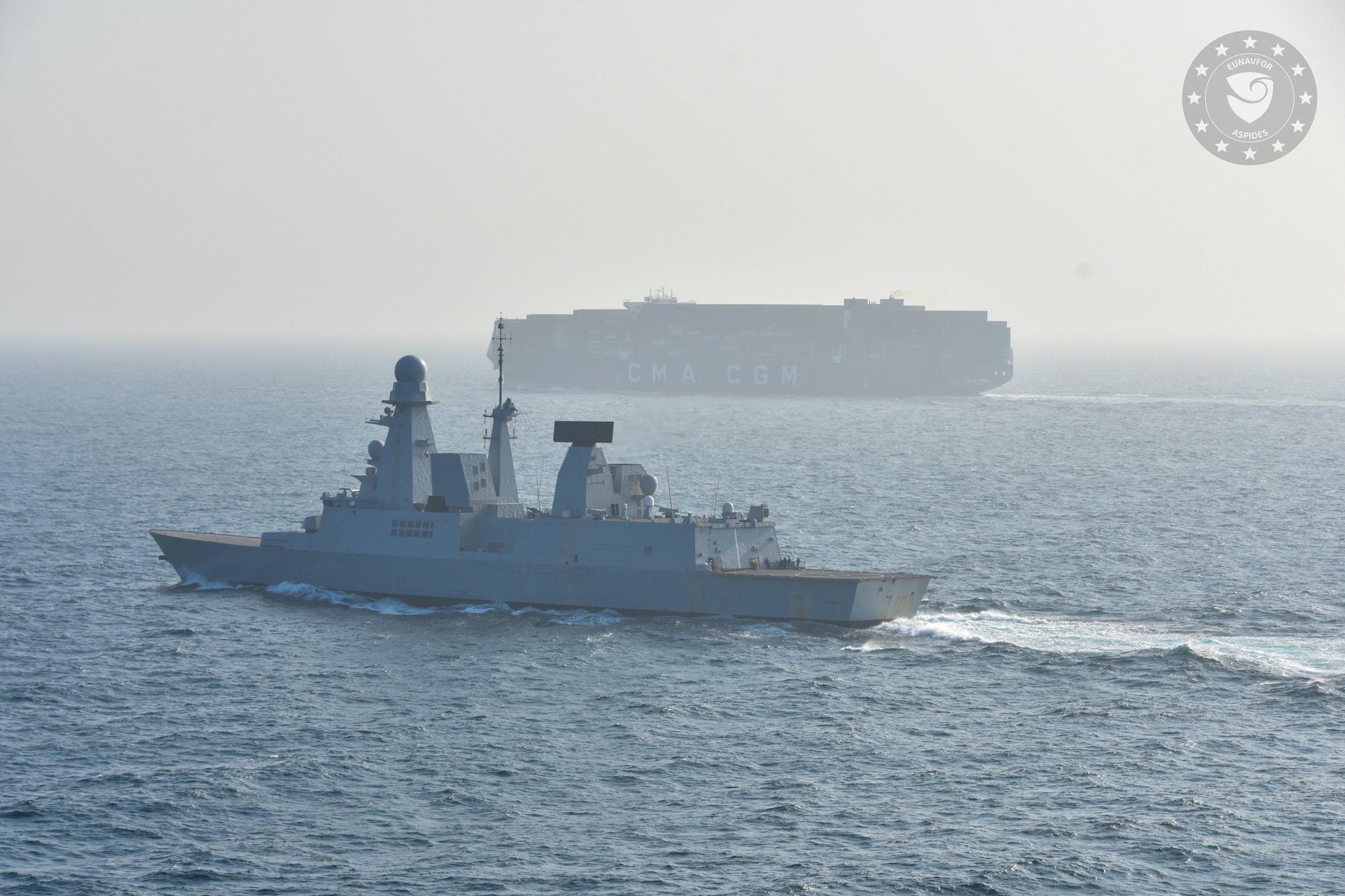
The EU naval mission to the Red Sea provides escorts for civilian vessels in the region, but has warned that it has limited assets and that ships looking for protection may face waiting times.
Unlike the Persian Gulf, the Red Sea has an escape route north through the Suez Canal, but that means significant additional sailing times and shipping costs for companies looking to move oil to Asia.
“It’s a cacophony of bad news at the moment,” said Sasha Foss, an analyst at CSC Commodities, a division of Marex Group. “I expect things to correct higher the longer the Strait is closed, as we no longer have the buffers.”
© 2026 Bloomberg L.P.

 Join The Club