Tension in one of the world’s most critical maritime chokepoints spiked this week after Iran temporarily restricted parts of the Strait of Hormuz during live-fire military exercises, a move that underscored how quickly geopolitics can ripple through global shipping markets even without a full blockade.
By Paul Morgan (gCaptain) – Iranian media described the measure as a short-duration safety restriction linked to Revolutionary Guard drills, rather than a sustained shutdown. That distinction matters. While headlines suggested Iran had “closed” the strait, the available evidence points instead to a limited operational restriction lasting several hours, enough to disrupt sentiment and insurance risk calculations, but not to halt traffic outright.
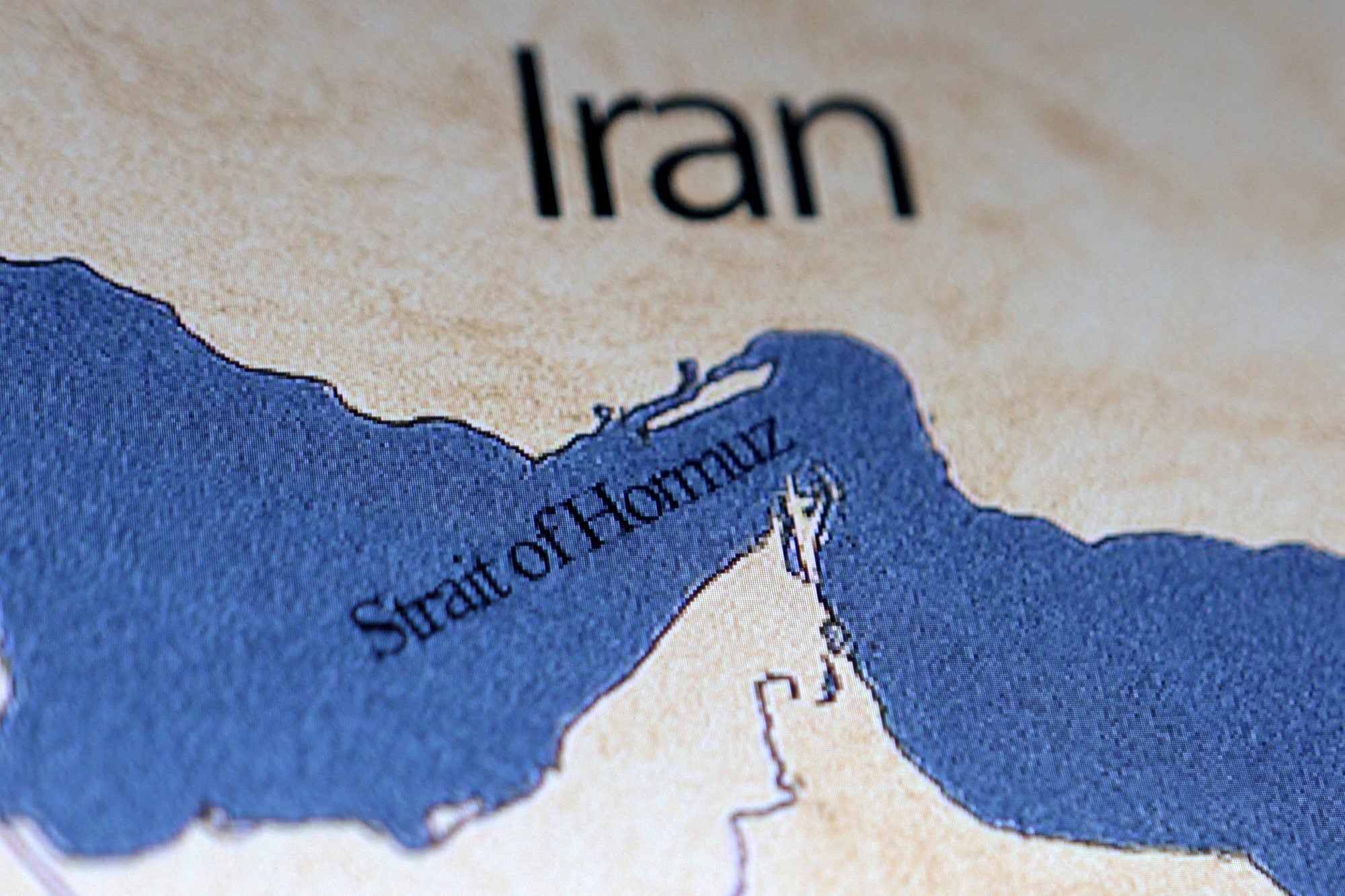
The Strait of Hormuz remains the world’s most sensitive maritime chokepoint, carrying roughly one-fifth of global petroleum liquids consumption, around 20 million barrels per day, through narrow traffic lanes only about two miles wide within a waterway roughly 21 miles across at its narrowest point. Even brief exercises that raise perceived risk can ripple through freight markets, war-risk premiums and voyage planning.
What made this episode different was timing. The temporary restriction unfolded alongside indirect US-Iran nuclear negotiations in Geneva and a visible military build-up in nearby waters. For shipowners and operators watching from the bridge and the chartering desk, the message felt less like an isolated exercise and more like strategic signalling.
The current cycle of tension began building in late December and January amid internal unrest in Iran and sharper rhetoric from Washington. Regional naval monitoring intensified as both sides sought to signal resolve without crossing into open conflict.
In early February, Tehran formally announced its “Smart Control of the Strait of Hormuz” military exercise, broadcasting navigational warnings to vessels about planned live-fire activity. The warnings alone were enough to trigger heightened monitoring by insurers and maritime security analysts.
On 4 February, tensions escalated further when a US Navy fighter jet shot down an Iranian drone approaching a carrier strike group in the Arabian Sea, a reminder of how quickly encounters in crowded operational environments can spiral.
In the days that followed, Iranian outlets reported missile tests and surface-firing drills linked to the exercise. US Central Command responded with warnings that unsafe manoeuvring near coalition vessels or commercial shipping risked escalation and destabilisation.
The most significant moment came Tuesday morning, when Iranian media said parts of the strait would be restricted for several hours for “safety and maritime concerns.” Reports described live-fire activity in or near the shipping lanes. While the extent of disruption remained unclear, the announcement alone triggered renewed attention across the energy and maritime sectors.
Simultaneously, indirect nuclear talks between Washington and Tehran resumed in Geneva. Iranian officials said both sides had agreed on “guiding principles,” though major red lines remained unresolved, according to US officials. Diplomacy and maritime signalling unfolded in parallel, reinforcing the perception that the exercise was as much political theatre as military training.
Strategic Messaging, not a Full Blockade. Despite recurring rhetoric from Tehran about the ability to close Hormuz, a sustained blockade remains unlikely in the near term. The strait is not simply an Iranian waterway; it is an international transit route bordered by Iran and Oman, and any attempt to fully shut it would risk overwhelming international response while also choking Iran’s own export routes.
Instead, analysts say Iran continues to rely on calibrated disruption, exercises, warnings and temporary restrictions, to remind global markets of its leverage without triggering a decisive military reaction.
History offers precedent. During the 1980s Iran-Iraq “Tanker War,” mines and attacks made parts of the Gulf effectively impassable at times, but in recent decades Iran has typically stopped short of sustained closure, even during periods of acute confrontation.
For commercial shipping, the real impact of the latest episode lies not in a dramatic stoppage of traffic but in the accumulation of uncertainty. A few hours of restricted navigation may not halt flows, but it sharpens scrutiny from underwriters, raises the prospect of higher premiums and encourages charterers to reassess routing risk.
Operationally, Hormuz’s geography amplifies that sensitivity. While the strait itself spans more than 30 kilometres at its narrowest point, ships follow tightly defined lanes that compress traffic into predictable corridors. Any military activity in or near those lanes, even if declared safe, introduces an element of unpredictability that shipowners cannot ignore.
The presence of the USS Abraham Lincoln carrier strike group in the Arabian Sea and Washington’s announcement that the USS Gerald R. Ford would move toward the region added another layer to the strategic backdrop. Tehran’s leadership warned that any attack could trigger retaliation, reinforcing the sense that the maritime environment is becoming a stage for geopolitical signalling.
Ultimately, this week’s episode was less about physically shutting the Strait of Hormuz and more about demonstrating the possibility. A Warning Shot to Markets! By temporarily restricting navigation during a high-profile exercise, Iran reminded the shipping industry, and global energy markets, how fragile the balance of security and commerce remains in the Gulf.
For shipowners and seafarers, the takeaway is familiar: Hormuz rarely closes outright, but it does not need to. Even a short-lived disruption can send shockwaves through freight markets and strategic planning, proving once again that the world’s most vital oil corridor remains as much a political instrument as a maritime highway.
Editorial Standards · Corrections · About gCaptain

 Join The Club