President Donald Trump said he will extend the current ceasefire with Iran while maintaining the U.S. maritime blockade, citing a request from Pakistani leadership to allow time for a unified negotiating proposal from Tehran.
In a post on Truth Social, Trump said he had been asked Pakistan’s Chief of Army Staff and Prime Minister to delay planned U.S. military action against Iran. He added that U.S. forces would “continue the Blockade” and remain “ready and able” while talks take shape.
“Based on the fact that the Government of Iran is seriously fractured… we have been asked to hold our Attack on the Country of Iran until such time as their leaders and representatives can come up with a unified proposal. I have therefore directed our Military to continue the Blockade and, in all other respects, remain ready and able, and will therefore extend the Ceasefire until such time as their proposal is submitted, and discussions are concluded, one way or the other. President DONALD J. TRUMP”
The statement points to a pause in escalation rather than a true de-escalation. By keeping the blockade in place, Washington is sustaining pressure on Iran’s oil exports and maritime activity—an approach that remains a central sticking point in any negotiations while already reshaping global shipping patterns.
Treasury Secretary Scott Bessent said the U.S. will maintain maximum economic pressure alongside the naval blockade, warning that Iran’s oil system is nearing a breaking point.
“As Donald Trump has made clear, the United States Navy will continue the blockade of Iranian ports,” he said, adding that storage at Kharg Island could fill within days, potentially forcing shut-ins at Iran’s oil fields. Bessent said constraining maritime trade strikes directly at Tehran’s primary revenue streams, with the Treasury set to “systematically degrade” Iran’s ability to generate, move, and repatriate funds. He warned that any vessel or intermediary involved in facilitating those flows risks exposure to U.S. sanctions, as authorities continue efforts to freeze assets tied to Iran’s leadership.
For the maritime sector, the impact is immediate. U.S. forces retain authority to stop, board, and interdict vessels tied to Iranian trade, effectively extending enforcement actions beyond the original two-week ceasefire window. At the same time, Iran’s tightening grip on the waterway is becoming just as consequential, with transits increasingly subject to de facto IRGC control—requiring coordination, approval, and routing through Tehran-designated corridors that place access to the Strait under Iranian oversight.
Meanwhile, President Donald Trump’s statement makes clear the ceasefire is now conditional, hinging on Iran’s ability to produce a “unified proposal,” injecting fresh uncertainty into both the timing and durability of any potential deal.
The move comes as the Strait of Hormuz remains anything but normal, with vessel traffic continuing to show a fractured pattern shaped by overlapping Iranian controls and U.S. enforcement of its maritime blockade on Iran.
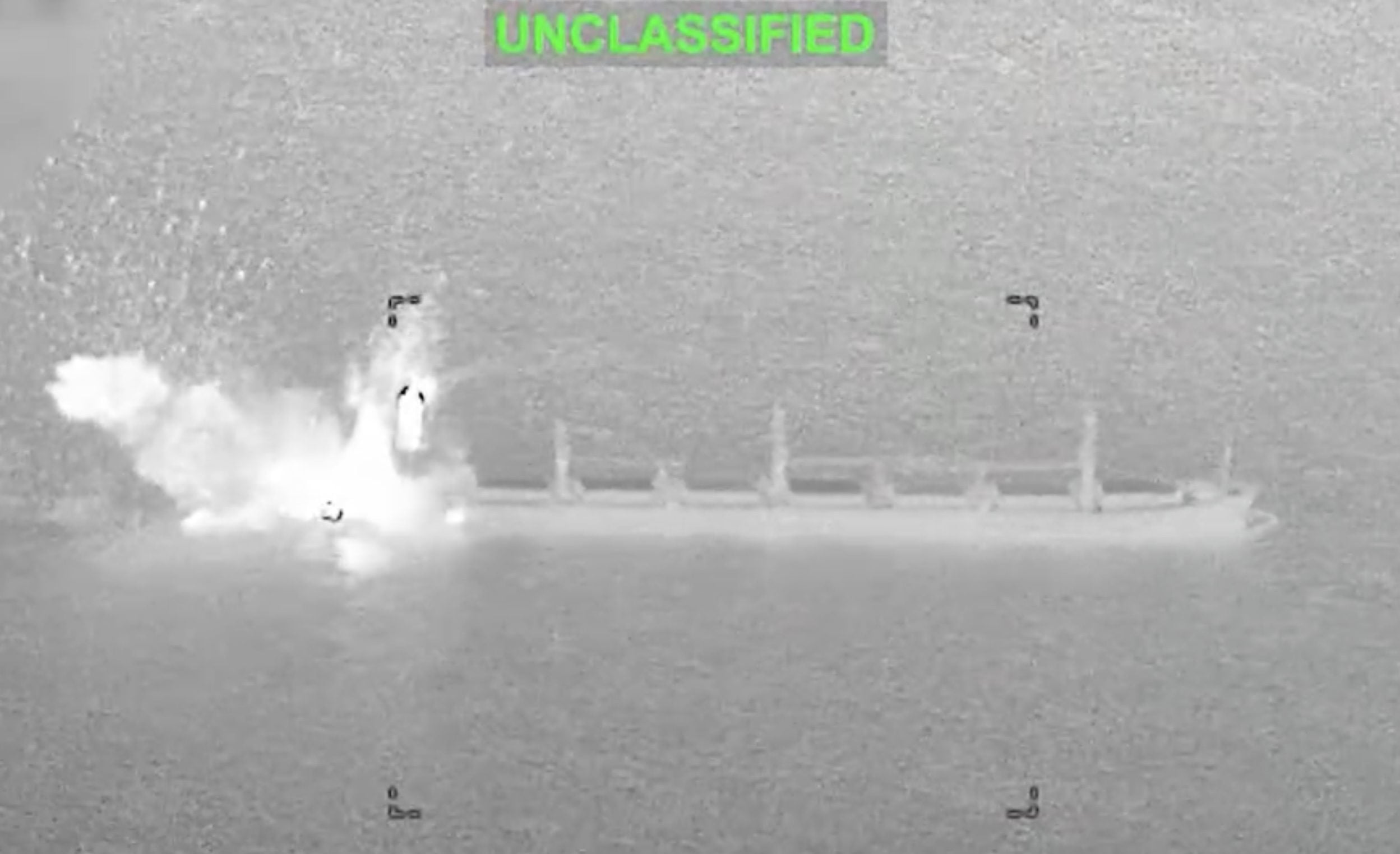
On Tuesday, U.S. forces expanded its crackdown beyond the Gulf, boarding the sanctioned tanker Tifani (IMO: 9273337) in the southern Bay of Bengal under a right-of-visit maritime interdiction. The boarding marked the second since the start of the conflict in late February.
Officials said the stateless Tifani, previously sanctioned in July 2025 for transporting Iranian petroleum and accused of falsely flying the flag of Botswana, was stopped and boarded without incident as part of Washington’s broader effort to disrupt Iran’s shadow fleet. The vessel was reported to have loaded oil at Iran’s Kharg Island earlier in April.
For now, President Donald Trump’s remarks signal that a return to normal shipping conditions remains unlikely for the foreseeable future.

 Join The Club