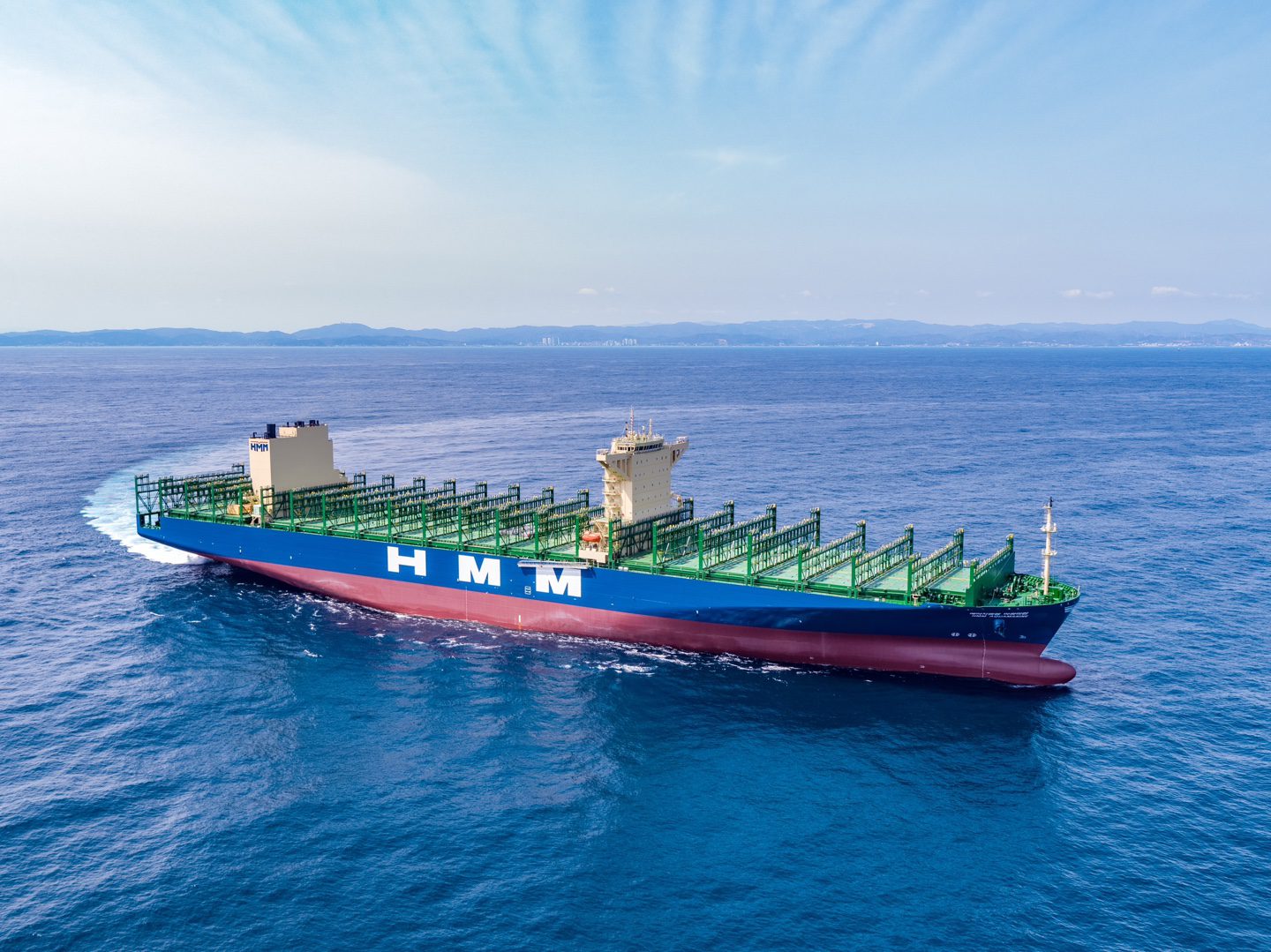
South Korean shipbuilding giant HD Hyundai has secured a 2.13 trillion won ($1.5 billion) contract to build eight dual-fuel containerships for South Korea carrier HMM, marking the largest containership order in 18 years since the 2007 shipbuilding super cycle.
HD Korea Shipbuilding & Offshore Engineering, the shipbuilding intermediate holding company of HD Hyundai, on Tuesday confirmed the deal for eight 13,400 TEU dual-fuel propulsion containerships. The vessels will be 337 meters long, 51 meters wide, and 27.9 meters high, equipped with LNG dual-fuel propulsion engines and fuel tanks approximately 50% larger than standard designs to improve operational efficiency.
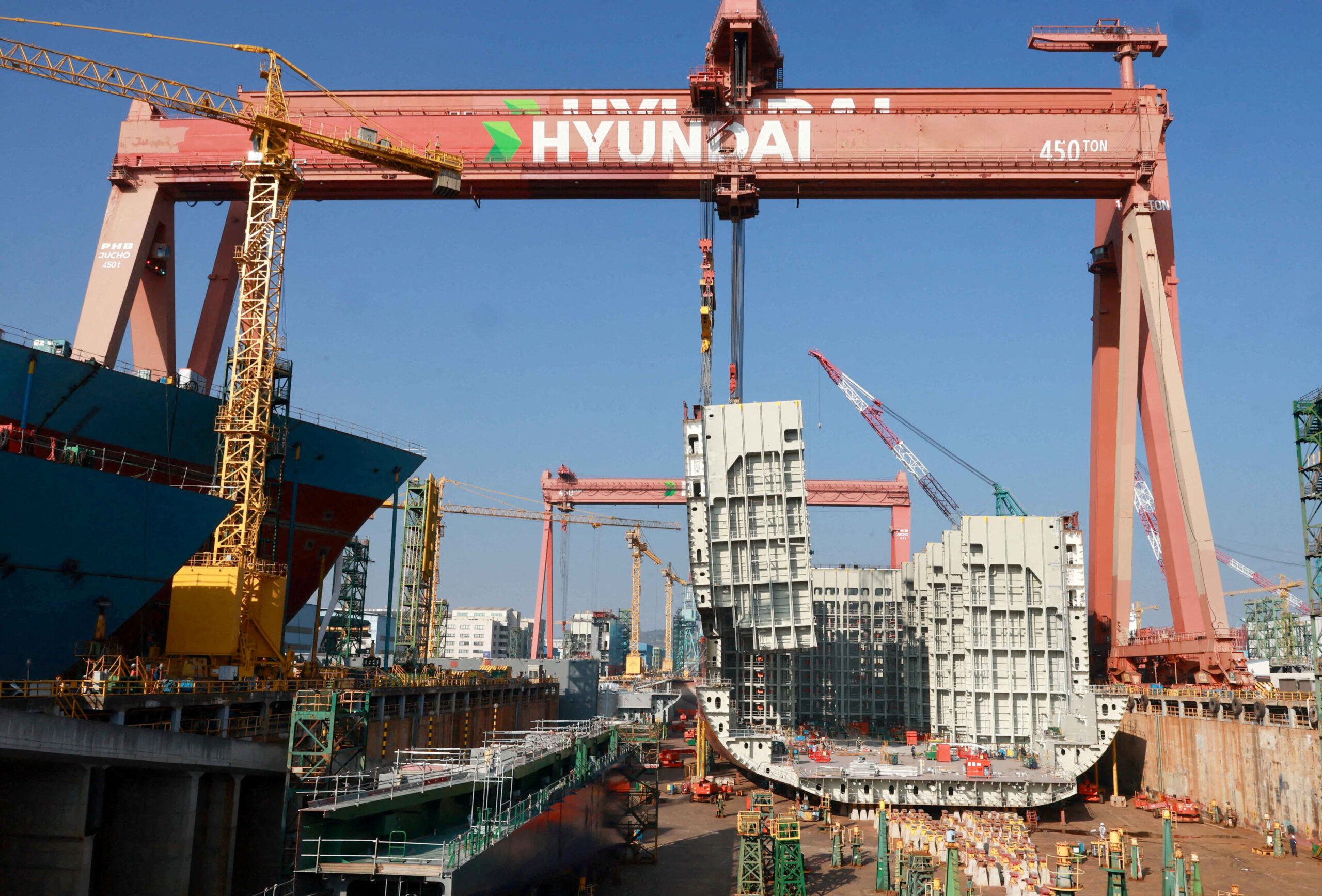
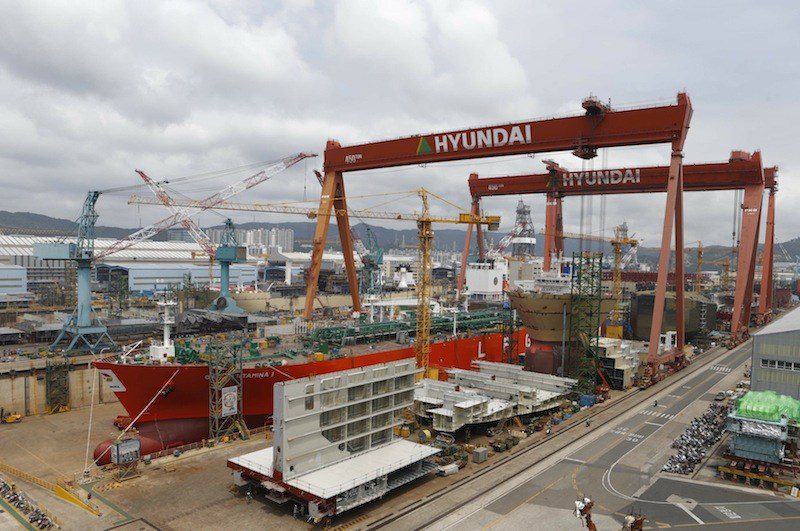
HD Hyundai Heavy Industries will construct two of the vessels, while HD Hyundai Samho will build the remaining six, with sequential deliveries scheduled through the first half of 2029.
The order brings HD Hyundai’s containership backlog to its highest level since 2007, when cargo volume peaked at 793,473 TEU during the global economic boom. With 69 containerships totaling 720,000 TEU ordered this year, the company has secured more orders than any other domestic shipbuilder.
HD Hyundai's competitive advantage extends beyond construction costs. The company's touts superior lifecycle economics despite higher initial prices compared to competitors. Since 2023, HD Hyundai has equipped its ships with HiNAS Control, an autonomous navigation assistance system developed by Avicus that has proven to reduce carbon emissions by 15% and increase fuel efficiency by 15% based on actual operating data.
"We are further solidifying our position in the global market based on differentiated technology and customer trust," a HD Hyundai official said. "We will continue to lead the decarbonization of the shipbuilding and shipping industries with our technological competitiveness centered on eco-friendly and high-efficiency ships."
The contract represents a significant milestone as the maritime industry faces increasing pressure to reduce emissions while maintaining operational efficiency on longer trade routes.
HD Hyundai has signed a strategic partnership with the Tamil Nadu state government to establish a new shipyard in India, marking the latest move by the South Korean shipbuilding giant...
General Dynamics NASSCO has joined forces with South Korean shipbuilding leaders Samsung Heavy Industries and longtime partner DSEC Co., Ltd. in a strategic tri-party alliance aimed at advancing ship design...
South Korean shipbuilder HD Hyundai recently gathered over 600 industry leaders, government officials, and technology partners at the APEC 2025 Future Tech Forum to unveil its strategy for transforming shipbuilding...
December 3, 2025
Total Views: 873
Get The Industry’s Go-To News
Subscribe to gCaptain Daily and stay informed with the latest global maritime and offshore news
— just like 107,340 professionals
Secure Your Spot
on the gCaptain Crew
Stay informed with the latest maritime and offshore news, delivered daily straight to your inbox
— trusted by our 107,340 members
Your Gateway to the Maritime World!
Essential news coupled with the finest maritime content sourced from across the globe.

 Join The Club