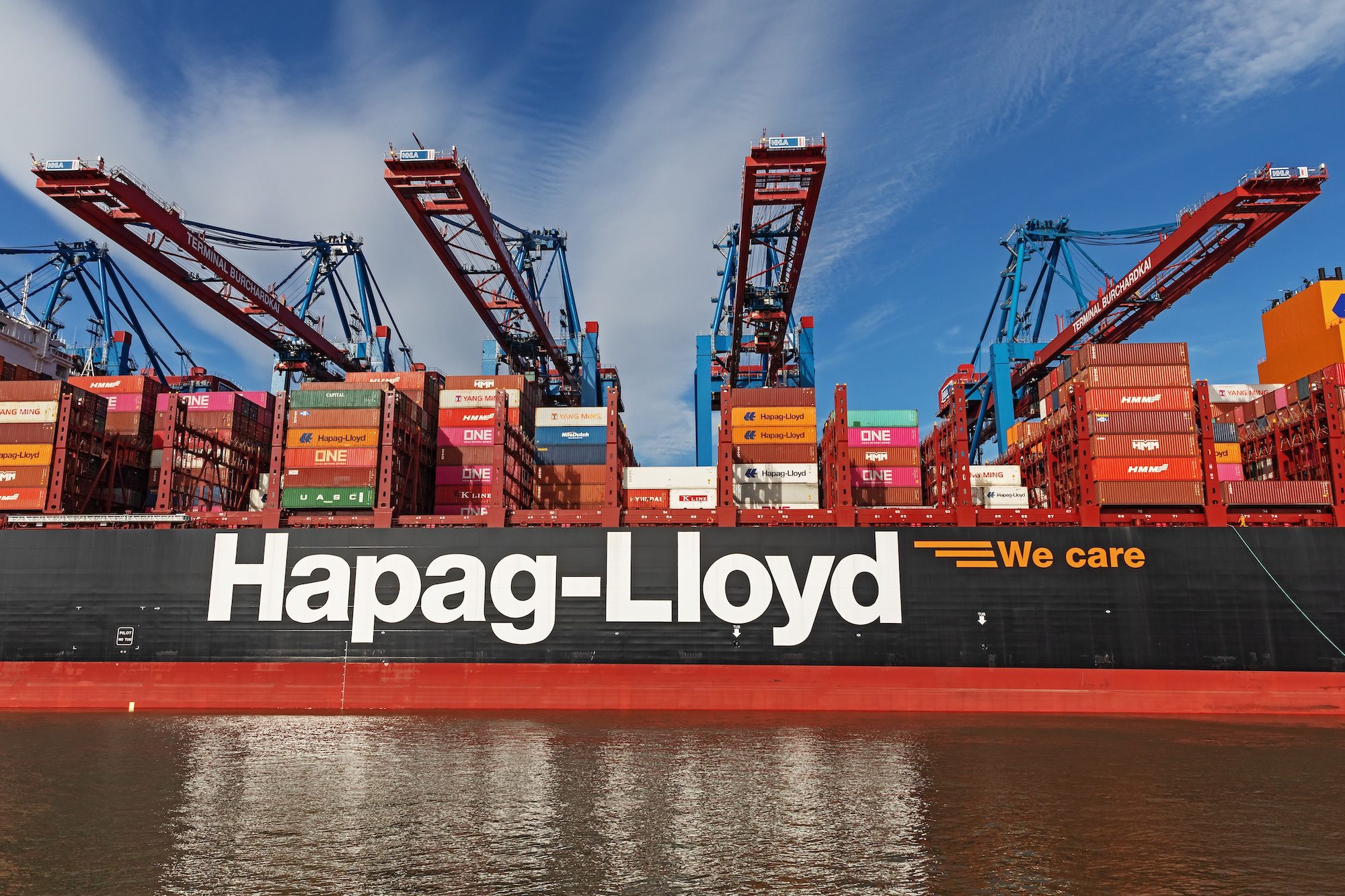
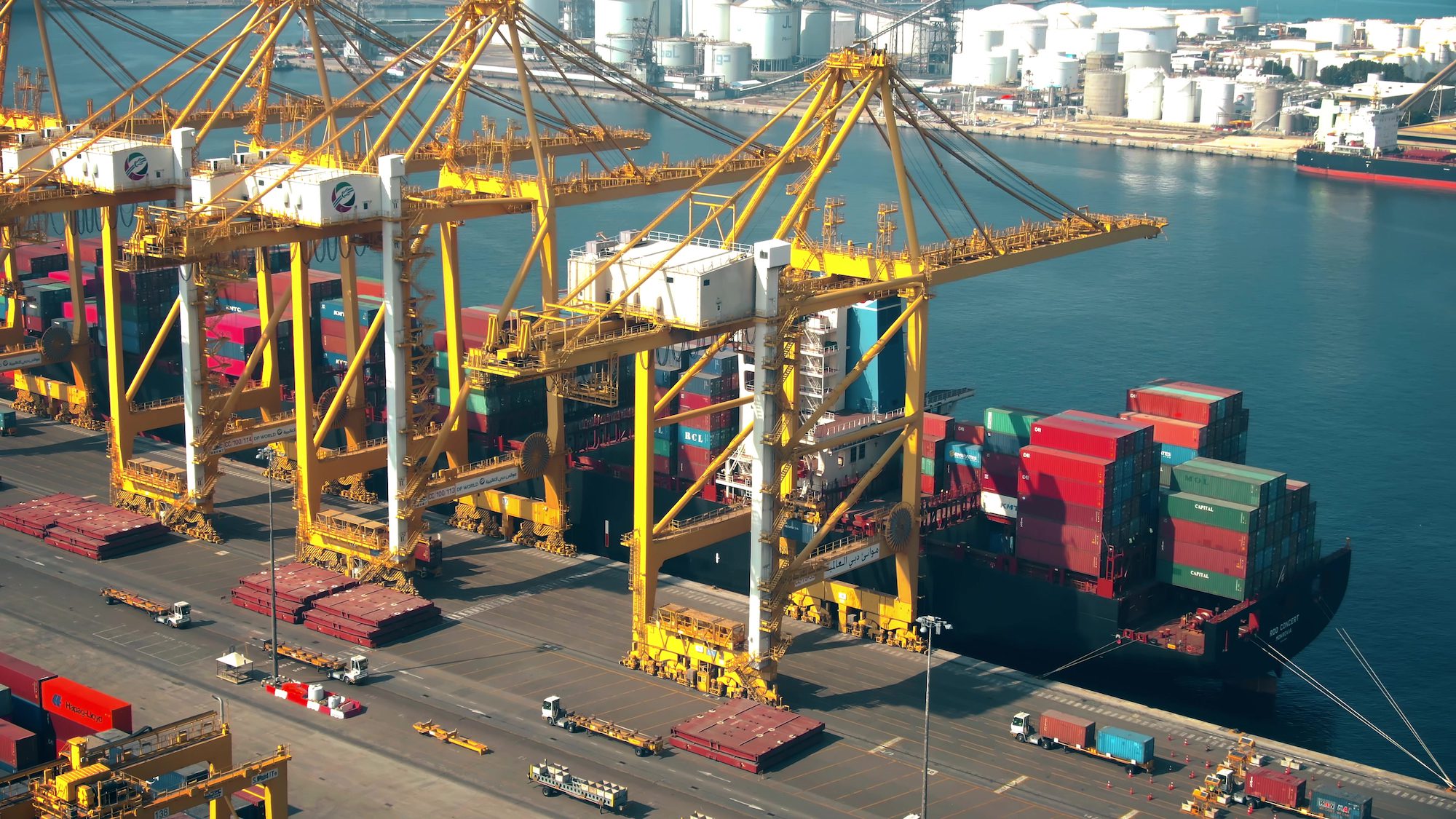
Hapag-Lloyd reported preliminary 2025 financial results that came in at the upper end of its guidance, even as earnings fell sharply from the prior year amid higher operating costs and softer freight rates.
The Hamburg-based container carrier posted full-year Group revenues of $21.1 billion, with EBITDA of $3.6 billion and EBIT of $1.1 billion. While the results met company expectations, they marked a notable decline from 2024, when EBITDA totaled $5.0 billion and EBIT reached $2.8 billion.
Volumes, however, moved in the opposite direction. Hapag-Lloyd carried 13.5 million TEU in 2025, an 8% increase year-over-year, supported by steady global trade and the launch of the Gemini Network. Average freight rates slipped 8% to $1,376 per TEU, offsetting much of the volume-driven gains.
“Higher costs due to the ongoing rerouting of ships via the Cape of Good Hope and start-up expenses for the Gemini Network weighed on the annual results,” the company said. “On the other hand, Gemini-related cost savings started kicking in during the second half of 2025 and will be fully realized in 2026.”
Those savings are tied to Hapag-Lloyd’s strategic partnership with A.P. Moller-Maersk under the Gemini Cooperation, which officially launched on February 1, 2025. The network includes 29 shared mainline services and 29 shuttle services across East–West trade lanes.
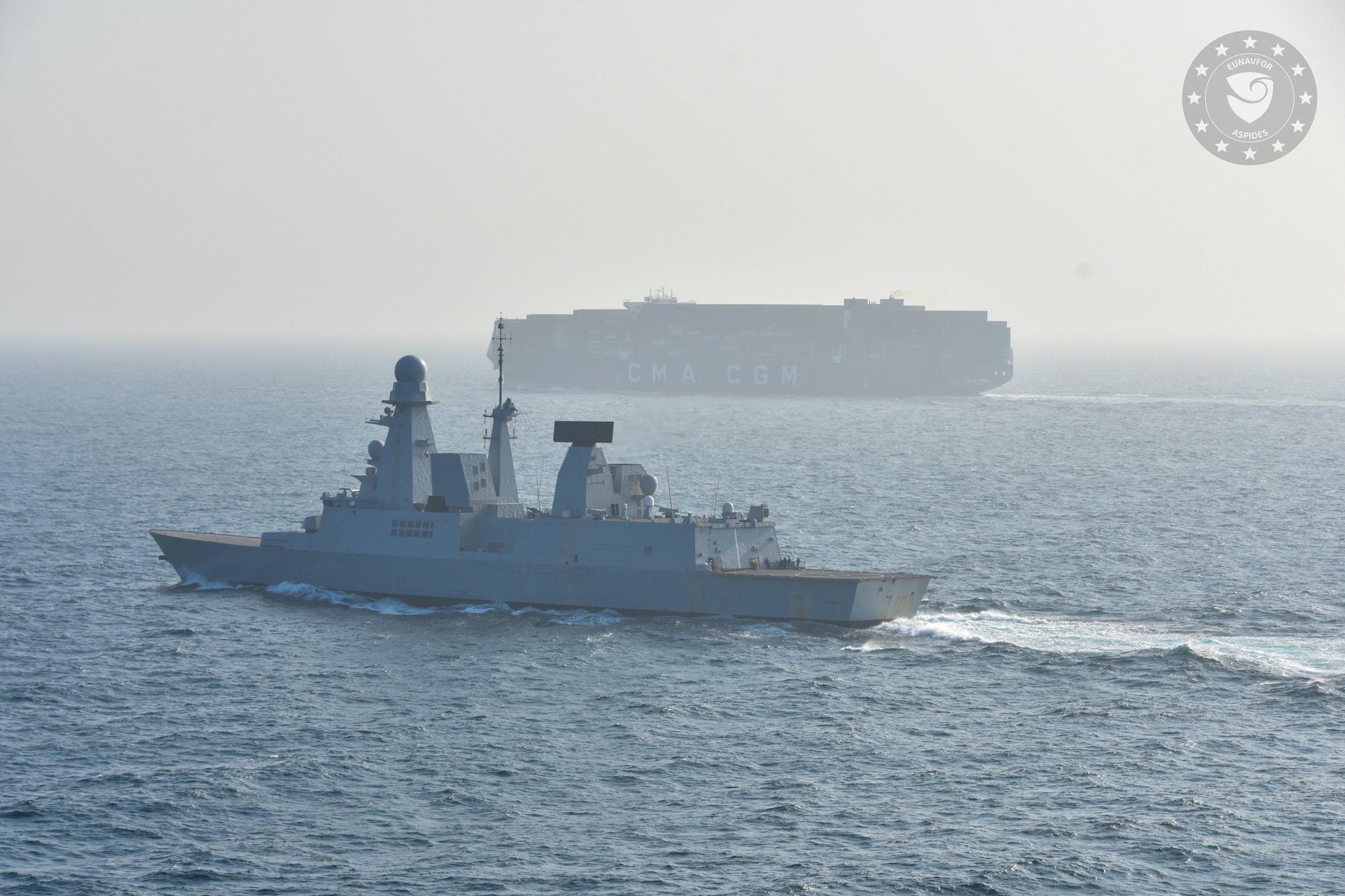
Operationally, the carriers took a key step earlier this month by announcing plans to return one shared service to the Red Sea and Suez Canal corridor, reversing the longer Cape of Good Hope routing imposed by security risks in the Red Sea. The IMX service linking India, the Middle East, and the Mediterranean will be the first to transition, with changes beginning in mid-February under naval protection.
“The highest possible security precautions will be undertaken, as the safety of the crew, the vessels, and the customers’ cargo remains the highest priority of both carriers,” the companies said, adding that the move supports Gemini’s focus on schedule reliability. Any expansion of Suez transits to additional services will depend on sustained stability in the Red Sea.
Hapag-Lloyd operates a fleet of 305 container ships with a combined capacity of 2.5 million TEU, serving more than 600 ports worldwide. The company employs roughly 14,000 people across 400 offices in 140 countries.
The carrier is scheduled to publish its full 2025 Annual Report, including audited results and its outlook for 2026, on March 26, 2026.
Editorial Standards · Corrections · About gCaptain

 Join The Club