A new Government Accountability Office report has exposed severe problems plaguing the U.S. Coast Guard’s Offshore Patrol Cutter program, with both shipbuilders failing to deliver any vessels despite years of construction and program costs ballooning to $17.6 billion.
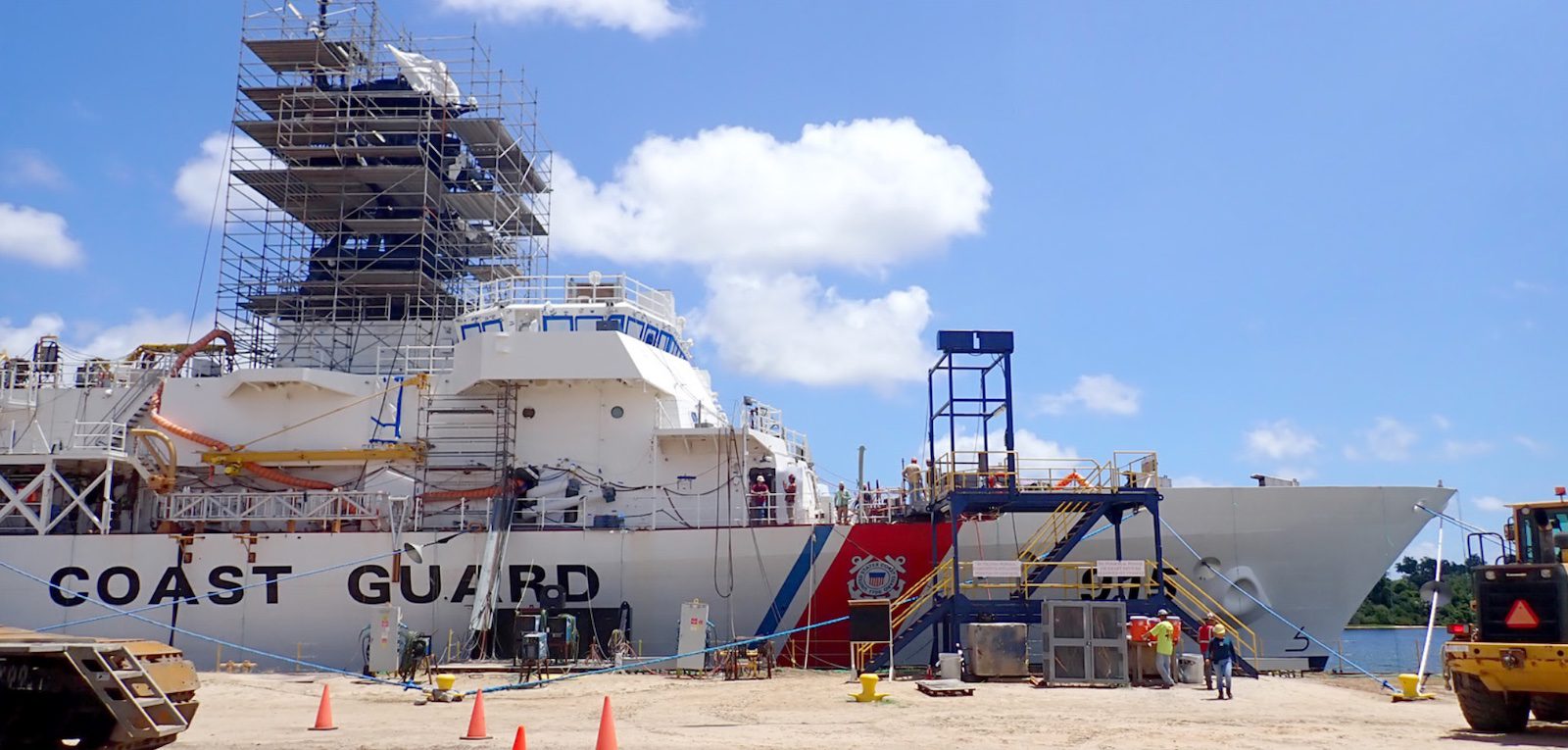
The GAO investigation found that the Coast Guard’s strategy of building ships before completing their designs has proven disastrous. Eastern Shipbuilding Group, the stage 1 contractor, has made minimal progress since GAO’s last assessment, leading the Coast Guard to terminate half of its original four-ship contract in July 2025. The situation deteriorated further when Eastern announced this month that it had suspended work on the remaining two vessels due to “severe financial strain”.
The report states that “construction of OPCs 1-4 began without a stable design, contrary to shipbuilding leading practices,” which “led to rework, which delayed ship deliveries”. OPC 1’s delivery has been pushed back more than five years, from June 2023 to at least late 2026.
Concerningly, the stage 2 contractor Austal USA appears to be following the same troubled path. According to GAO, “construction of OPC 5 began in August 2024 without a stable design.” The report warns that continuing to build additional stage 2 vessels before stabilizing the design “increases the risk that stage 2 will also encounter costly rework and schedule delays”.
The program’s financial picture has deteriorated significantly, with total costs escalating from $12.5 billion to $17.6 billion. GAO found that “the OPC program is at risk of not meeting its cost goals, in part, because the program used outdated cost information to establish them.”
Adding to concerns, GAO discovered weaknesses in Austal’s cost tracking systems that “may be hard to monitor”, making it difficult to assess whether the program is staying within budget as construction progresses.
The Coast Guard faces another challenge with its stage 3 procurement strategy. The program “is unlikely to have results from performance testing of any OPCs before it starts stage 3 procurement activities,” meaning “it could end up buying more ships before knowing if OPCs meets requirements and operational needs.”
GAO issued four recommendations to the Coast Guard and DHS to address these issues, including stabilizing the stage 2 design before authorizing construction of additional vessels, improving cost goal reporting by stage, and developing a comprehensive plan for stage 3 procurement that incorporates testing results and shipbuilding best practices. However, the Department of Homeland Security only concurred with two of the four recommendations.
The troubled program comes as the Coast Guard urgently needs these vessels to replace aging cutters that conduct law enforcement and search and rescue operations. The original plan called for acquiring 25 OPCs across three stages, with stage 1 covering vessels 1-4, stage 2 covering vessels 5-15, and stage 3 covering vessels 16-25.
Despite Eastern Shipbuilding’s challenges with the OPC program, the company secured a $714.5 million contract for hybrid-electric ferries in August, suggesting its difficulties may be specific to the complexity of the Coast Guard vessels rather than general shipbuilding capability.
With Austal USA now holding a $3.3 billion contract for up to 11 OPCs and scheduling its first vessel’s keel laying for December, the question remains whether the Coast Guard and its contractors can learn from past mistakes and deliver the critically needed cutters without repeating the costly errors that have plagued the program’s first stage.
The U.S. Coast Guard has intercepted a vessel carrying fuel to Cuba after an international enforcement operation found large quantities of fuel concealed inside the ship’s ballast tanks. The Coast Guard...
Rauma Marine Constructions in Finland has made rapid progress on the first of two Arctic Security Cutters it is building for the U.S. Coast Guard, with almost half of the vessel's blocks already launched and construction of the second ship approaching, according to the Finnish shipbuilder's chief executive.
The U.S. Coast Guard has awarded a $315 million contract to Tutor Perini Corp. to build a new fuel pier and major cutter mooring at Base Kodiak, Alaska, as the service prepares...
September 23, 2026
Total Views: 1742
Get The Industry’s Go-To News
Subscribe to gCaptain Daily and stay informed with the latest global maritime and offshore news
— just like 107,080 professionals
Secure Your Spot
on the gCaptain Crew
Stay informed with the latest maritime and offshore news, delivered daily straight to your inbox
— trusted by our 107,080 members
Your Gateway to the Maritime World!
Essential news coupled with the finest maritime content sourced from across the globe.

 Join The Club