The Dali bridge collapse, the implosion of the Titan submersible and the deadly fire aboard the Grande Costa D’Avorio are among 49 marine casualties highlighted in the National Transportation Safety Board’s latest review of accidents and the lessons behind them.
The NTSB’s Safer Seas Digest 2025 brings together investigations completed last year, covering everything from major ship casualties to towing vessel collisions, fires, groundings, flooding and machinery failures.
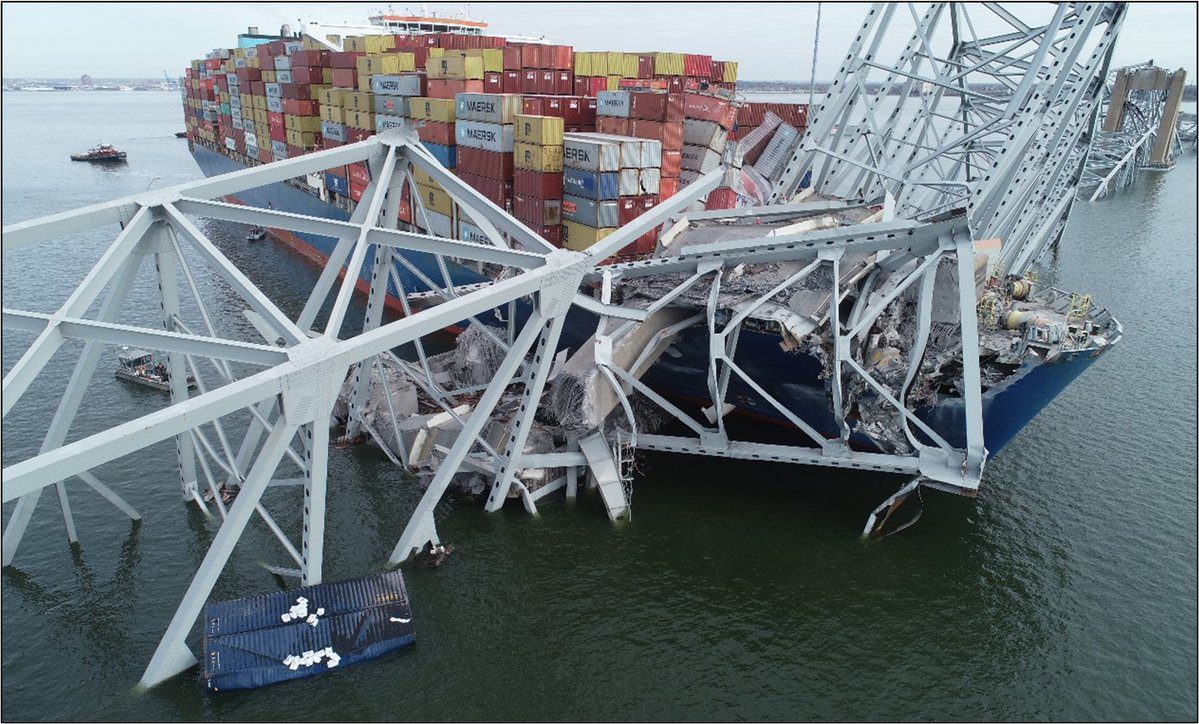
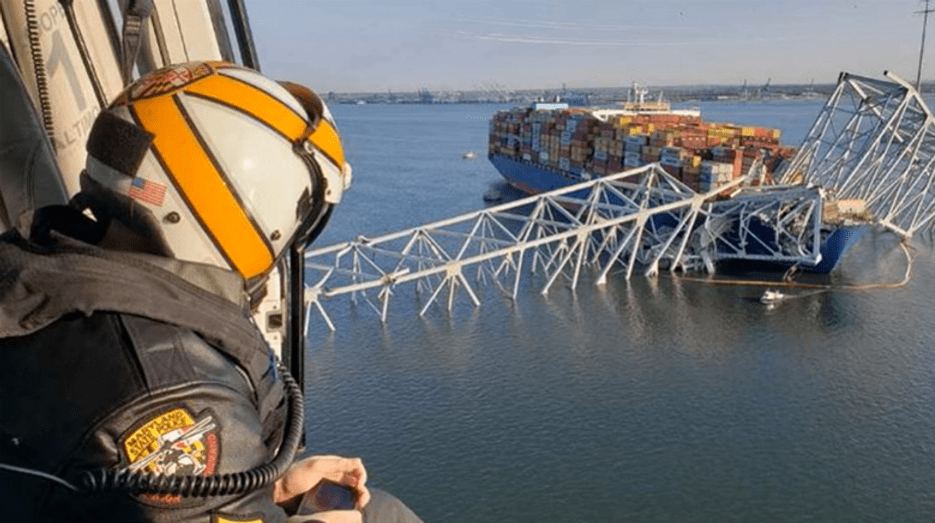
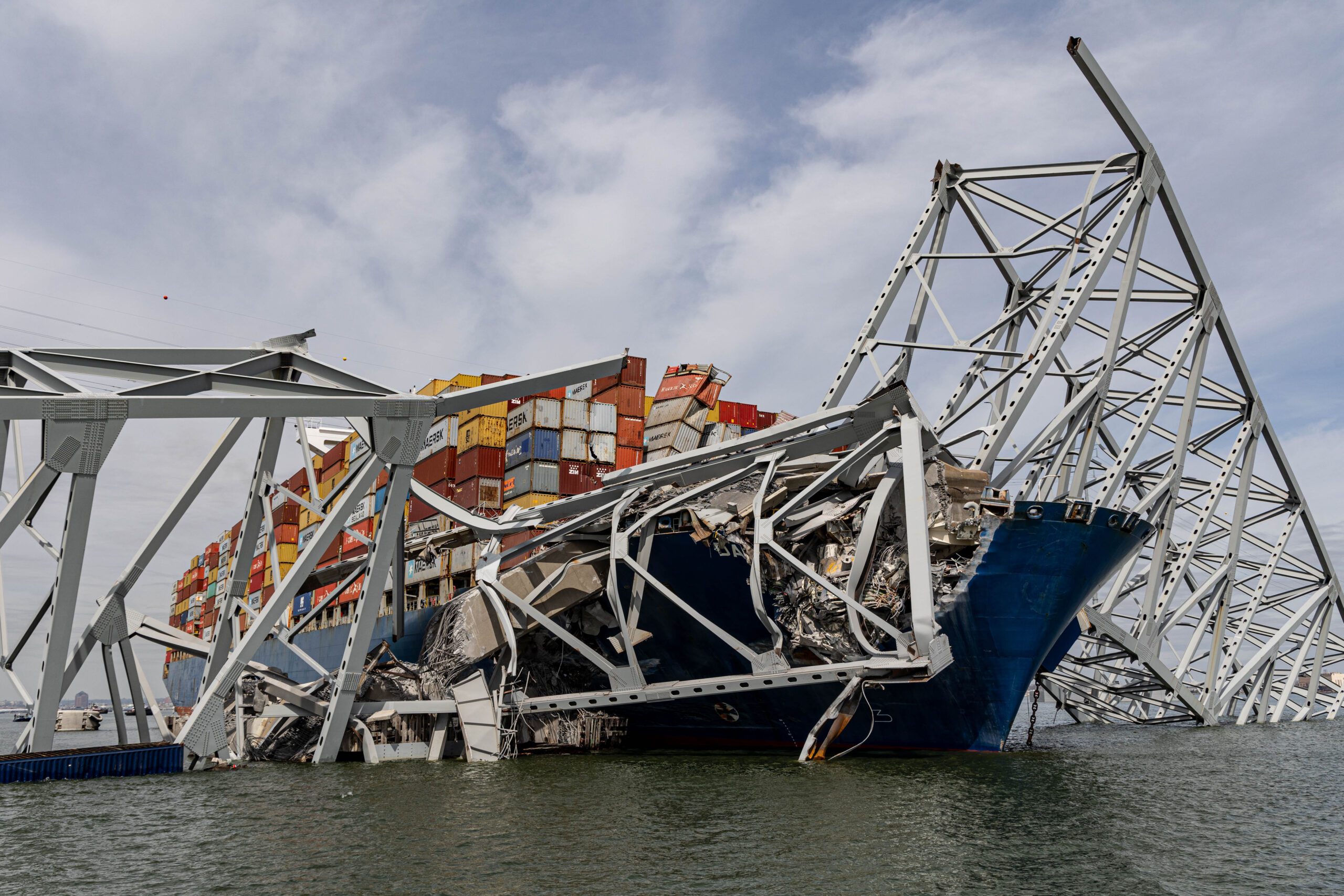
The Dali investigation is among the most prominent cases in the report. The containership struck Baltimore’s Francis Scott Key Bridge in March 2024 after losing electrical power, causing the bridge to collapse and killing six construction workers.
The investigation led to nearly two dozen safety recommendations, including urgent recommendations focused on bridges over navigable waterways where the risk of collapse from strikes by large oceangoing vessels had not been determined.
The digest also revisits the 2023 implosion of the Titan submersible, which killed all five people aboard during a dive to the wreck of the Titanic.
Investigators found the submersible failed to meet necessary strength and durability requirements because of shortcomings in the operator’s engineering process. The NTSB also found the vessel was not adequately tested and that emergency-response planning did not follow applicable guidance.
Another major case is the 2023 fire aboard the roll-on/roll-off containership Grande Costa D’Avorio at Port Newark, New Jersey, where two firefighters were killed and six other emergency responders were injured.
The NTSB found that land-based firefighters lacked adequate procedures and training for responding to a vessel fire, contributing to an ineffective response and the fire’s spread. The investigation resulted in 11 new safety recommendations.
But the digest is not just a collection of high-profile disasters.
Across the 49 investigations, the NTSB identified recurring problems involving maintenance, voyage planning, fire detection and containment, watertight integrity, fatigue and distraction, lithium-ion batteries, losses of electrical power and emergency preparedness. Investigators also pointed to risks from strong currents and heavy weather, as well as failures to operate equipment and machinery as designed.
Contacts with fixed objects made up the largest category, with 16 investigations. Fires and explosions accounted for 11, followed by seven groundings or strandings, five collisions and five flooding or hull failure cases.
Some of the smaller casualties illustrate how quickly familiar operational problems can become serious accidents.
In May 2024, the fishing vessel Papa Rod collided with the anchored bulk carrier Appaloosa in the Gulf of America after the watchstander fell asleep while the fishing vessel continued underway on autopilot. The Papa Rod was not equipped with a watch alarm that could have awakened the operator or alerted other crewmembers.
On the Lower Mississippi River, the towing vessel William B Klunk and its 22-barge tow struck moored barges near Baton Rouge after the pilot became distracted by cell phone use. Investigators found the pilot was looking at a phone about 40 seconds before the collision and had made no rudder or throttle adjustments in the preceding minutes.
Fatigue also contributed. The pilot had received only about four hours of continuous sleep during the 36 hours before the accident and had been awake for nearly 18 hours by the time of the collision.
Another case involved the yacht Lovebug, which developed a heavy list and partially sank in Chesapeake Bay. Investigators found no hull breach, but salvors discovered a partially open stern garage door and an open watertight door leading to the engine room. The NTSB concluded that undetected flooding through an open watertight door caused the vessel to lose stability.
Taken together, the investigations show how major casualties can begin with relatively ordinary failures: a door left open, a missed maintenance issue, a distracted watchstander or an emergency plan that does not work when it is needed.
The Safer Seas Digest 2025 includes summaries, probable causes and lessons learned from each investigation, along with references to the NTSB’s full reports and accident dockets.

 Join The Club