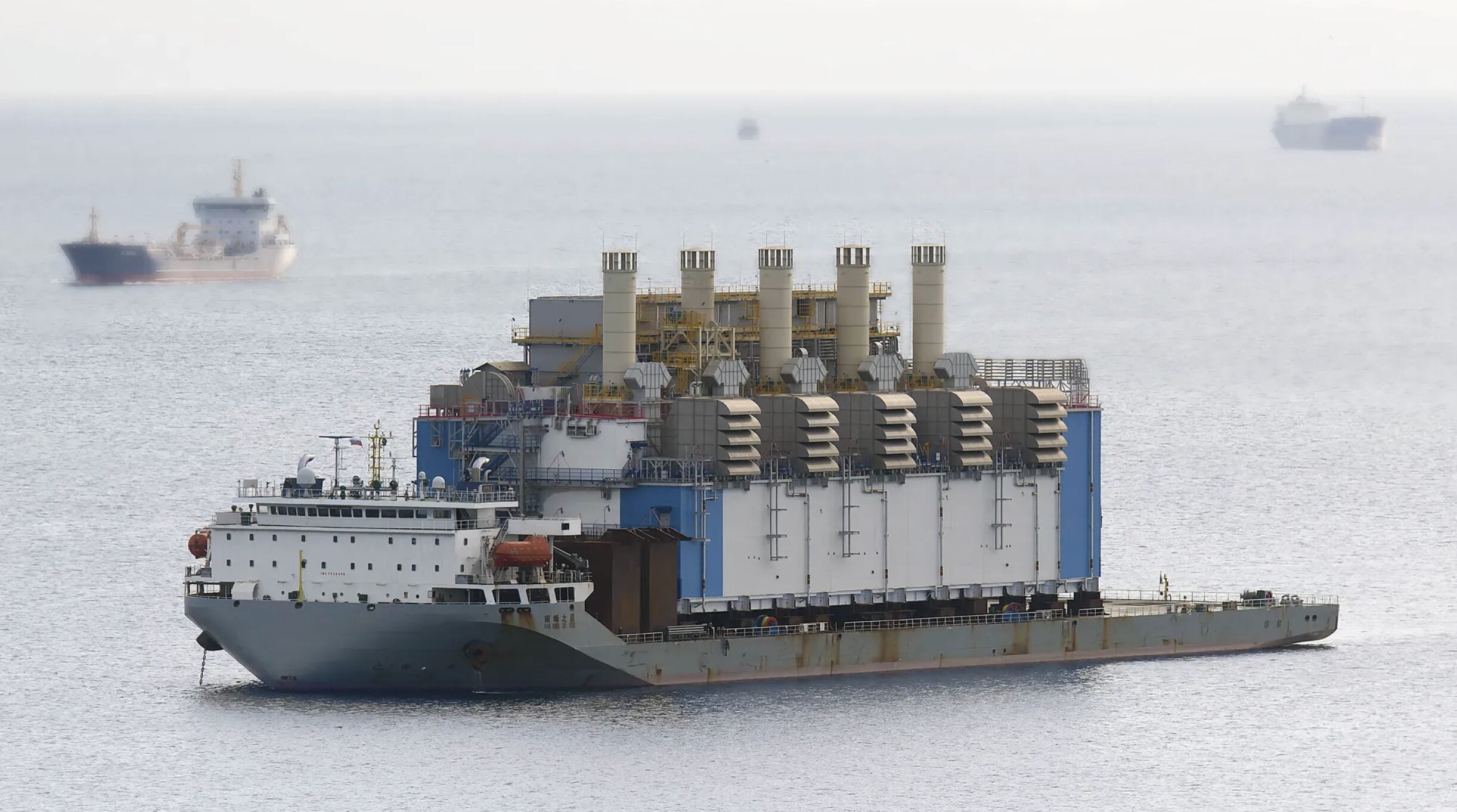
Two U.S.-sanctioned heavy-lift vessels are carrying critical power-generation modules from China toward Russia’s Arctic LNG 2 project, according to satellite imagery and vessel-tracking data. The shipment is the latest sign that supply chains supporting the sanctioned liquefied natural gas project remain operational despite Western efforts to disrupt them.
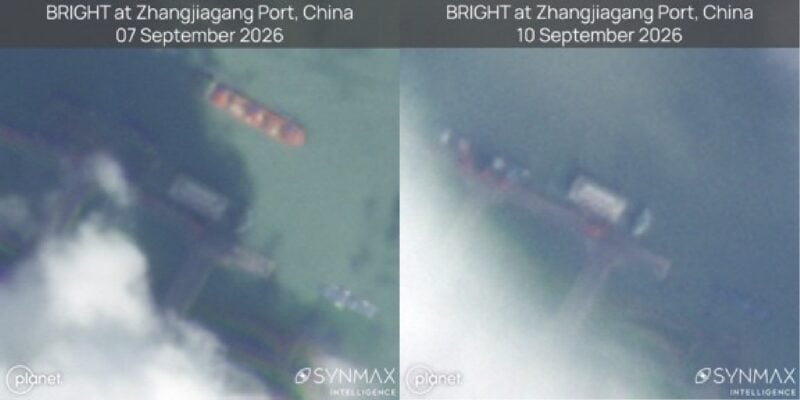
The vessels, Glory and Bright, loaded two onshore power plant modules at Zhangjiagang port in eastern China between Sept. 6 and Sept. 10 and subsequently headed north toward the Sea of Japan and likely the Northern Sea Route, according to AIS data and satellite imagery provided by maritime intelligence company SynMax. Satellite images show Bright in port with one of the large modules loaded aboard.
Power generation module (PGM) pickup at Zhangjiagang Port by Bright in September 2026. (Source: Planet Labs via SynMax Intelligence)
The modules, designated 2-PGM-002 and 2-PGM-004, are the final two of four onshore power plant modules originally fabricated at Wison’s Zhoushan facility for the second train of Novatek’s Arctic LNG 2 project on Russia’s Gydan Peninsula.
Their arrival would allow Novatek to complete the electrical power system for Train 2, which has so far operated on a single string and has therefore been limited to roughly half of its 6.6 million metric tons per year design capacity. In total 20 gas turbines will provide 482 MW of power generation capacity, Novatek project documents show.
The shipment also highlights a continuing logistics channel between Chinese heavy-industry suppliers and Arctic LNG 2, despite U.S. sanctions that have targeted both the project and companies involved in manufacturing and transporting its equipment.
Journey begins at sanctioned Chinese yard
PGM 2 and PGM 4 were originally built by Wison’s former Zhoushan unit as part of the redesign of Arctic LNG 2’s second liquefaction train, which was modified to use electrically driven equipment.
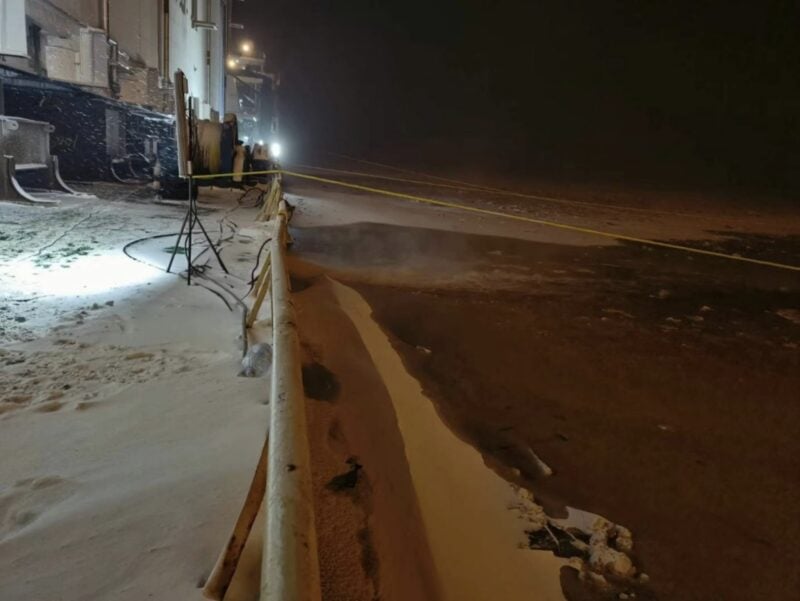
Unloading of onshore power plant modules at the Utrenniy terminal in November 2024. (Source: Provided to gCaptain)
That delivery became part of the U.S. government’s case against Wison’s Zhoushan operation.
On Jan. 10, 2025, the Biden administration sanctioned Zhoushan Wison Offshore and Marine Co Ltd, also known as Wison Zhoushan Yard, for supporting Arctic LNG 2. The U.S. State Department said the company had built and supplied power-generation modules for the project and that modules leaving the yard had been moved through a series of intermediary ports and vessels.
The sanctions came as part of a sweeping package targeting Russia’s energy sector and included entities involved in supporting the construction and transportation of equipment for Arctic LNG 2.
Wison subsequently moved to sell the Zhoushan facility.
The remaining PGM 2 and PGM 4 modules, however, stayed at the former Wison yard for more than a year after the first pair had departed.
In April 2026, the modules began moving again.
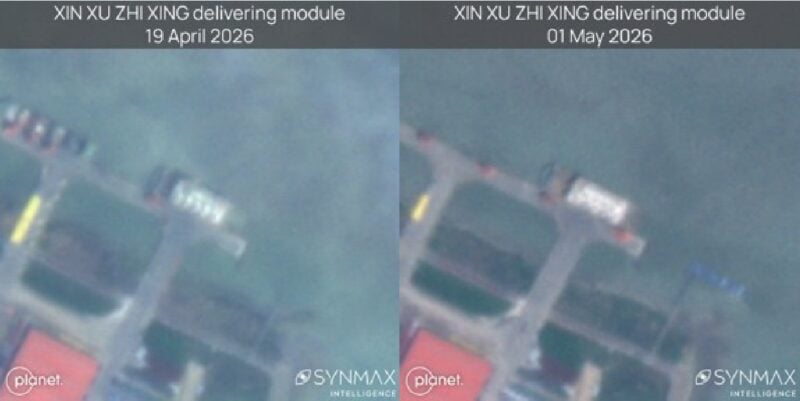
The Chinese cargo vessel Xin Xu Zhi Xing (MMSI 413544670) collected the modules from Zhoushan on April 17 and April 26. It delivered them to Zhangjiagang on April 19 and May 1, respectively, according to AIS records and satellite imagery from SynMax. The vessel has not been sanctioned by the U.S. or its partners.
2-PGM-002 and 2-PGM-004 dropoff at Zhangjiagang Port by Xin Xu Zhi Xing in April/May 2026. (Source: Planet Labs via SynMax Intelligence)
Zhangjiagang had previously been used as an intermediate location for the handling and reloading of the first pair of PGM modules in 2024.
The two remaining modules then sat at Zhangjiagang for several months before the arrival of Glory and Bright in September.
This summer’s second delivery
The voyage marks another Arctic delivery for the two heavy-lift vessels.
Glory (IMO 9934498) was previously named Nan Feng Zhi Xing and later Glory Ocean. Bright (IMO 9830769) was previously named Hunter Star and later Bright Ocean. Both vessels have been subject to U.S. sanctions connected to their involvement in Russian energy projects. Vessel records show the ships were reflagged to Russia and ownership was transferred to Eco Shipping LLC out of Arkhangelsk, Russia, earlier this year.
The ships have already made a high-profile Arctic LNG 2 voyage this summer.
In July, they delivered two large modules from China to Novatek’s LNG construction center at Belokamenka, near Murmansk. Those modules are intended for the project’s third liquefaction train, or T3, and their arrival marked the first indication of module delivery for the third train after the project had been effectively stalled by sanctions.
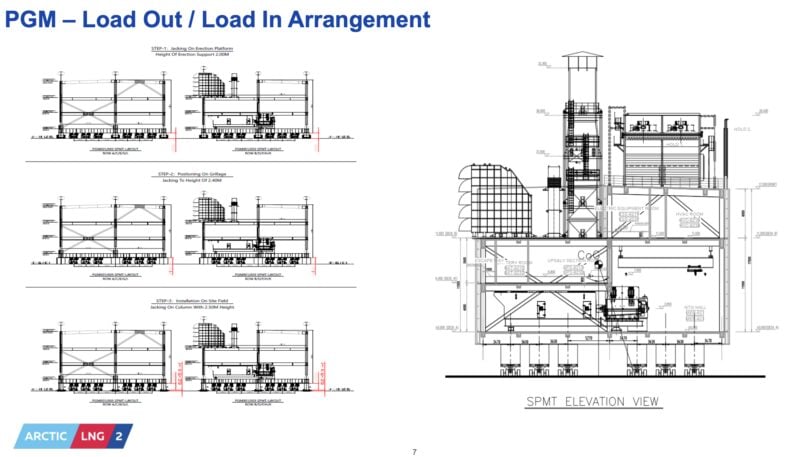
PGM load-out and load-in arrangement from Novatek onshore power plant technical brief. (Source: Provided to gCaptain)
The latest voyage therefore represents a continuation of the logistics pattern that has persisted despite sanctions: large modules fabricated in China are moved by heavy-lift vessels through the Russian Arctic to support a project that remains under extensive Western sanctions.
Critical equipment for Train 2
The PGM modules now aboard Glory and Bright are particularly significant because they are intended for Train 2 rather than the stalled third train.
Arctic LNG 2’s first train was commissioned in 2023 and began production in the midst of U.S. sanctions. The project was designed around three 6.6 million-ton-per-year trains mounted on gravity-based structures.
Train 2 has been operating with only part of its intended electrical-power configuration. Installation of PGM 2 and PGM 4 would give Novatek the equipment needed to complete the second train’s power-generation system and potentially bring the train toward its full design capacity.
That does not necessarily mean an immediate ramp-up to 6.6 million tons per year. The second train has reportedly experienced technical problems during startup, meaning commissioning and stable operation could still take time even after the missing equipment reaches the site.
Nevertheless, the shipment removes one of the most visible remaining hardware constraints on the second train.
Chinese supply chain remains active
The movement also provides a fresh indication that sanctions have not completely severed Arctic LNG 2’s equipment supply chain in China.
The Zhoushan case demonstrated the ability of U.S. sanctions to disrupt individual shipments. In January 2025, for example, a separate pair of large modules intended for the project’s third train was returned to China after an extended voyage, following the introduction of sanctions against companies involved in the project. gCaptain previously reported that the modules eventually returned to a Chinese port after a roughly 10-month journey.
But other equipment has continued to move.
Two T3 modules reached Belokamenka this summer, while additional Arctic LNG 2 equipment remains at Chinese fabrication yards, including two pipe-rack modules for Train 3 at the former Wison facility in Zhoushan.
The movement of PGM 2 and PGM 4 is consequently significant not only because of the equipment itself, but because of the logistics chain required to move it.
The modules remained at a sanctioned yard for more than a year, were transferred to another Chinese port, stored there for months and then loaded aboard two U.S.-sanctioned heavy-lift vessels. Those ships are now heading toward the Russian Arctic.
Novatek, Wison New Energies and Eco Shipping have been contacted for comment.
A tanker loaded with Russian diesel will sail for the US on Thursday as Moscow starts to implement a fuel supply deal struck by Vladimir Putin and Donald Trump, according to Deputy Prime Minister Alexander Novak.
A carrier loaded with Qatari liquefied natural gas is sailing north through the Red Sea, potentially speeding up delivery to European customers with a rare transit through waters vulnerable to renewed attacks from Houthi rebels.
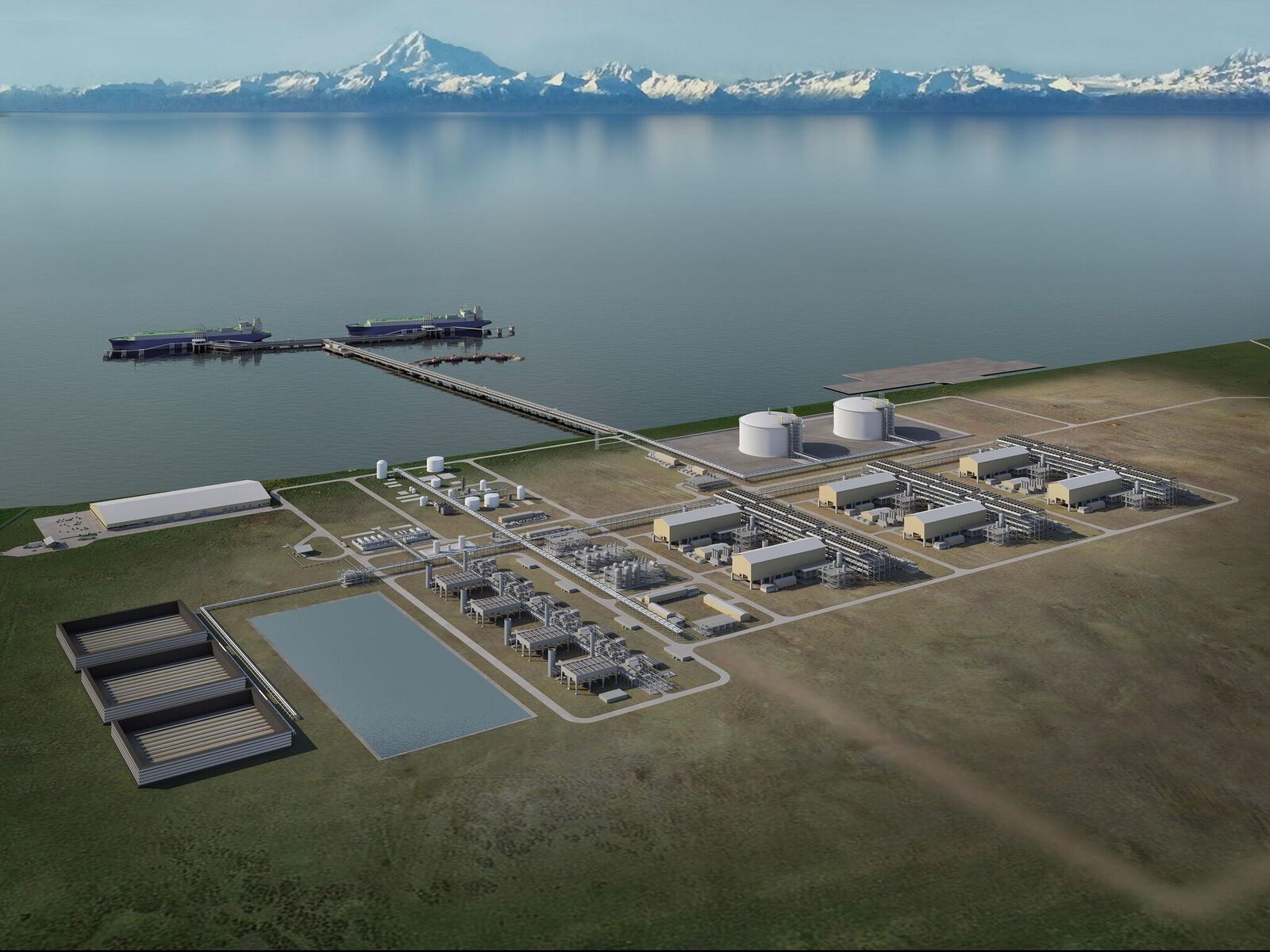
President Donald Trump said Taiwan had agreed to buy 30% of the liquefied natural gas from a planned project in Alaska for 20 years, even as Taipei indicated that no binding commitments have been finalized.
October 14, 2026
Total Views: 599
Get The Industry’s Go-To News
Subscribe to gCaptain Daily and stay informed with the latest global maritime and offshore news
— just like 106,328 professionals
Secure Your Spot
on the gCaptain Crew
Stay informed with the latest maritime and offshore news, delivered daily straight to your inbox
— trusted by our 106,328 members
Your Gateway to the Maritime World!
Essential news coupled with the finest maritime content sourced from across the globe.

 Join The Club