Don’t Miss Your Daily Briefing for the Maritime Industry
Join the leading maritime news network
— trusted by our 107,412 members
Firefighters work at the site of a Russian drone strike, amid Russia's attack on Ukraine, in Odesa, Ukraine in this handout picture released March 11, 2025. Press service of the State Emergency Service of Ukraine in Odesa region/Handout via REUTERS
Four Killed in Russian Strike on Grain Ship in Odesa Port
March 11 (Reuters) – A Russian missile attack on Tuesday damaged a grain vessel in the Black Sea port of Odesa, killing four people, Ukrainian authorities said.
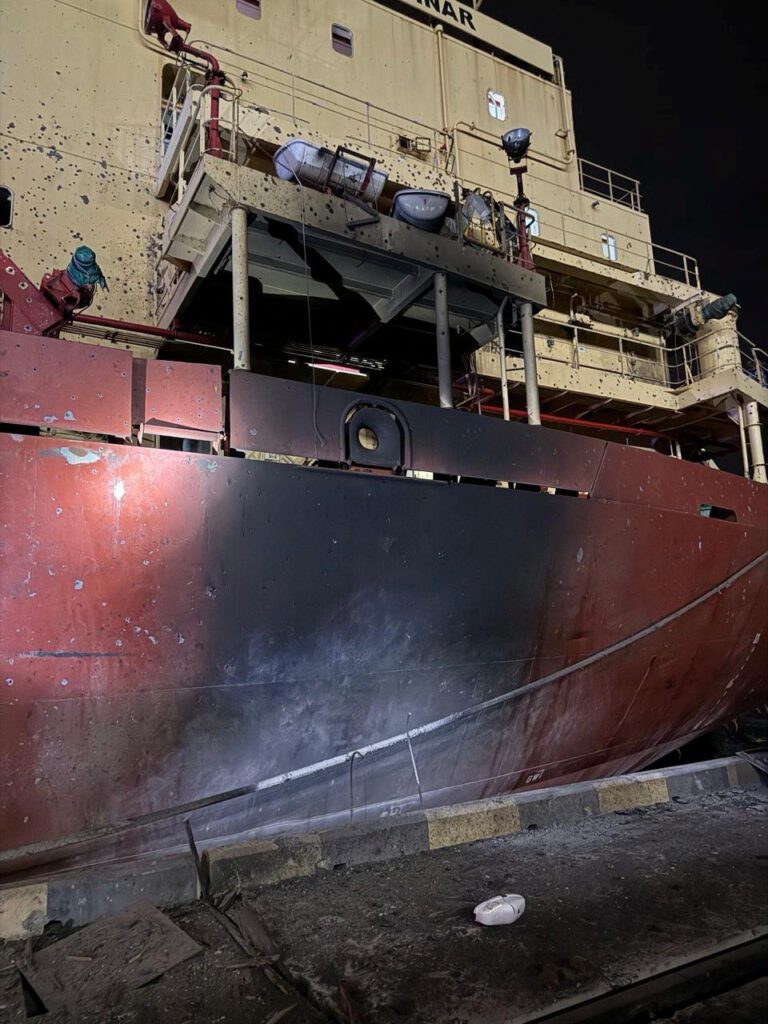
A ballistic missile struck the MJ Pinar bulk carrier that was loading wheat for Algeria, killing four Syrian nationals and injuring one other Syrian and a Ukrainian, Ukraine’s Deputy Prime Minister Oleksiy Kuleba said on Telegram.
“Russia is attacking Ukraine’s infrastructure, including ports, which are involved in ensuring the world’s food security,” Kuleba said.
Global grain merchant Louis Dreyfus Company said in an emailed statement that the vessel had been loading at its Brooklyn-Kiev terminal at Odesa port, with terminal infrastructure also damaged.
LDC said its terminal employees were safe, with the dead among the crew of the chartered vessel.
Kuleba said another vessel was also damaged, without giving further details.
A view shows Barbados flagged bulk carrier MJ Pinar, which was hit by a Russian missile strike while it was loading wheat for export to Algeria, amid Russia’s attack on Ukraine, at a sea port in Odesa, Ukraine, in this handout picture released March 12, 2025. Press service of the Ministry for Development of Communities and Territories of Ukraine/Handout via REUTERS
Ukraine, like Russia, is a major grain exporter. It has managed to re-establish large-scale maritime exports during the war, despite Russian strikes on ports.
Chicago wheat futures Wv1, a global price benchmark, were little changed on Wednesday.
Ukraine also reported other Russian strikes overnight as fighting continues in the three-year-old war in parallel to U.S. efforts to negotiate a ceasefire.
(Reporting by Yuliia Dysa, Pavel Polityuk and Gus Trompiz; Editing by Hugh Lawson)
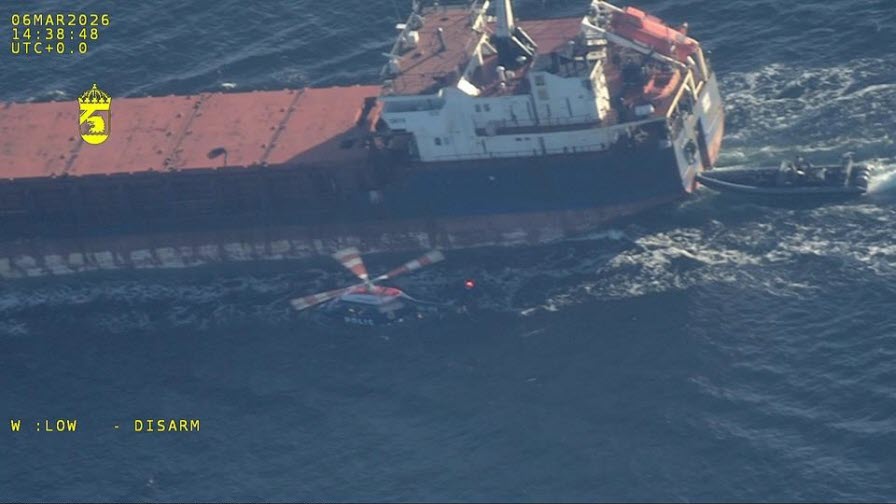
Swedish authorities have boarded and taken control of a cargo vessel in the Baltic Sea after determining the ship was operating as a suspected stateless ship, triggering an investigation and raising fresh concerns about illicit cargo flows tied to Russia’s war in Ukraine.
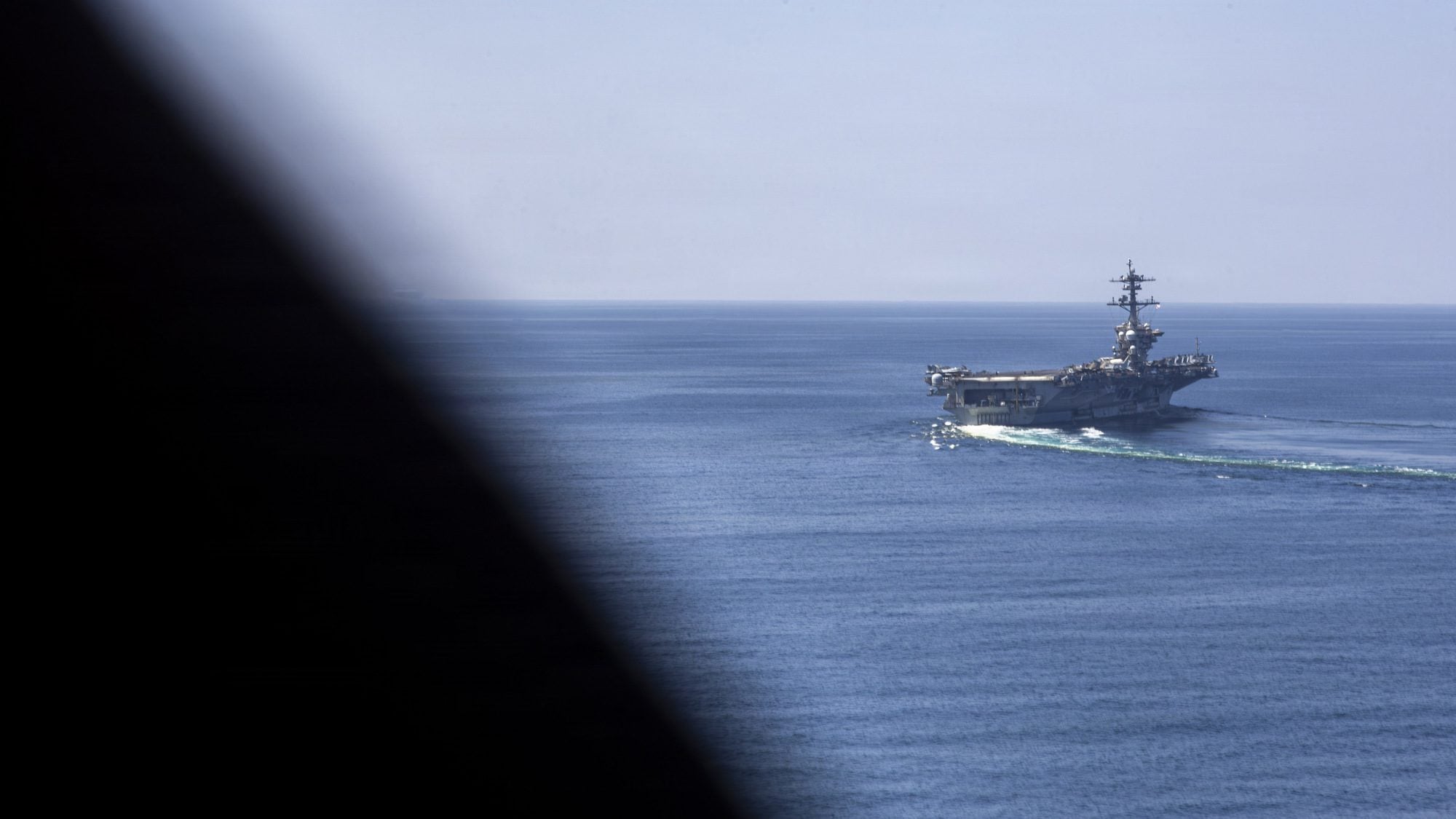
Russia is providing Iran with targeting information that includes locations of U.S. warships and aircraft in the Middle East, the Washington Post reported on Friday, citing three officials familiar with the intelligence.
The U.S. Treasury Department has issued a temporary sanctions waiver allowing Indian refiners to receive Russian crude oil cargoes already loaded on tankers, a narrowly targeted move aimed at preventing...
March 5, 2026
Total Views: 2152
Get The Industry’s Go-To News
Subscribe to gCaptain Daily and stay informed with the latest global maritime and offshore news
— just like 107,412 professionals
Secure Your Spot
on the gCaptain Crew
Stay informed with the latest maritime and offshore news, delivered daily straight to your inbox
— trusted by our 107,412 members
Your Gateway to the Maritime World!
Essential news coupled with the finest maritime content sourced from across the globe.

 Join The Club