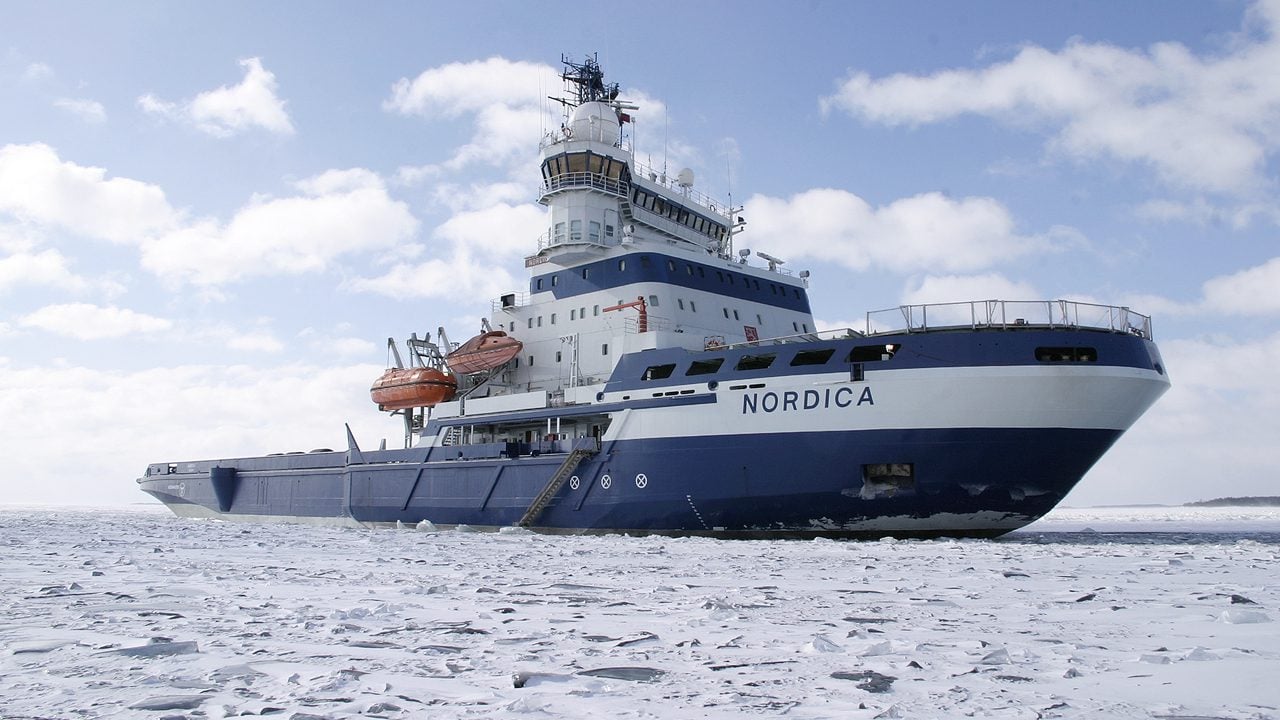
Finland’s multipurpose icebreaker Nordica has departed for Canada, where it will provide icebreaking and ice-management services to the Canadian Coast Guard in the Arctic later this year, marking a new step in Finland’s expanding role in the North American icebreaking sector.
Nordica left Kotka, Finland, on Aug. 23 and is expected to arrive in St. John’s, Newfoundland and Labrador, on Sept. 5, according to shipping data. From there, the vessel is expected to head north into the Canadian Arctic for its seasonal assignment.
The deployment follows an agreement signed in July between Finland’s state-owned Arctia and Qikiqtaaluk Horizon Arctic Services, an Inuit-owned joint venture, with Horizon Naval Engineering as Arctia’s contractual partner. The Canadian Coast Guard is the end customer. The contract calls for icebreaking, vessel assistance and ice-management services and is initially for one year, with options for extension. Arctia said the work will not involve law enforcement or defense activities.
“Through a charter with QHAS, an Inuit-owned company, the MSV Nordica will support our icebreaking, search and rescue, and environmental response operations in the Arctic,” the Canadian Coast Guard said in a statement. “This additional capacity will support our new maritime security mandate.”
The 116-meter (381-foot) Nordica was built in 1994 at Finland’s Aker Finnyards shipyard in Rauma and has a displacement of about 12,800 tonnes. Its diesel-electric propulsion system provides 15 megawatts of power through two azimuthing thrusters, giving the vessel a 230-tonne bollard pull and strong maneuverability in ice.
Nordica has extensive Arctic experience. In 2017, the vessel set a record for the earliest seasonal transit of the Northwest Passage, sailing from Vancouver to Greenland in 24 days over more than 6,000 miles. It has also worked in the Beaufort and Chukchi seas and on offshore projects in other parts of the world. The vessel was also contracted by Arctia Shipping to support Shell’s 2012 exploratory drilling campaign in the Alaskan Arctic.
The Canadian assignment highlights how Finland’s icebreaking expertise is increasingly extending beyond vessel construction. Under the ICE Pact, Canada, Finland and the United States are cooperating on Arctic and polar icebreakers, while Finnish shipyards are now directly building vessels for North American customers.
Canada’s Polar Max is being constructed with its hull work taking place at Helsinki Shipyard before final completion in Quebec. Meanwhile, Rauma Marine Constructions and Helsinki Shipyard are building Arctic Security Cutters for the U.S. Coast Guard, with up to four of the vessels planned for construction in Finland.
Nordica’s Canadian deployment also fits neatly into Finland’s seasonal icebreaking cycle. The vessel is expected to return to the Baltic before the Finnish icebreaking season begins, typically around December, allowing it to resume winter assistance to merchant shipping. The 2025-26 season began unusually late, with the first Finnish icebreaker departing on Dec. 31, before rapidly deteriorating conditions required the entire fleet to be deployed.
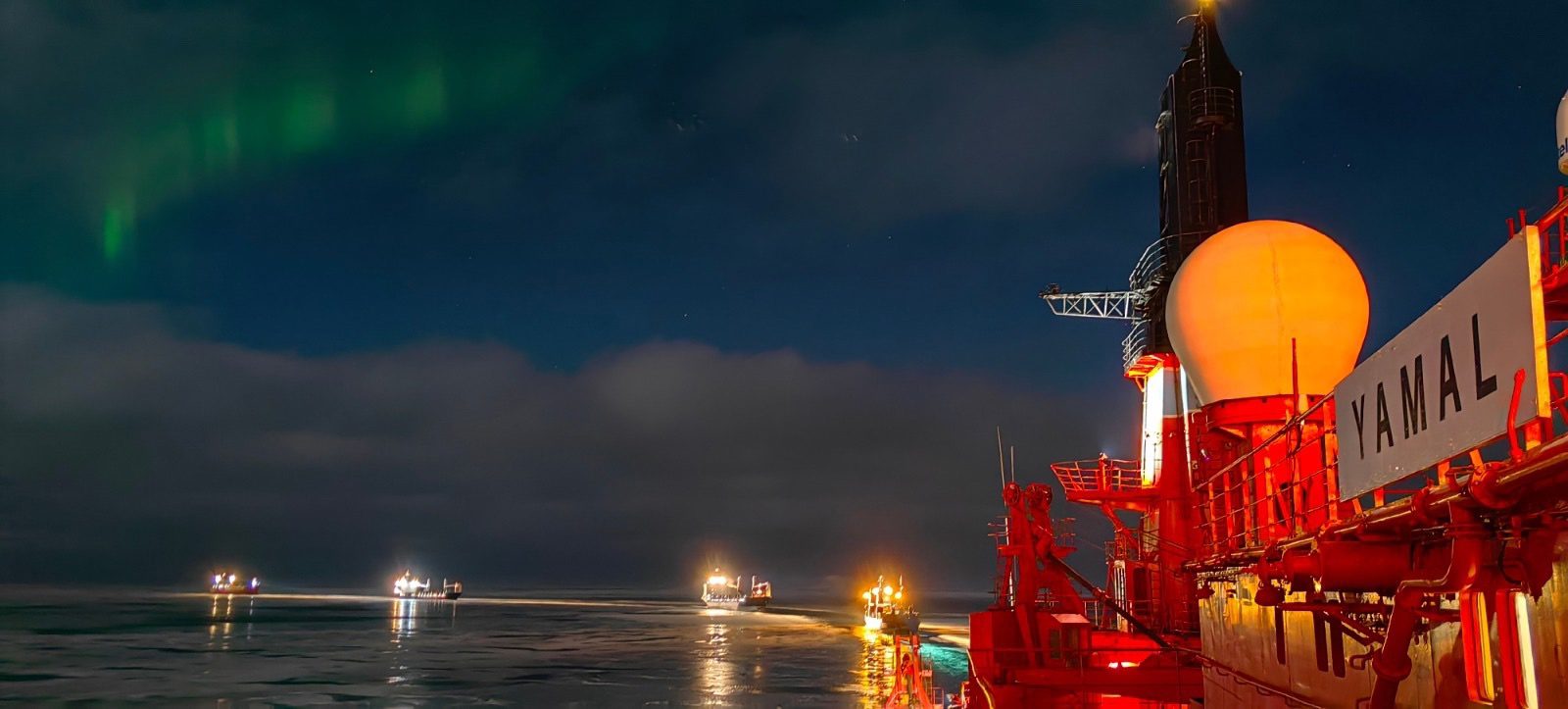
Last winter underscored the severity that Baltic ice can reach. Russia sent the nuclear-powered icebreaker Sibir from the Arctic to the Baltic, a voyage that took about several weeks after the vessel departed Pevek in January. It subsequently operated in the Gulf of Finland as heavy ice disrupted shipping.

 Join The Club