Dominion Energy said Thursday that costs for the nation’s largest offshore wind project have climbed to $11.5 billion, a $300 million increase driven by a brief federal work suspension and mounting tariff expenses, while pushing full completion into early 2027.
The Coastal Virginia Offshore Wind (CVOW) project, previously estimated at roughly $11.2 billion, absorbed $228 million in delay-related costs tied to a December stop-work order issued by the U.S. Department of the Interior’s Bureau of Ocean Energy Management (BOEM), along with $137 million in new tariff exposure, according to Dominion’s January 30 project update.
Legal Clash Over National Security Claims
BOEM ordered a 90-day suspension of offshore construction on five East Coast offshore wind farms under development, including CVOW, on December 22, 2025, citing “reasons of national security.” Dominion filed suit the following day, and on January 16, 2026, a federal judge granted a preliminary injunction allowing construction to resume after roughly 25 days of halted activity.
The work stoppage alone cost the project approximately $5 million per day, Dominion said.
In granting the injunction, U.S. District Judge Jamar Walker concluded that Interior’s order was overly broad and not narrowly tailored to Dominion’s project. The court noted that the government’s stated national security concerns — particularly related to radar interference — primarily applied to wind farm operations, not construction activity.
Tariffs Add New Pressure
Tariffs have emerged as a major new cost driver, with Dominion now facing 50% duties on steel, 30% on Mexican imports, 35% on Canadian goods, and 15% on materials sourced from the European Union.
Total tariff exposure through early 2027 is now estimated at $580 million, with Dominion absorbing roughly $287 million and partner Stonepeak covering the remainder. The company said tariffs are now among the largest single contributors to offshore wind cost inflation in the U.S.
Project Advances Despite Delays
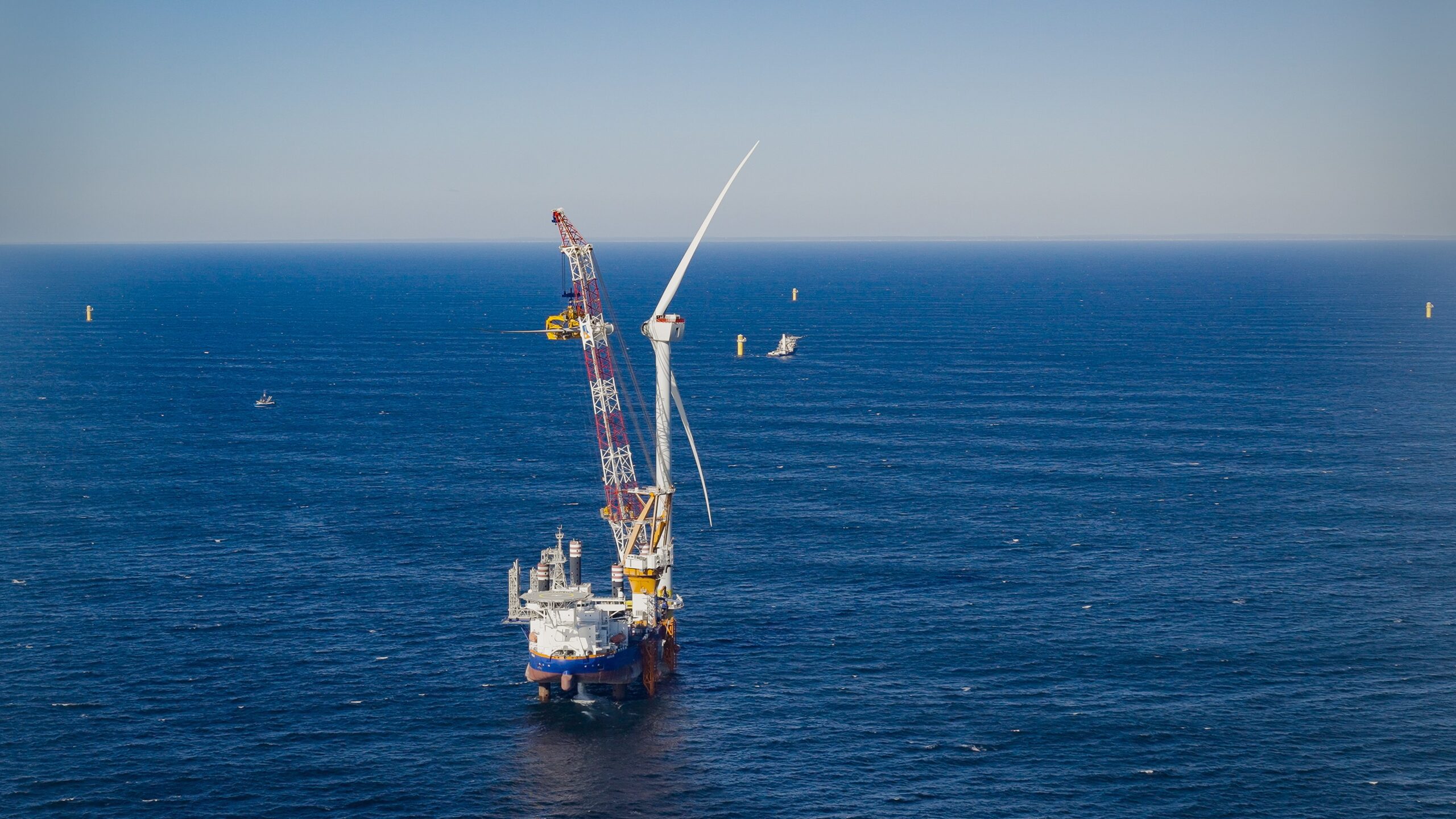
Despite the setbacks, CVOW has reached approximately 71% completion, with all 176 monopiles and nine deepwater export cables installed. The first turbine was installed in January, and Dominion expects to deliver initial power within weeks, though full project completion has slipped into early 2027.
Installation is being carried out by the U.S.-flagged wind turbine installation vessel Charybdis, the nation’s first Jones Act–compliant WTIV. The $715 million vessel faced earlier commissioning delays tied to the remediation of quality-assurance punch-list items before becoming fully operational.
Dominion is increasingly framing CVOW as strategic infrastructure, emphasizing its role in supporting AI data centers, shipbuilding, military readiness, and defense installations, including Naval Air Station Oceana — a notable shift from earlier climate-centered messaging.
Once operational, the 176-turbine facility will generate 2.6 gigawatts of power, enough to supply roughly 660,000 homes. The project has already created an estimated 2,000 direct and indirect U.S. jobs and generated more than $2 billion in economic activity.
Dominion said CVOW will add roughly 43 cents per month to a typical residential electric bill, though the latest cost increases and schedule delays highlight the growing challenges facing offshore wind development in U.S. waters amid regulatory uncertainty and escalating trade tensions.
Editorial Standards · Corrections · About gCaptain

 Join The Club