A fight over whether Indian shipbreaking yards using the controversial beaching method should qualify under European environmental rules is widening, with steelmakers, recyclers, trade unions and environmental groups now urging the European Commission to withdraw its proposal.
The NGO Shipbreaking Platform, EUROFER, IndustriAll Europe, the European Environmental Bureau, Recycling Europe and Transport & Environment sent a joint letter to European Commissioners Jessika Roswall and Stéphane Séjourné opposing the proposed addition of two facilities in Alang-Sosiya, Gujarat, to the European List of Ship Recycling Facilities.
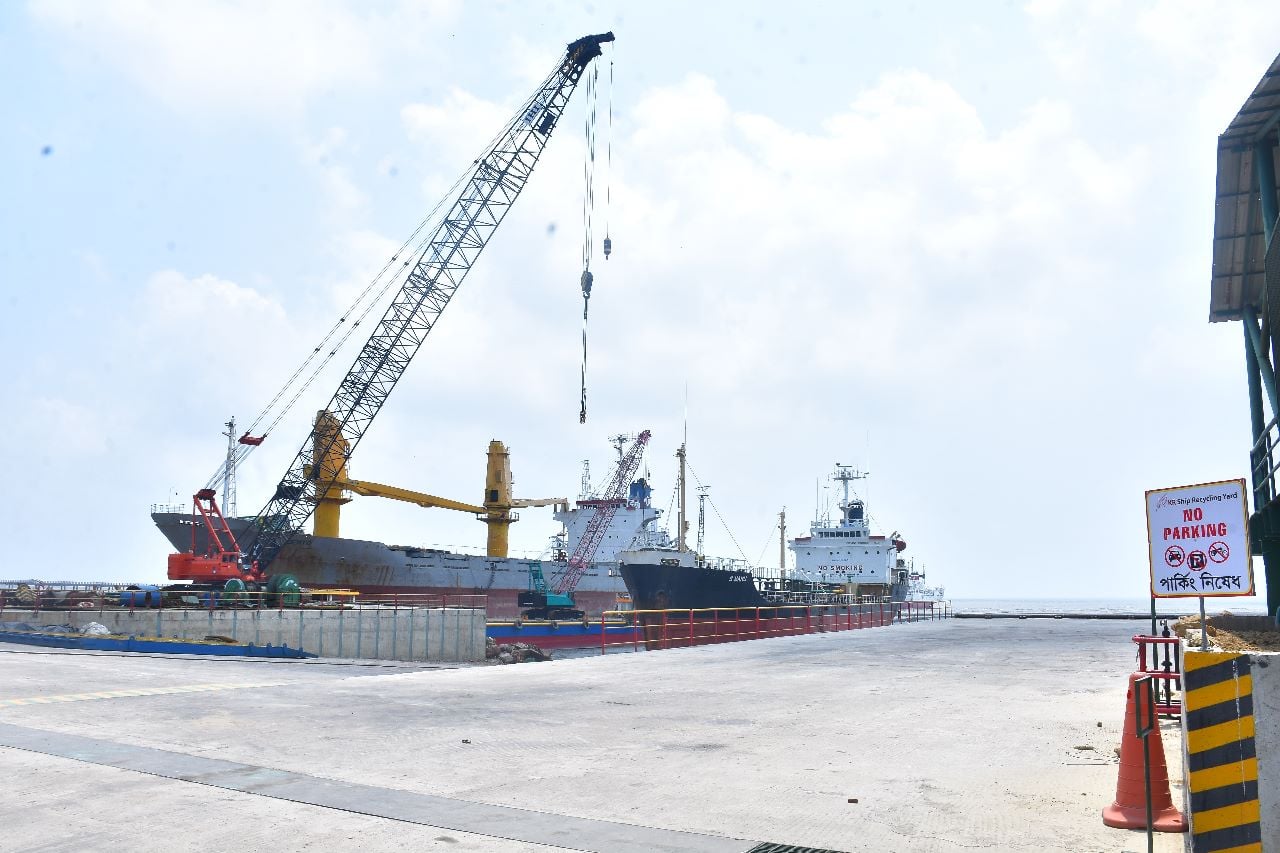
The facilities — Shree Ram Vessel Scrap Pvt. Ltd./Shree Ram Shipping Industries Pvt. Ltd. and YSI Recyclers LLP — would become the first Indian yards approved under the EU system.
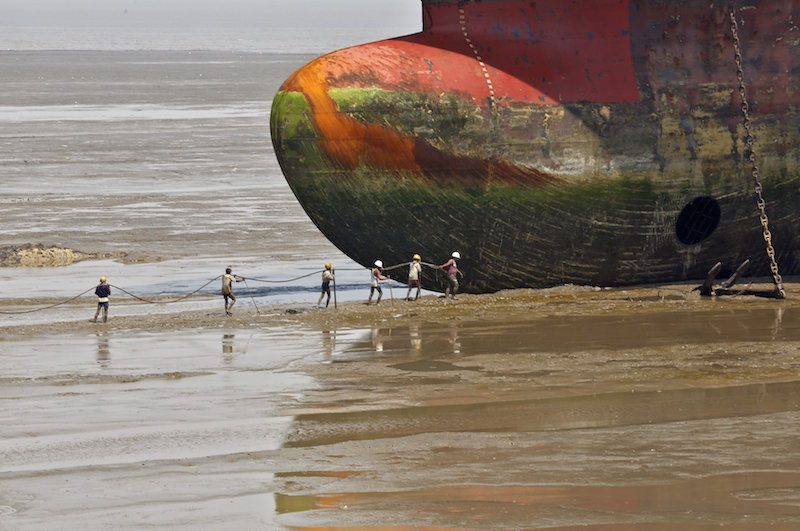
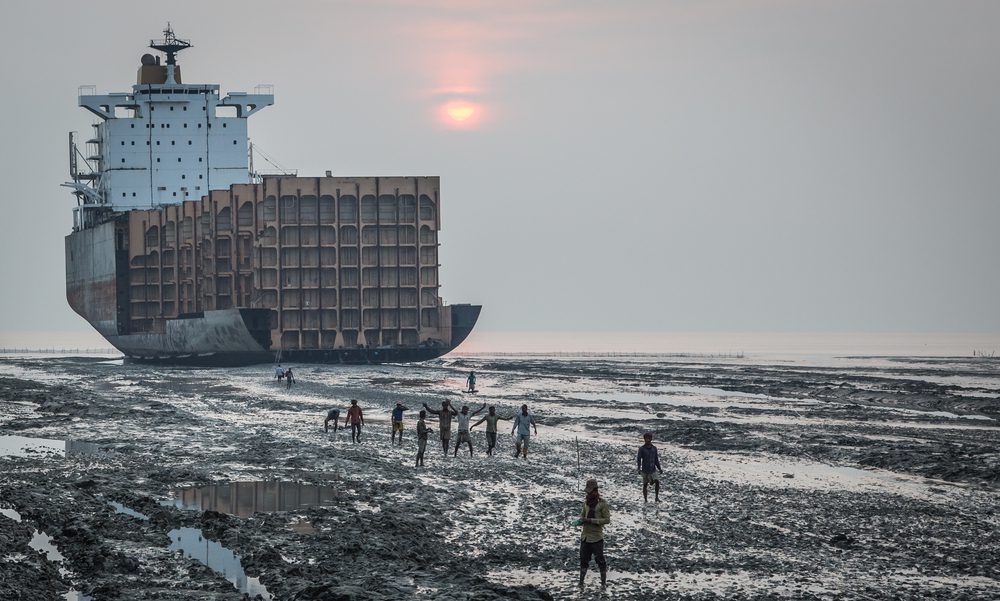
Both use the beaching method, in which ships are driven onto intertidal areas before being dismantled. That practice has become the central issue in an increasingly sharp dispute over whether upgraded South Asian recycling yards can meet European standards.
The coalition argues they cannot.
“This method is not allowed in any EU Member State,” the groups said, arguing that dismantling ships on tidal mudflats makes it difficult to prevent oil and other hazardous materials from reaching surrounding soil, water and marine ecosystems.
The groups also pointed to a heavy fuel oil spill at another Alang yard earlier this year as evidence of the difficulty of containing pollution when ships are dismantled in an intertidal zone.
But the opposition goes beyond environmental groups. EUROFER represents Europe’s steel industry, while Recycling Europe represents companies operating across the European recycling sector.
Their letter argues that approving Indian beaching yards would put European facilities that have invested in stricter environmental, worker safety and waste-management systems at a competitive disadvantage.
The groups also tied the issue to Europe’s wider industrial policy, arguing that end-of-life ships represent an important source of scrap steel and other secondary raw materials and that more recycling capacity should be retained in Europe.
They are calling on the Commission to reject the two Indian facilities, further develop technical guidance excluding beaching under the EU Ship Recycling Regulation, close loopholes allowing European-owned ships to reflag before recycling and push for a global beaching ban through the International Maritime Organization.
The pushback comes just weeks after major shipping associations moved firmly in the opposite direction.
As gCaptain reported earlier this month, BIMCO, European Shipowners | ECSA, the International Chamber of Shipping, INTERCARGO, INTERTANKO and the World Shipping Council welcomed the Commission proposal, arguing that approval should be based on the performance of individual facilities rather than geography or recycling method.
The industry groups say the two yards have invested heavily in infrastructure, safety systems and environmental management since the adoption of the IMO’s Hong Kong Convention for the Safe and Environmentally Sound Recycling of Ships.
The lobbying has only intensified.
On September 17, eight shipping organizations — including BIMCO, CLIA, European Shipowners | ECSA, ICS, INTERCARGO, INTERFERRY, INTERTANKO and the World Shipping Council — sent their own letter to EU environment and transport ministers urging member states to approve the yards.
“Inclusion on the European List should be determined solely on whether a facility meets the EU Ship Recycling Regulation safety and environmental requirements, based on objective assessment and inspection,” the shipping groups said.
They argue that the European Commission’s inspection process found that the two facilities meet EU requirements and warn that rejecting them despite those findings would undermine the credibility of the approval system.
They also say Europe faces a shortage of approved recycling capacity as a growing number of ships approach the end of their operating lives.
The disagreement exposes a fundamental question at the center of the EU’s ship recycling regime: whether beaching itself should be disqualifying, or whether individual yards can use the method while still meeting European environmental and safety requirements.
The issue has taken on added significance since the IMO’s Hong Kong Convention entered into force on June 26, 2025, establishing global requirements for safe and environmentally sound ship recycling. India, Bangladesh, Pakistan and Türkiye, which together account for most global ship recycling capacity, are parties to the convention.
Under the EU Ship Recycling Regulation, large seagoing vessels flying an EU member-state flag may only be dismantled at facilities appearing on the European List. Facilities inside and outside the EU must meet requirements covering worker safety and environmental protection.
Adding the two Alang yards would therefore do more than expand available recycling capacity. It would establish whether upgraded South Asian beaching facilities can satisfy a European regulatory system that has, until now, kept them outside the gate.

 Join The Club