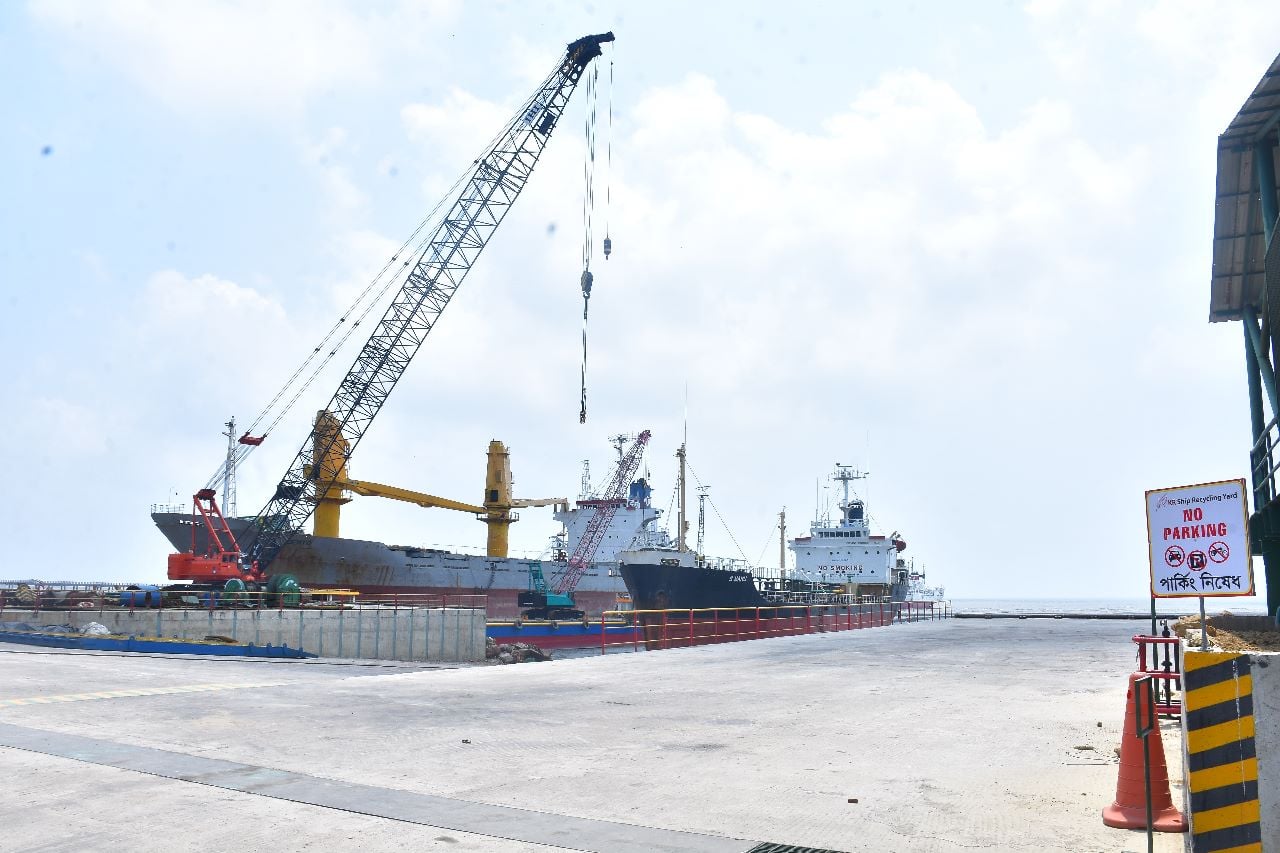
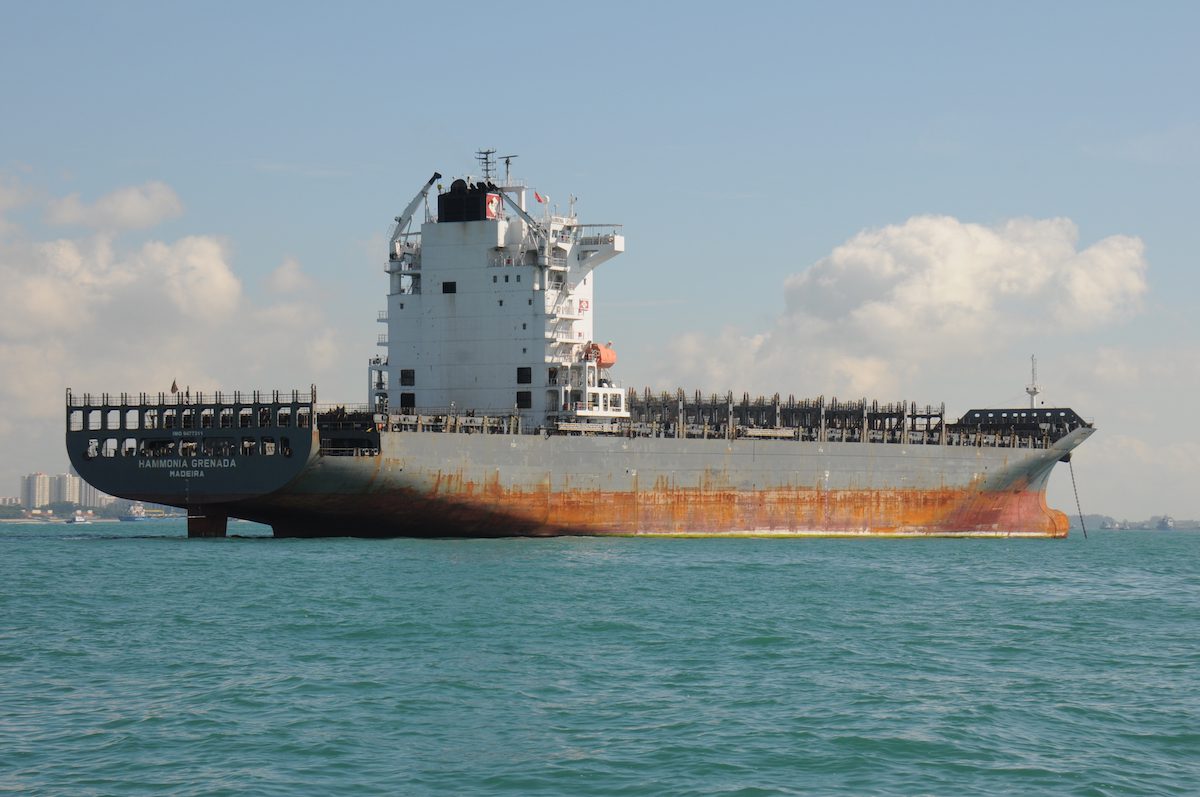
Strong freight markets kept aging vessels trading through the third quarter despite rising scrap prices and strong demand from ship recyclers, according to a new market review from GMS, the world’s largest cash buyer of ships for recycling.
The ship recycling market entered the quarter looking ripe for an increase in demolition activity. GMS said it was tracking roughly 550 merchant vessels preparing to exit the Gulf at the start of July, including around 200 bulk carriers, while recycling yards in the major South Asian markets had available capacity and appetite for tonnage.
But the expected wave of ships never materialized.
Instead, strengthening freight markets, healthy secondhand values and continued employment opportunities gave owners little incentive to sell vessels for recycling.
“The quarter therefore ended with a market that had demand, but not enough willing sellers,” GMS said.
The report highlights an important distinction in the recycling market: yards are not simply competing against one another for vessels. They are also competing against the money owners can make by keeping those vessels in service.
That became increasingly difficult during Q3.
By early September, the Baltic Dry Index had climbed to 3,488, its highest level since October 2021, providing older dry bulk vessels with a strong commercial reason to continue trading. The tanker market became even more lucrative later in the quarter, with GMS reporting some VLCC employment exceeding $1 million per day by Week 39.
At those levels, even sharply higher recycling prices can struggle to persuade owners to scrap a vessel that remains capable of earning substantial revenue.
Recycling prices nevertheless moved significantly higher during the quarter.
At the beginning of Q3, Bangladesh led the market with dry bulk values of about $458 to $463 per light displacement ton, or LDT, and tanker values of $478 to $483 per LDT.
By Week 39, Pakistan had moved to the top of the South Asian market, with dry bulk values around $510 per LDT and tanker values around $530 per LDT. Bangladesh followed at approximately $500 and $520 per LDT, respectively, while India reached around $465 per LDT for dry tonnage and $485 for tankers.
Despite those increases, GMS said fresh vessel supply remained limited.
The report argues that owners were weighing recycling offers against a much broader set of alternatives, including freight earnings, secondhand sale opportunities, remaining vessel life, route risks and compliance costs.
Pakistan offered perhaps the clearest example of how scarcity affected the market.
Gadani recyclers entered the quarter behind Bangladesh but progressively raised bids as available tonnage tightened. By Week 34, GMS indications had climbed as high as $515 to $520 per LDT for dry bulkers and $535 to $540 for tankers.
Those increases came before enough vessels had actually reached the yards, leaving recyclers effectively bidding against one another for a limited pool of future candidates. Prices later eased as previously purchased vessels arrived and some immediate demand was satisfied, although Pakistan still ended the quarter in the leading pricing position.
India, meanwhile, increasingly developed what GMS described as two distinct recycling markets.
While Alang generally remained behind Pakistan and Bangladesh for conventional steel tonnage, specialist vessels—including reefers, gas carriers, passenger ships and vessels with significant non-ferrous content—could attract a different buying response.
Regulatory and compliance requirements are also becoming a larger part of the valuation equation. GMS said sanctions exposure, ownership history, registries and previous trading activity increasingly determine which facilities can realistically handle a vessel and what value can ultimately be achieved.
That means the highest headline recycling offer may not always represent the best executable deal.
The bigger question now is what happens when freight markets eventually weaken.
GMS expects recycling supply to remain tight into the fourth quarter as long as vessel earnings remain strong, particularly where ships continue to find lucrative employment linked to the Strait of Hormuz.
But those delayed recycling decisions may be creating a larger pool of aging tonnage that will eventually need to leave the fleet.
If freight earnings normalize, secondhand liquidity weakens or employment opportunities narrow, GMS said some of that deferred supply could reach recycling markets over a much shorter period.
For now, however, ship recyclers remain in an unusual position: strong demand, rising prices and too few ships available to buy.
“The recycling yards were ready to buy,” GMS concluded. “The ships, for the most part, still had somewhere else to go.”

 Join The Club