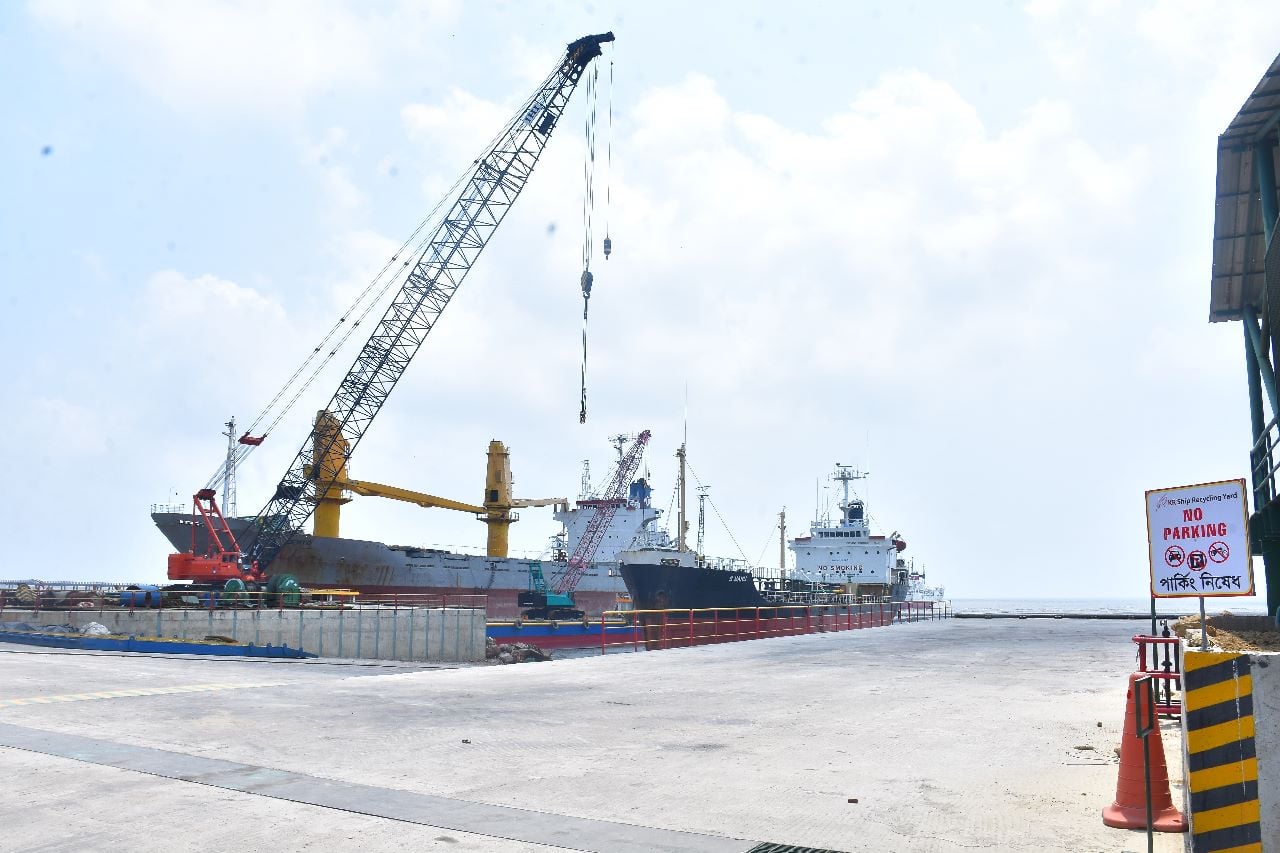
A European Parliament committee has voted to oppose the approval of two Indian ship recycling yards, dealing a setback to shipping industry efforts to expand access to South Asia’s shipbreaking facilities.
The Parliament’s Environment Committee voted Wednesday to object to the European Commission’s proposal to add Shree Ram Vessel Scrap and YSI Recyclers, both located in Alang-Sosiya, Gujarat, to the European List of approved ship recycling facilities.
The objection passed by 48 votes to 26, with five abstentions, according to European recycling industry association Recycling Europe.
The vote comes after months of lobbying by shipping industry groups, environmental organizations, European steelmakers and recyclers over whether Indian facilities using the controversial beaching method should qualify under European environmental rules.
The two yards had received preliminary backing from the European Commission following inspections intended to determine whether they meet the requirements of the EU Ship Recycling Regulation. Their inclusion would mark the first time Indian ship recycling facilities have been added to the European List.
At the center of the dispute is beaching, a method in which ships are driven onto tidal shorelines before being dismantled.
Lawmakers opposing the proposal argue that cutting ships apart in intertidal areas makes it difficult to contain oil, heavy metals and other hazardous materials, even at facilities that have invested in improved infrastructure and environmental controls.
The objection also raises concerns about downstream waste management, including scrap steel sent to local re-rolling mills that have not been assessed against European industrial emissions standards.
The NGO Shipbreaking Platform welcomed the committee vote, arguing that approving the facilities would undermine the environmental protections established under EU law.
“Today’s vote in the European Parliament sends a strong political message to the European Commission,” said Ingvild Jenssen, the organization’s executive director.
Recycling Europe also welcomed the decision, arguing that approving facilities without conclusive evidence of compliance would place European recyclers at a competitive disadvantage.
The opposition follows a coordinated campaign by European steelmakers, recyclers, trade unions and environmental organizations.
As gCaptain reported in September, a coalition including EUROFER, IndustriAll Europe, the European Environmental Bureau, Recycling Europe, Transport & Environment and the NGO Shipbreaking Platform urged the Commission to withdraw its proposal.
The groups argued that beaching facilities cannot meet European requirements for pollution containment and warned that approving the Indian yards could undermine investments made by European recycling facilities to comply with stricter environmental and worker safety standards.
Their concerns extend beyond pollution. The groups also argue that end-of-life ships represent an important source of scrap steel and other secondary raw materials that should be recovered within Europe.
Shipping associations have taken the opposite position.
In September, BIMCO, European Shipowners | ECSA, the International Chamber of Shipping, INTERCARGO, INTERTANKO and the World Shipping Council welcomed the Commission’s proposal, arguing that approval should be based on individual facilities’ compliance rather than their location or recycling method.
The campaign intensified on September 17, when eight shipping organizations, including CLIA and INTERFERRY, sent a joint letter to EU environment and transport ministers urging member states to approve the two yards.
The associations argue that the facilities have invested heavily in infrastructure, worker safety and environmental management, and that rejecting yards found compliant through the Commission’s inspection process would undermine the credibility of the EU approval system.
Shipping groups also warn that the European List faces a shortage of suitable recycling capacity as more vessels approach the end of their operating lives.
European Shipowners | ECSA reiterated that position ahead of Wednesday’s vote.
“The inclusion of the two Indian yards in the EU list is a long-awaited and very welcome step, which rewards investments made to meet EU standards,” ECSA Secretary General Sotiris Raptis said in an October 28 statement.
The disagreement highlights a broader divide over how the European Union should regulate an industry concentrated largely in South Asia.
More than 95% of global ship recycling takes place in Bangladesh, India, Pakistan and Turkey, according to the shipping associations. All four countries are parties to the International Maritime Organization’s Hong Kong Convention, which entered into force on June 26, 2025, establishing international requirements for safe and environmentally sound ship recycling.
The EU Ship Recycling Regulation goes further in certain areas. Since December 2018, large EU-flagged commercial vessels have been required to use facilities on the European List, regardless of where those facilities are located.
The latest adopted EU list, published in February, contained 41 facilities, including 30 in Europe, 10 in Turkey and one in the United States.
Environmental campaigners dispute the shipping industry’s capacity argument, pointing to more than 2 million light displacement tonnes of combined annual capacity at facilities already approved by the EU, which they argue is sufficient to handle recent recycling volumes involving EU-flagged and EU-owned ships.
The European Commission itself has acknowledged weaknesses in the existing system, including the practice of shipowners reflagging vessels outside the EU shortly before recycling to avoid the regulation’s requirements.
Wednesday’s committee vote does not amount to a final rejection of the Indian yards.
The objection, introduced by Green lawmaker Sara Matthieu and supported by representatives from other political groups, is expected to go before the full European Parliament later in November. Even if adopted, it would not legally require the Commission to withdraw its proposal. EU member states will have the final say.

 Join The Club