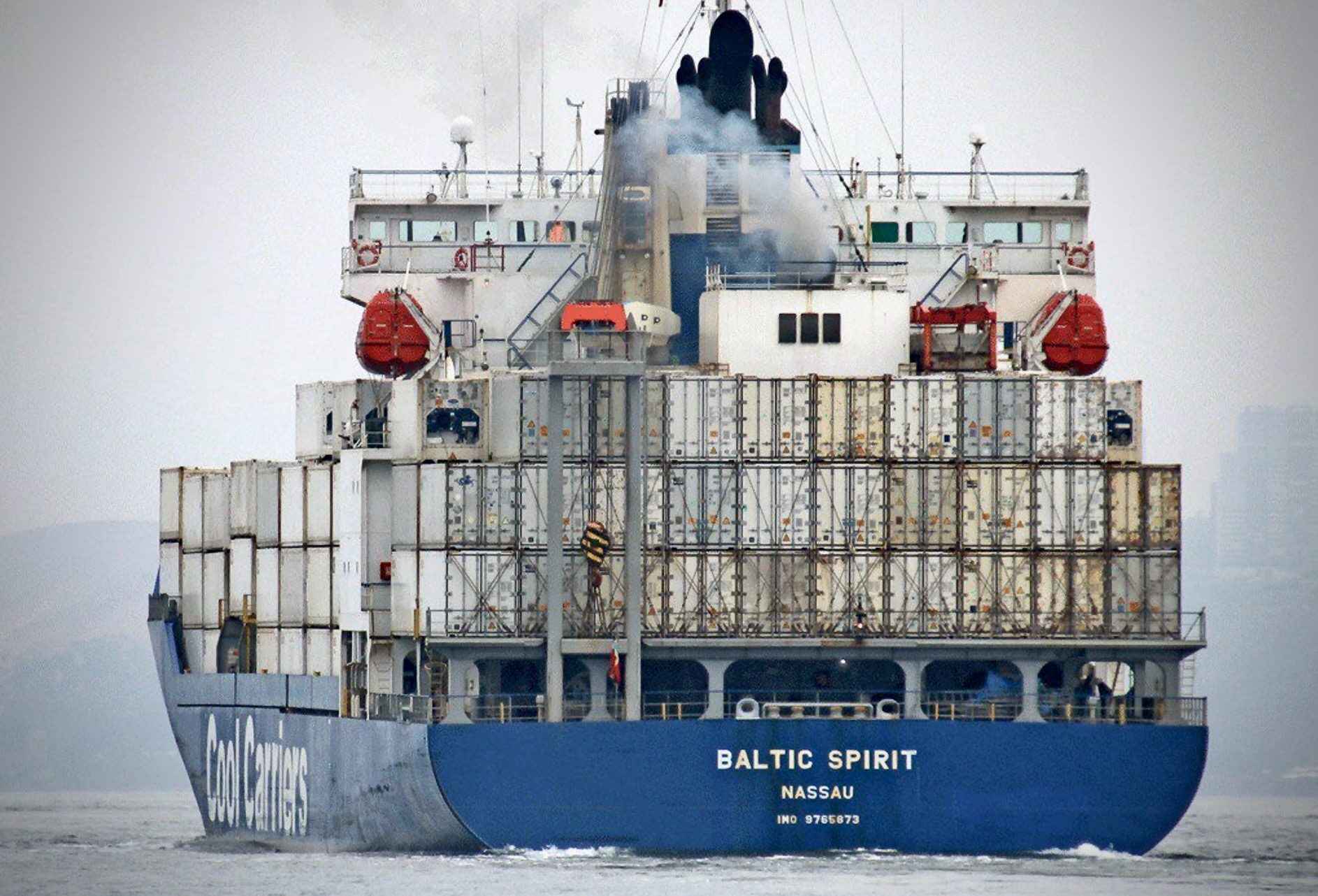
Estonian authorities released the Russia-bound containership Baltic Spirit after an intensive overnight search turned up no evidence of drug smuggling, despite intelligence from international partners that had prompted a dramatic helicopter-borne boarding operation in Tallinn Bay.
The 188-meter ship departed Muuga harbor at 2:15 a.m. following a customs inspection that involved unloading and examining suspicious containers. The vessel is now continuing its voyage to St. Petersburg, Russia, after sailing from Puerto Bolívar, Ecuador a route that raised red flags for investigators.
“This time, the information received from international partners was not confirmed,” Vitali Zajarin, head of the investigation department’s narcotics service at Estonia’s Tax and Customs Authority, told ERR News.
The operation unfolded Tuesday afternoon when police K-Commando swat teams rappelled from helicopters onto the Bahamas-flagged vessel around 5 p.m. as it anchored in Estonian waters for bunkering. The boarding party encountered no resistance from the ship’s 23 crew members.
Estonian customs officials had been monitoring the vessel for several days after receiving intelligence that it might be carrying narcotics concealed in containers. The Ecuador-to-Russia routing particularly concerned investigators, given that Estonia’s largest-ever drug seizure — 2.5 tonnes of cocaine hidden in banana boxes — came from an Ecuador-origin vessel in 2022.
After securing the ship, authorities transferred it to Muuga port east of Tallinn, where customs inspectors spent Tuesday evening methodically unloading and searching the flagged containers. No illegal cargo was discovered.
The vessel is not suspected of being part of Russia’s shadow fleet and faces no European Union or other international sanctions, according to ERR News.
The failed interdiction highlights both the challenges of acting on international drug-trafficking intelligence and the resource limitations facing smaller NATO member states attempting to police busy maritime corridors. Ecuador remains a major transshipment point for cocaine bound for European markets, with trafficking organizations increasingly using commercial shipping routes through the Baltic Sea to reach Russian ports.
Updated: February 16, 2026 (Originally published February 5, 2026)
Editorial Standards · Corrections · About gCaptain

 Join The Club