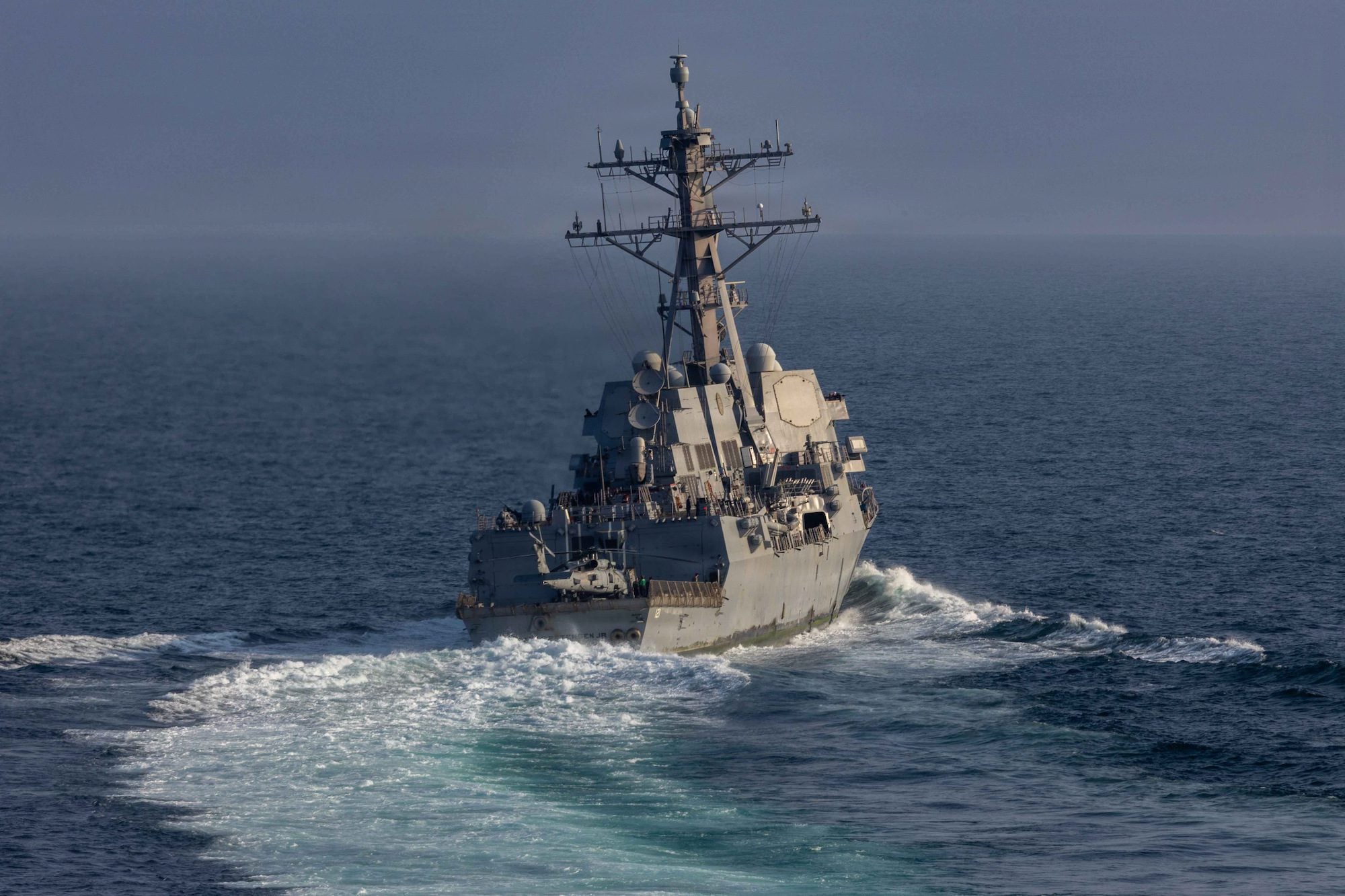
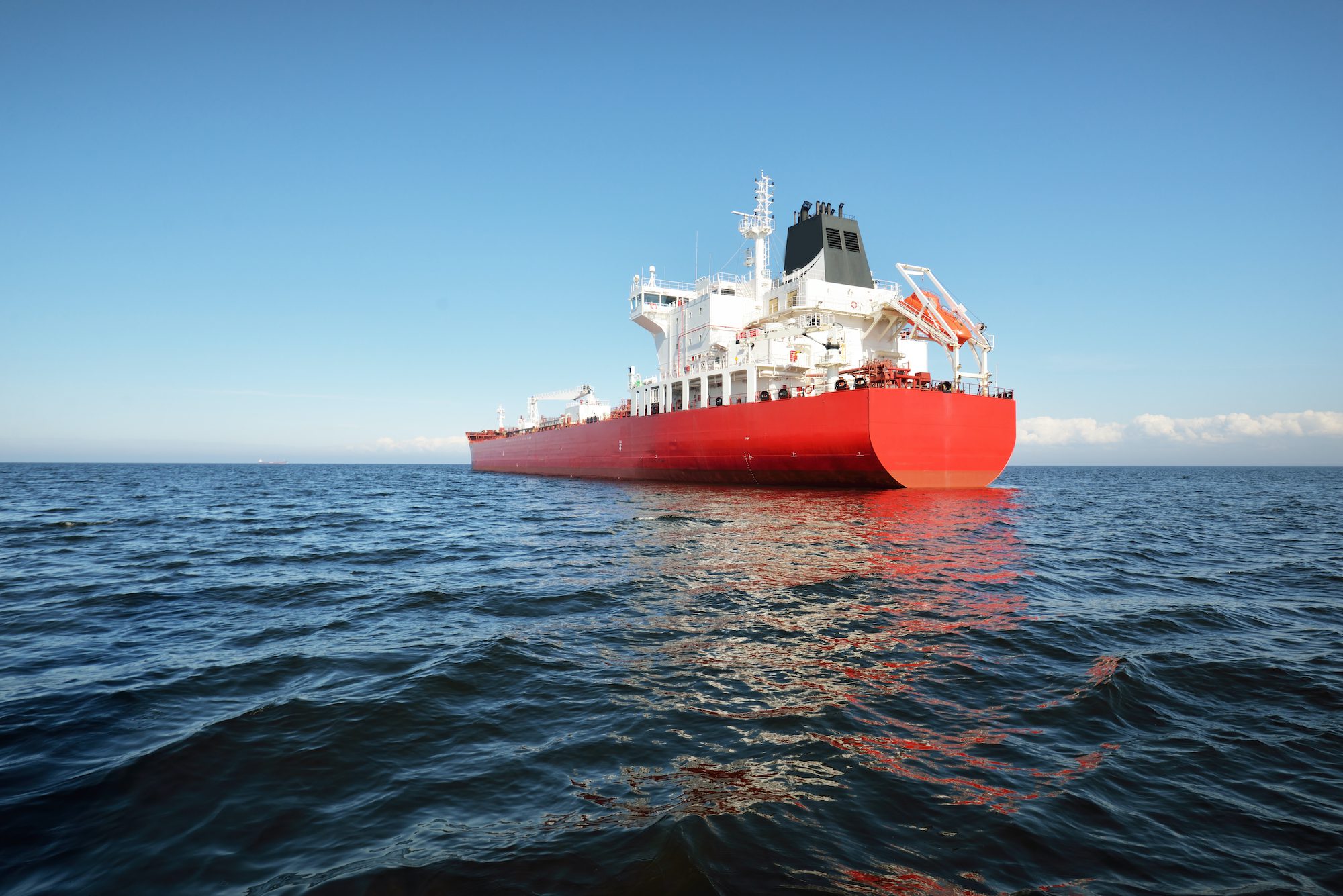
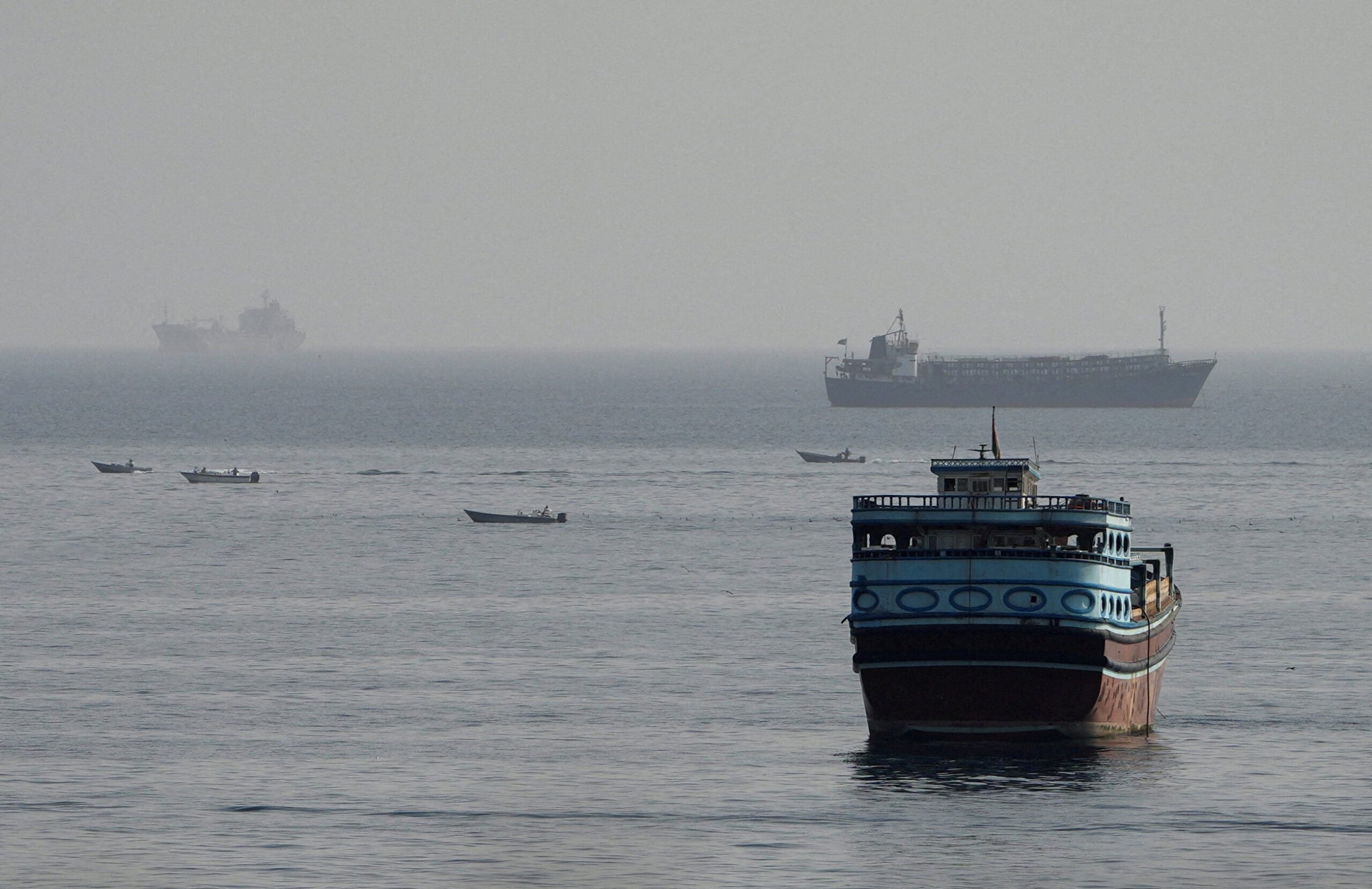
By Julian Lee and Prejula Prem (Bloomberg) — Shipping through the Strait of Hormuz, the waterway that’s become a focal point for the global economy, stayed far below peacetime levels as an effective double blockade stifles vessel movements.
The number of commercial ships observed sailing through the strait stood at 11 on Tuesday, ship-tracking data compiled by Bloomberg show. It averaged 16 a day over the weekend. Ships can switch off their digital transponders to hide their movements in danger zones, and the Wall Street Journal cited two US officials as saying more than 20 went through on Tuesday.
Quickly restoring traffic to normal is critical for global economy because it’s led to a more-than 400 million-barrel shortfall in oil shipments. That’s driven a 31% increase in oil prices since the conflict started with European natural gas gaining by a similar amount.
It’s not clear whether there has been any change in Iranian crude shipments since the US blockade, as Iranian-linked tankers tend to travel with their signals off. The US said on Tuesday that no vessels had got through its blockade.
Whatever the final number of transits, and some ships will turn on their transponders again only once well clear of Hormuz, they remain at a fraction of last year’s 135-a-day average.
Iran all but shut the waterway to other countries’ shipping within a day of coming under attack from the US and Israel on Feb. 28, leaving Tehran as the region’s only oil exporter of note. Initially, the US didn’t block Tehran’s shipments in a bid to contain soaring oil prices, and went so far as to ease sanctions on them.
But after ceasefire talks broke down on Sunday, it changed tack, blockading almost all Iran’s maritime activity. The measure began on Monday evening Persian Gulf time.
Both sides have touted their ability to breach the other’s blockade.
Tehran claimed that one of its own oil supertankers had broken the US blockade.
Although it didn’t name the ship, it may have been referring to the Alicia, an empty US-sanctioned ship that made an inbound transit, passing Iran’s Larak Island at about 4:10 am local time.
Two hours after the Alicia went in, another supertanker, the Greek-owned Agios Fanourios I, crossed Hormuz into the Gulf on its second attempt.
The ship is heading for the Iraqi port of Basra, according to signals it is transmitting through its Automated information System.
It is only the second non-Iran-linked Very Large Crude Carrier, or VLCC, observed making an inbound transit since the early days of the war.
Importantly for the oil market, there have been no signs of cargo-hauling Iranian tankers breaching the US blockade. Several have turned back.
Separately, Iran appears to have loaded another oil tanker at its Jask export terminal, located just inside the eastern arm of Hormuz, and just outside the Persian Gulf.
Satellite images show a VLCC moored at the terminal on both Friday and Sunday. An image from Tuesday shows the mooring to be empty. The ship had its transponder off while it was there, and still does, meaning it’s not clear where it is now.
Beyond oil tankers, at least two Iran-linked container ships, the Golbon and the Kashan, appear to have successfully left the Persian Gulf, hugging the coast of Iran as they head toward its border with Pakistan. Both crossed the apex of the strait on Tuesday, tracking data show, having previously been anchored off the Iranian port of Bandar Abbas.
All the ships observed entering and leaving the Persian Gulf during the past day were confined to a narrow northern lane that runs close to the Iranian islands of Larak and Qeshm.
Observed Transits
In addition to the two container ships, three bulk carriers, one small oil products carrier, one bitumen tanker and three tiny coastal cargo ships were observed making the outbound crossing on Tuesday and early Wednesday.
Vessels going dark in high-risk waters may make transit counts appear lower initially, with figures likely revised upward as delayed data comes in. Tuesday is the most recent day where a full 24 hours of data are available.
As well as the two VLCCs, two small oil products tankers, one LPG tanker, one bulk carrier and two sanctioned container ships were seen entering the Persian Gulf over the same period.
© 2026 Bloomberg L.P.

 Join The Club