The U.S. Department of Homeland Security (DHS) has raised concerns over a surge in Chinese military and research vessels in Arctic waters during 2025. The findings are part of a report on the trilateral Icebreaker Collaboration Effort (ICE) Pact with Canada and Finland.
DHS calls the level of China’s activity in the Arctic “unprecedented” and says under certain circumstances the country’s ongoing expansion of its Arctic fleet poses a challenge to U.S. maritime sovereignty.
According to DHS, 2025 saw a dramatic increase in the number of Chinese-flagged research and military-capable vessels operating in or near U.S. Arctic waters. Multiple Chinese vessels spent extensive time in waters part of the American extended continental shelf and conducted nearly four dozen manned submersible dives across the Arctic Ocean.
This expansion underscores Beijing’s growing interest in the Arctic, not only for scientific research but also for strategic leverage over shipping routes, resource access, and future influence.
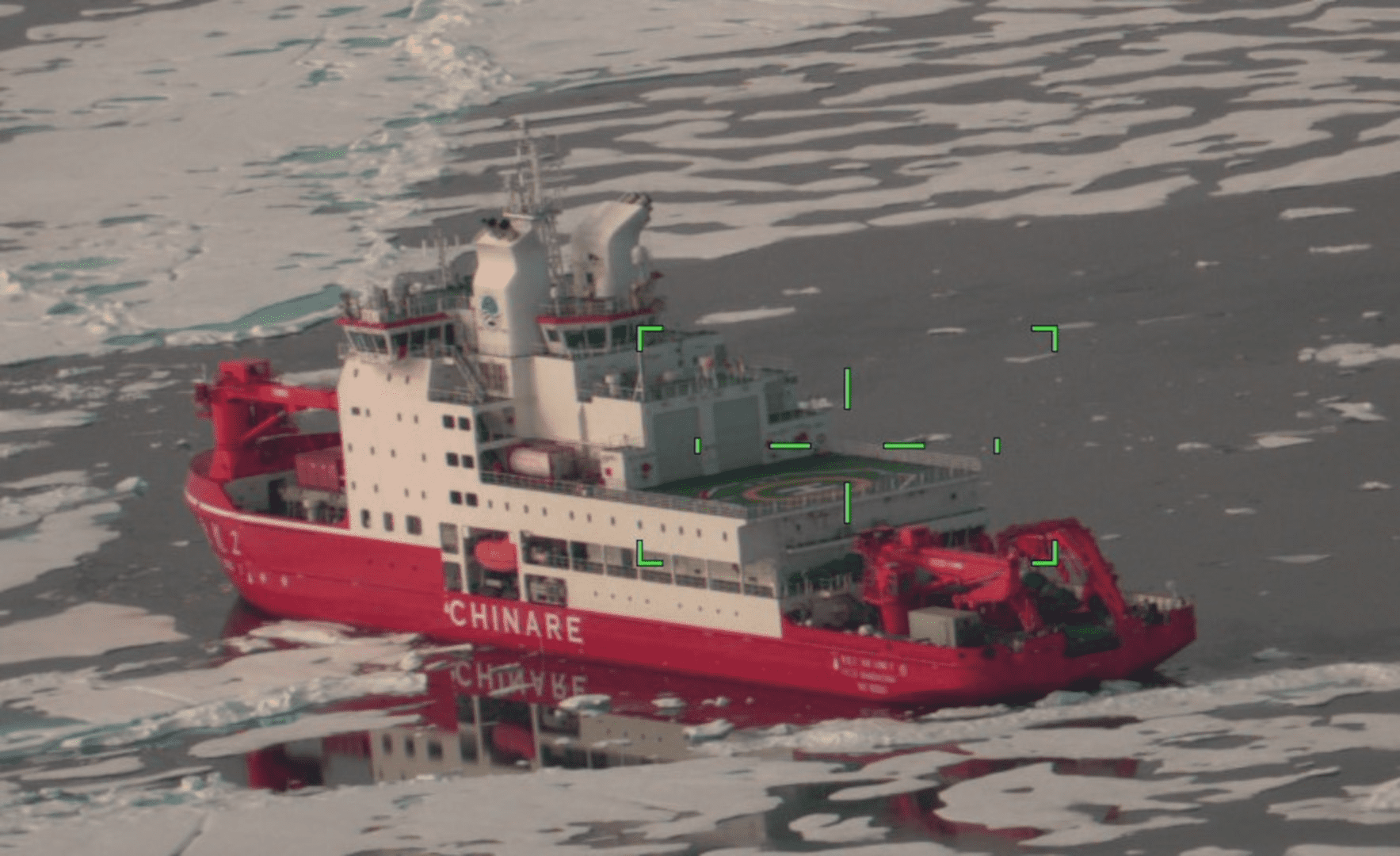
China’s Arctic ambitions are rooted in a long-term plan to steadily grow its polar-capable fleet, including research icebreakers such as Xue Long 2, and invest heavily in scientific, environmental, and navigation research in polar regions.
The influx of these vessels this summer appears to mark a new phase to move beyond occasional expeditions and to maintain sustained operations across several months with a multitude of vessels. The expanded presence signals China’s intention to establish a more permanent presence.
The increased Chinese activity has repeatedly been the subject of discussions on Capitol Hill with experts warning lawmakers that without expanded capacities – icebreakers, maritime patrols, and alliances – the U.S. risks ceding influence in the Arctic. The ICE Pact, an agreement between the U.S., Canada and Finland to build modern icebreakers, is part of a broader push to strengthen readiness in the face of growing polar competition.
In response to last summer’s Chinese presence, the U.S. Coast Guard (USCG) ramped up surveillance and icebreaker patrols to monitor and challenge the expanding presence in the Arctic Ocean near U.S. territory.
The acquisition and subsequent commissioning of the commercial icebreaker Aiviq as USCG Cutter Storis within just eight months helped shore up the service’s Arctic presence this past summer.
The Coast Guard also deployed USCGC Healy, marking the first time in over a decade that the U.S. dispatched more than one icebreaker to the High North simultaneously. The Coast Guard’s Arctic capabilities are set to expand with new Arctic Security Cutters joining the fleet as early as 2028.
In parallel, patrol aircraft and cutters such as USCGC Waesche flew and sailed to track multiple Chinese vessels – including Ji Di, Tan Suo San Hao, Shen Hai Yi Hao, Zhong Shan Da Xue Ji Di, and Xue Long 2 – as they transited through the Bering Strait. The Chinese vessels spent extensive time in the Chukchi and Beaufort Seas and over U.S. extended continental shelf waters off Alaska.
The surge also raises legal and strategic questions: what constitutes acceptable “research” in Arctic waters and how are extended continental shelf rights interpreted. The U.S. Coast Guard repeatedly probed and queried Chinese vessels to ensure they complied with international law requiring permission to conduct marine scientific research in extended continental shelf waters.
The thawing Arctic has also opened up new maritime routes that shorten shipping times between Asia and Europe. A Chinese containership traveled from Ningbo-Zhoushan to the UK in just 20 days this September.

 Join The Club