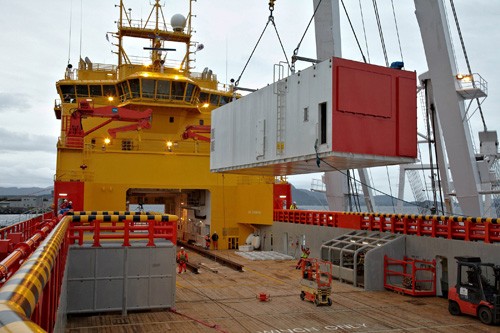
The Norway-based FellowSHIP project, an R&D collaboration between DNV, Wartsila, and Eidesvik, is demonstrating the use of a fuel cell integrated with a battery pack aboard the Viking Lady (photo courtesy: Eidesvik)
With rising fuel prices and impending environmental regulations, the pressure is on for more efficient and environmentally friendly ships. For that reason, DNV Research and Innovation has been working on safe and reliable fuel cell applications for ships. In the joint industry project, FellowSHIP, a 330 kW fuel cell was successfully installed, and demonstrated smooth, fully electrical operations for more than 7000 hours on board the offshore supply vessel Viking Lady.
In September 2009, the first high temperature fuel cell was installed on the Viking Lady.
Fuel cell technology of this magnitude has never before been installed in a merchant vessel, and the project is innovative on a global scale. The achievements of the project include significantly reduced CO2 emissions, improved energy efficiency and zero emissions of harmful substances compared to conventional engine technology.
This recent success with fuel cell technology indicates that it is possible to lower the contribution from shipping to global warming. Introducing fuel cells to ships benefit human health and the environment by avoiding local consequences of air pollution. It can even completely eliminate CO2 emission if hydrogen from renewables becomes available.
According to DNVs expert on the field, Researcher Eirik Ovrum, fuel cells can have a viable future within shipping. “DNV has paved the way for safe and smooth introduction of fuel cells for ships. We recognize that it will take time before fuel cells can become a realistic on-board alternative, mostly restricted by costs, but the FellowSHIP project has taken some important first steps towards a future for fuel cells on ships.”
Although fuel cell technology is not new, this recent success means that it has become relevant to discuss the potential for fuel cells in shipping, as done in this present position paper from DNV.
In February 2014, the 3D Seismic Vessel ‘Polarcus Naila’ was at Damen Shipyard Group’s ship repair and conversion yard Shipdock Amsterdam for a 6-week propulsion upgrade that included the exchange...
PRESS RELEASE – With new stringent sulphur oxide (SOx) emission regulations due to be enforced from January 2015, Finnlines has ordered Wärtsilä Exhaust Gas Cleaning Systems for six of its...
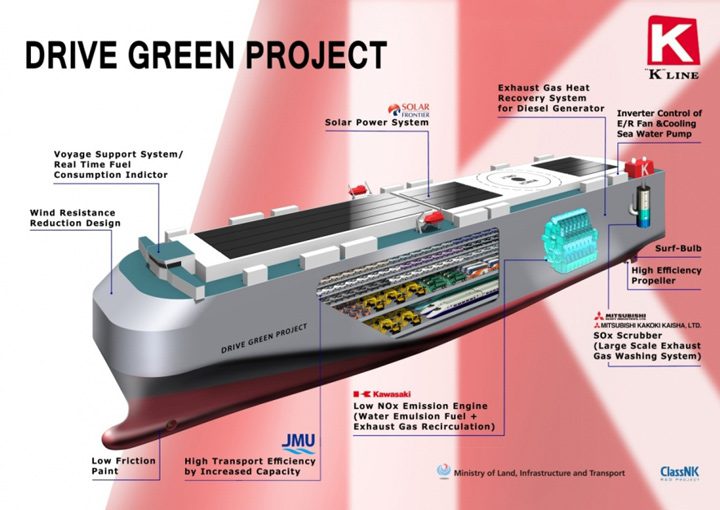
Kawasaki Kisen Kaisha Ltd., Japan’s third-largest shipping line by sales, has ordered a vessel fitted with an engine to cut nitrogen oxide emissions to meet stricter controls, said three people familiar with the situation.
February 12, 2014
Total Views: 165
Get The Industry’s Go-To News
Subscribe to gCaptain Daily and stay informed with the latest global maritime and offshore news
— just like 107,459 professionals
Secure Your Spot
on the gCaptain Crew
Stay informed with the latest maritime and offshore news, delivered daily straight to your inbox
— trusted by our 107,459 members
Your Gateway to the Maritime World!
Essential news coupled with the finest maritime content sourced from across the globe.

 Join The Club