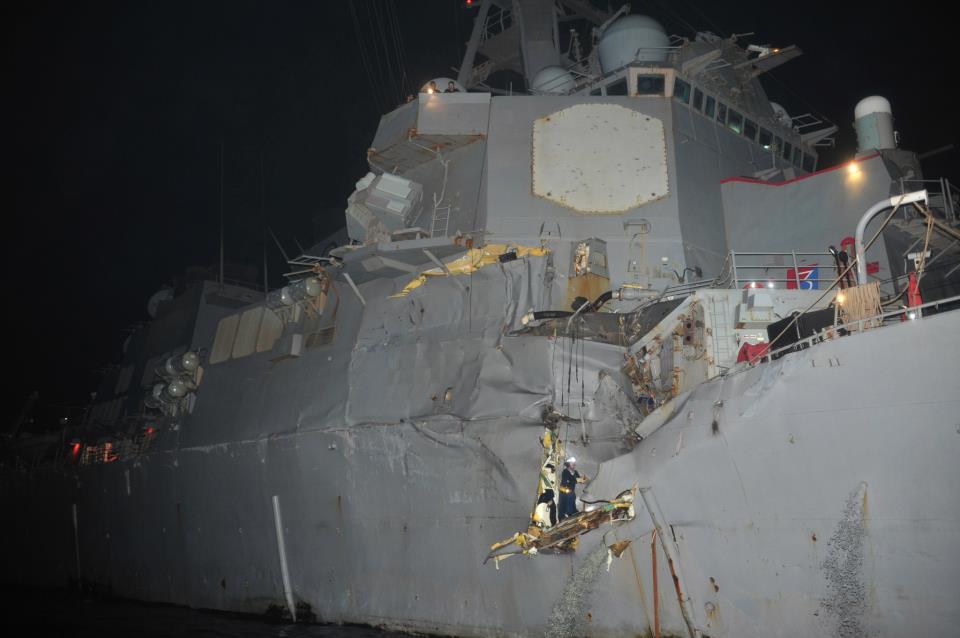
uss porter tanker collision

(U.S. Navy photo by Mass Communication Specialist 3rd Class Jonathan Sunderman/Released)

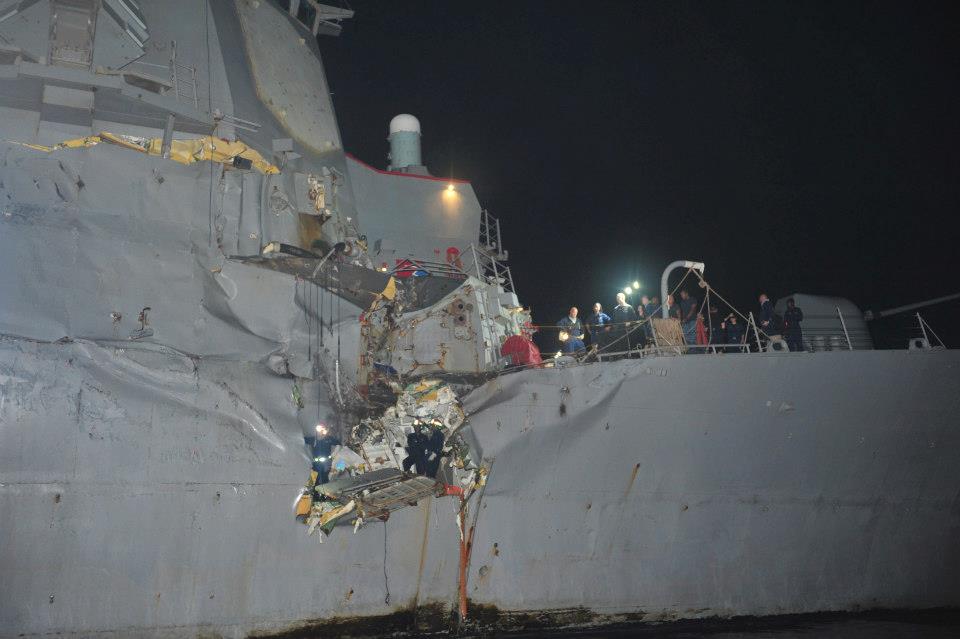
uss porter collision tanker gulf

(U.S. Navy photo by Mass Communication Specialist 3rd Class Jonathan Sunderman/Released)

uss porter collision persian gulf oil tanker

(U.S. Navy photo by Mass Communication Specialist 3rd Class Jonathan Sunderman/Released)

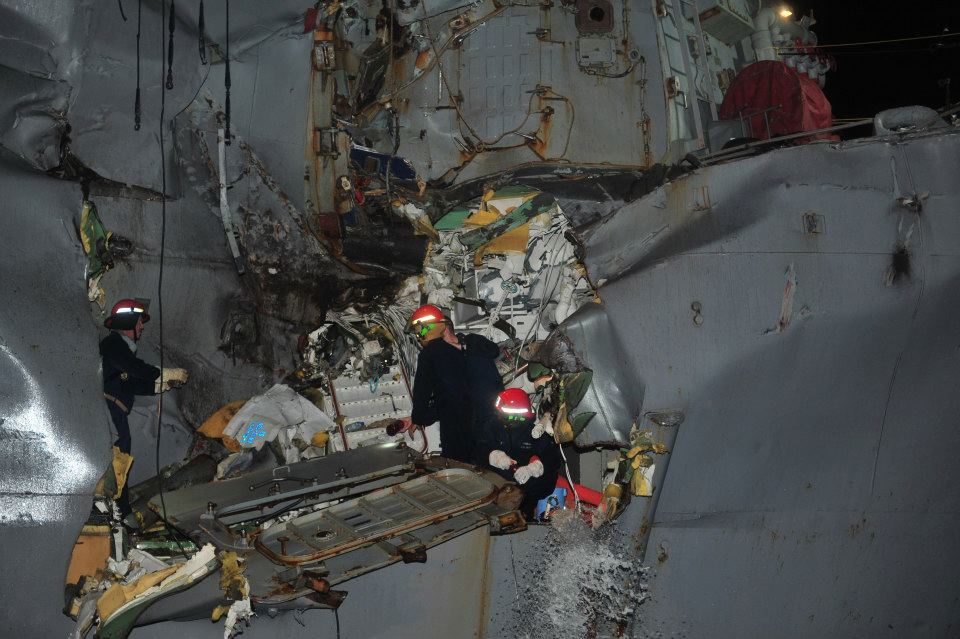
uss porter collision gulf damage

(U.S. Navy photo by Mass Communication Specialist 3rd Class Jonathan Sunderman/Released)

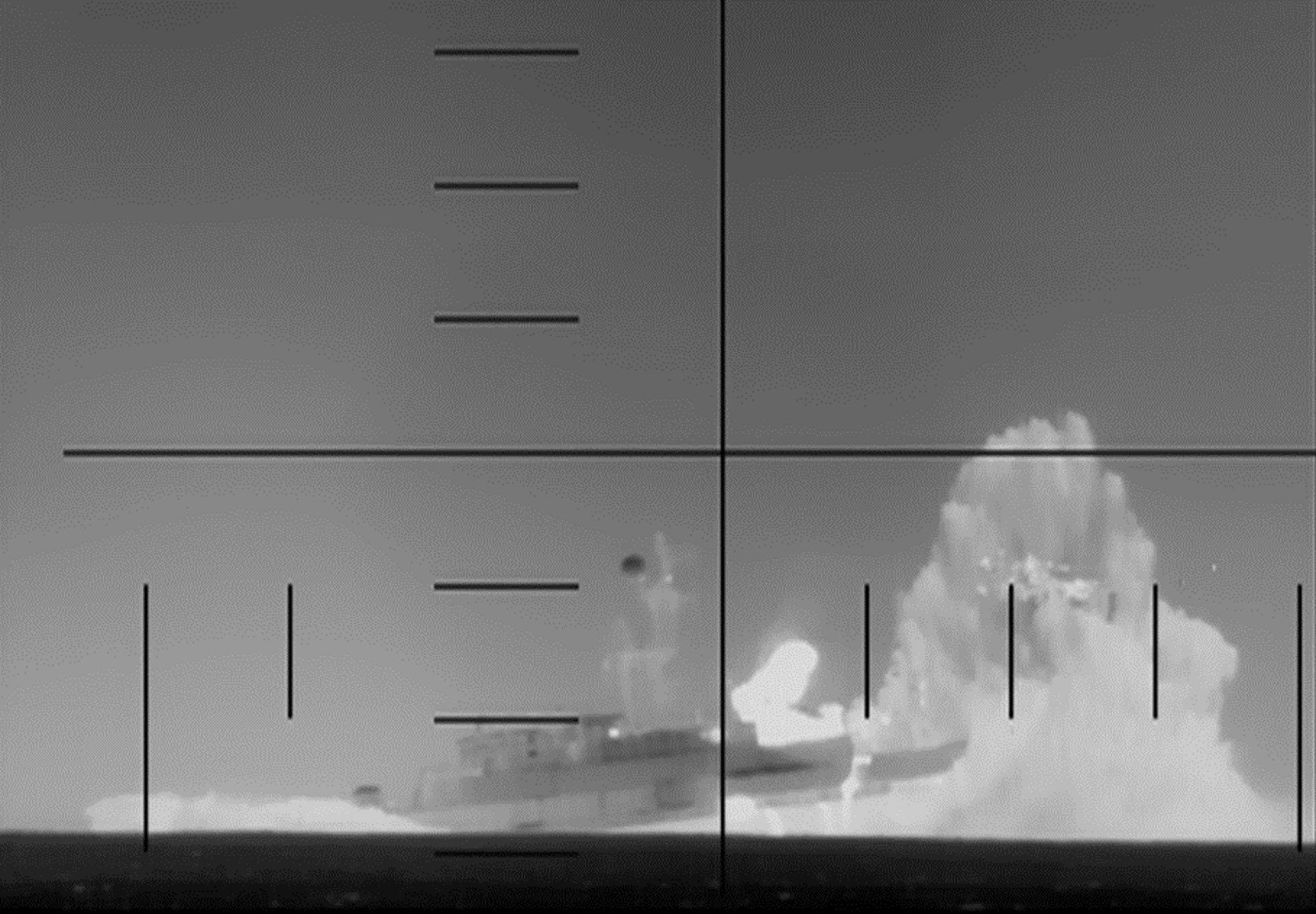
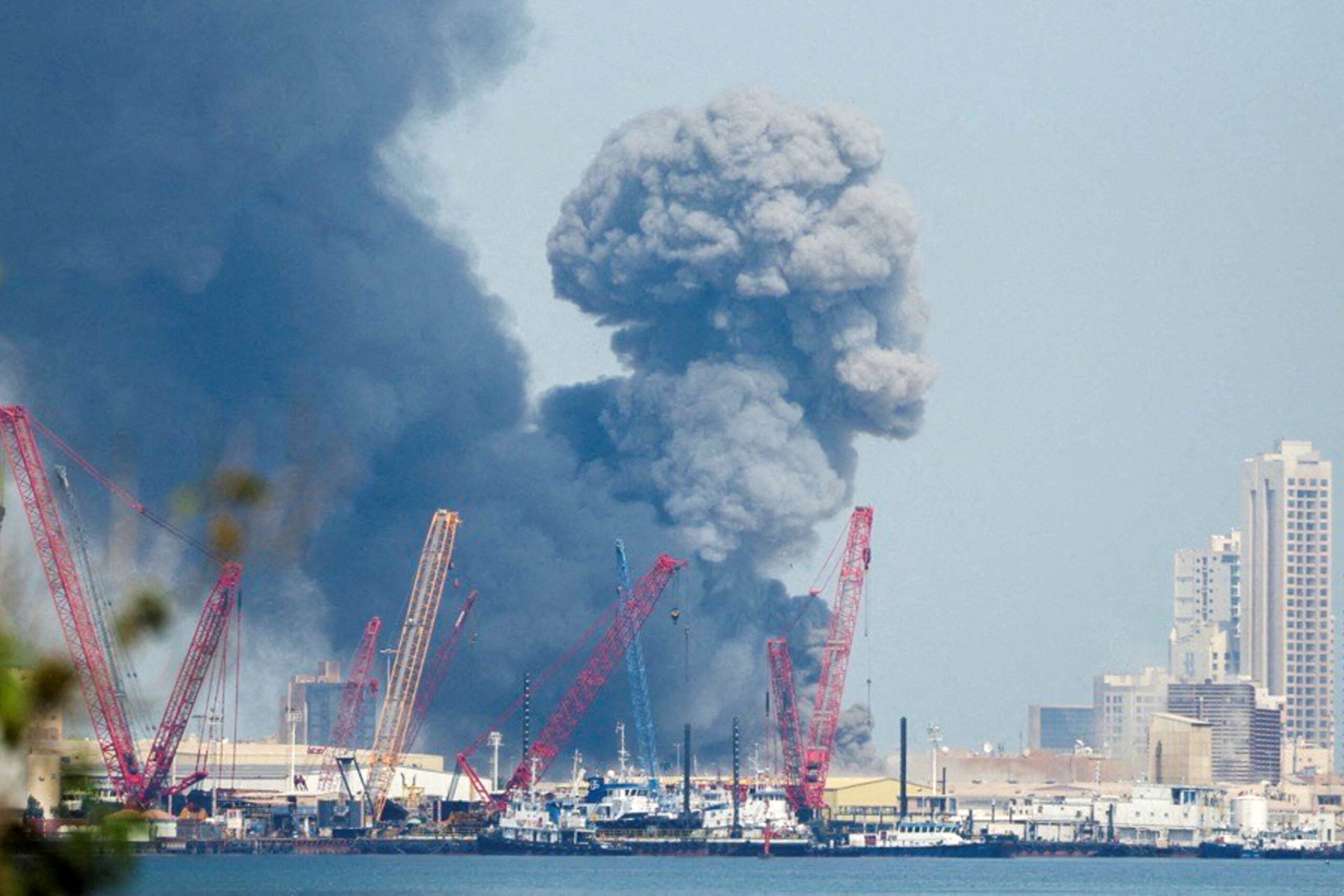
The U.S. Navy said one of its guided-missile destroyers collided with an oil tanker near the Strait of Hormuz in the Persian Gulf.

The collision between USS Porter and the Panamanian-flagged bulk oil tanker M/V Otowasan occurred at about 1 a.m. local time, Bahrain-based U.S. 5th Fleet spokesman Lieutenant Greg Raelson said in a phone interview today. The collision was not combat-related and overall damage to the ship is being evaluated, he said.

The Strait of Hormuz is a narrow waterway carrying a fifth of the world’s traded oil that Iranian officials have threatened to block in retaliation for sanctions targeting the country’s nuclear program. The U.S. Navy has said it would move to stop any Iranian attempt block the waterway.

The tanker, owned by Tokyo-based Mitsui OSK Lines Ltd., can hold 2 million barrels of crude oil and is 95 percent full, according to ship-tracking data compiled by Bloomberg. The vessel loaded at Mesaieed in Qatar and was sailing to Fujairah, the region’s largest refueling port in the United Arab Emirates, the data show.

“We have had no reports of any spills or leakage,” 5th Fleet’s Raelson said.

- Wael Mahdi and Isaac Arnsdorf, Copyright 2012 Bloomberg
YouTube Preview Image
Tagged with:  
Share →

Article Comments


28 Responses to US Navy Destroyer Collides With Japanese Oil Tanker [IMAGES, VIDEO]

  1. avatar Pradeep Joshi says:

    The fighting Navy world over is not conversant with ROR/COLREGS.Before the enquiry starts I can conclude with eyes wide shut that its a case of bad judgement & too much talking on the VHF.A yankee at one end & a Jap at the other.Port/Stbd/Stbd/Port & bang.

    • avatar Giles Ridyard says:

      I would disagree. The Watchkeepers and Deck officers all have to be very conversant with the COLREGS/IRPCS and have to pass verbatim tests and scenario based tests to 100% standard at regular intervals during their careers.

  2. avatar Mayur Jayade says:

    Reminded me the famous and funny video of USS Montana asking a lighthouse in Northsea to alter course! Its hard to believe loaded VLCC of Mitsui OSK got herself so close and finally into USS Porter.Looking forward to great stories out of it.

  3. avatar Brad Blickenstaff says:

    Your headline is backwards. The damage is on the Starboard side of the ship. International Rules of the Road state “When two power driven boats are approaching at right angles or nearly so, and risk of collision exists, the boat on the right is the stand-on vessel and must hold its course and speed. The other boat, the give-way vessel, shall maneuver to keep clear of the stand-on vessel and shall pass it by its stern. If necessary, slow, stop or reverse until the stand-on vessel is clear.” Therefore, the tanker hit the USS Porter, not the way you wrote it.

    • avatar Scotty says:

      Is that really what the rules say? A bit of paraphrasing there I think.

    • avatar At Sea says:

      The tanker may have hit the navy ship, but the navy was mostly at fault. The VLCC broke rule 2, ‘Nothing in these Rules shall exonerate any vessel, or the owner, master or crew thereof, from the consequences of any neglect to comply with these Rules or of the neglect of any precaution which may be required hy the ordinary practice of seamen, or by the special circumstances of the case’, but from the looks of the picture the navy vessel broke rule 15 ‘When two power-driven vessels are crossing so as to involve risk of collision, the vessel which has the other on her own starboard side shall keep out of the way and shall, if the circumstances of the case admit, avoid crossing ahead of the other vessel’. Looks like she tried to cross ahead and failed.

  4. avatar Paul W Gibbs says:

    The damage on the STBD side DOES tell a tale of its own, doesn't it.

  5. avatar Anonymous says:

    The Navy ignored the Rules of the Road again and crossed the bulk ships bow.
    The evidence is on the stud. side of the navy ship.

  6. avatar cmjeff says:

    Maybe they were carrying whale oil?

  7. avatar william cunningham says:

    “If it’s grey, stay away.”

  8. avatar Jonathan Spindler says:

    How does that happen…. Fire the watch officer!

  9. avatar ferdinand magellan says:

    knowing nothing else regarding the incident, the US navy is the biggest joke in the international merchant fleet. way too much VHF chatter and not enough common sense when following COLREGS. I am an American mate that sails on tankers, and it is an embarrassment to deal with US naval (ANY naval ships for that matter) vessels when using collision avoidance. Only a US naval vessel will call me on the VHF when I am 15nm away, in somewhat heavy traffic in the mediterranean, asking what my intentions are. jokes.

  10. avatar Kevin says:

    I attended a lecture while at the Naval War College. The subject was how the Navy was “safer” than ships crewed by merchant seamen. They cited the percentage of Naval ships that were involved in collisions and compared that to the percentage of the civilian manned MSC ships that were involved in collisions. Having been with MSC some 20 years by then, I raised my hand, stood and reminded the speaker that every collision experienced by MSC was with a Navy vessel, and in each case, it was the Navy’s fault. I reminded them that “figures lie and liars figure”, and if they really wanted a clear picture of safety, they should look at the percentage of collisions caused by each organization. If they did this, the score would be 100 percent to 0 percent. I also reminded them that these collisions happen in spite of the fact that there are so many people on a Navy bridge that it’s difficult to move around…while the civilian manned ships had less than a handful of people on the bridge, and that was during maneuvering and UNREP details. The Army, Air Force, and Marine officers gave me a solid round of applause. The biggest difference between a Navy ship and a merchant ship is that on merchant ships the Commanding Officer has worked their way up the chain through the deck department, whereas the Navy CO has worn many hats, and probably never really had to navigate. Don’t get me wrong, there are some very sharp COs out there, but the actual navigation is being done by enlisted personnel.

  11. I can't count the number of times I've been told or heard over the VHF " This is Coalition Warship conducting operations … Change course and stay clear". I guess that doesn't always work.

    • avatar KenH says:

      Indeed
      And having been to Newport and watched some US Naval officers in training scenarios, there is way too much of that. The COLREGS don’t give a rusty Frack about what sort of mighty warship you are driving.
      Not to mention, why the hell can you not simply take action as the give-way vessel?

    • avatar At Sea says:

      Also ‘This is Coalition Warship hailing the vessel 15 miles on my port bow’.
      1) Navy ships ar painted grey, to hide.
      2) Navy ships are designed with a small radar signature, to hide.
      3) Navy ships have AIS turned off, to hide.
      So which one of the many small targets with no AIS would you happen to be?

  12. avatar Capt. Fran says:

    Starboard side damage does not lie. If you don’t know what that means, time to pick up a copy of the COLREGS.

  13. avatar Doc says:

    No amount of Bondo is gonna fix that!

  14. We will have to wait for more details, but both vessels are under a very real duty to avoid collision and in my experience it is difficult to get a U.S. warship to cooperate in many cases. And the time of the collision is also suspect as this is the 3rd Mate watch. Most accidents happen during these hours. It is also not uncommon to have difficulty working with a foreign flag OOW who is scared to deviate from his orders and who will lock up. You have to avoid a collision, not continue into a close quarters situation that can quickly get out of control. The U.S. warship may be shown to have been the stand on vessel, but also a cause of the collision due to its not avoiding an avoidable accident.

  15. My experience dealing with American warships: they sometimes use these terms, units, which are not commonly used by merchant mariner….
    that's confusing, so it sometimes causes a state of danger in the sea, even collision.

  16. avatar Bill McKinley says:

    Just proves what we were all taught back at the school ship many years ago.. "If you see gray, stay away".

  17. avatar 1200PSi says:

    Yep back at school… a log, a bathtub and many other things could be considered a vessel under the Navigation Rules.

  18. avatar George Hale says:

    Back in 1944 I learned “Every vessel in fog,rainstorm or heavy snow,hearing the fog signal of another vessel
    ,apparently forward of her beam, the position of which is not immediately ascertained, shall so far as the circumstances of the case admit, stop her engines and proceed with c aution until danger of collision is over. (I’M sure the rules have changed since then, but the last few words tell it all–even at night.)

  19. avatar johan van Ham says:

    “If you see it´s gray, stay away”…well in the European Navies it is the other way around. We are very respectful and prudent with merchant ships. Not because they are bad, not at all, but they are much more limited as warships. The warships has a full manned bridge and opsroom while proceeding with powerfull gasturbines and diesels, consuming at States costs. The european naval commanders has TOO worked up their way up in watckeeping and opsroomduties. They are professionals. And never ever are they calling on VHF “change course and stay away” With what authority?

  20. avatar James Jones says:

    Being a former watchstander, and having litigated several collision cases to verdict, my take is that there is always plenty of fault to go around in any collision at sea.