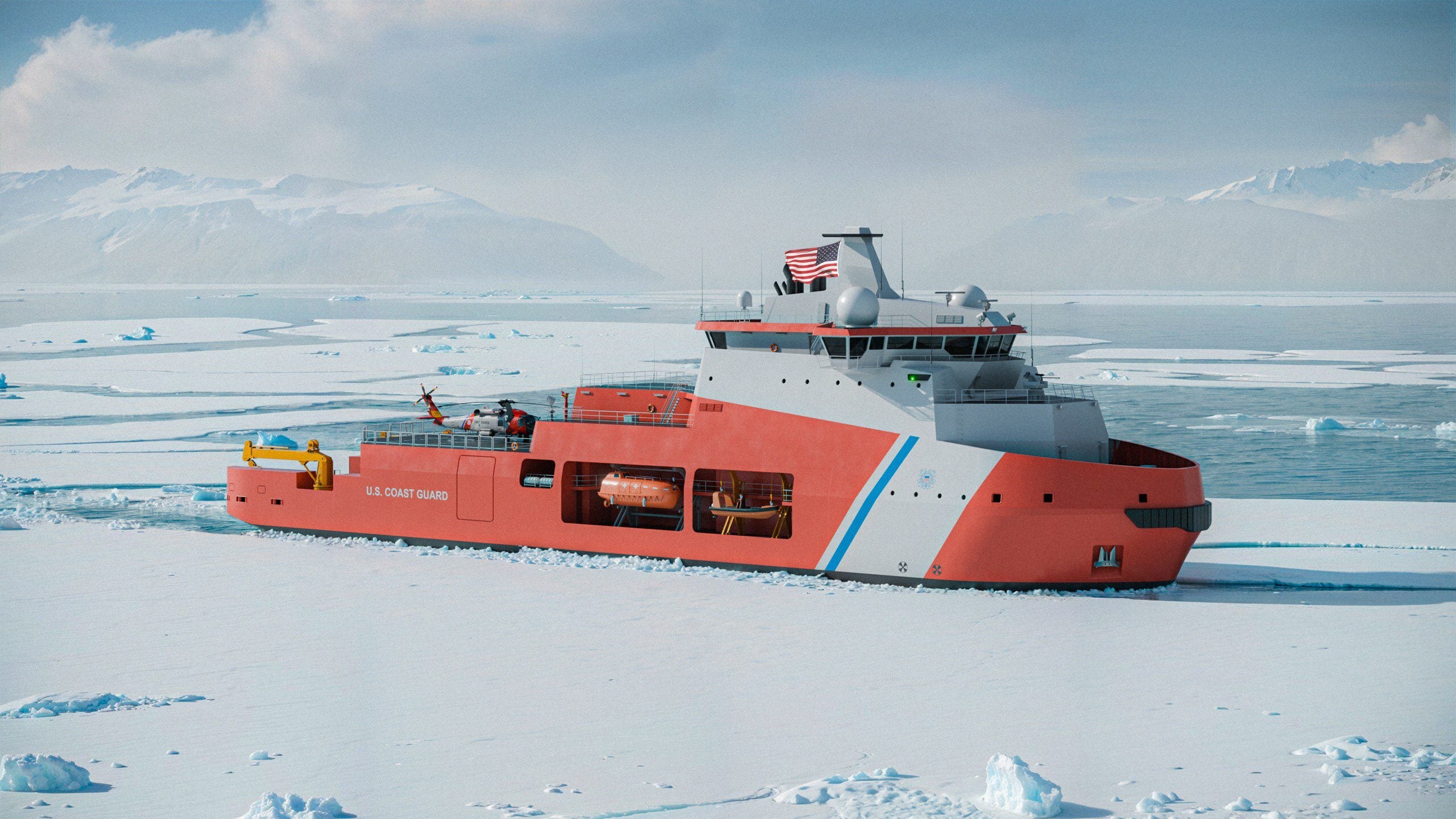
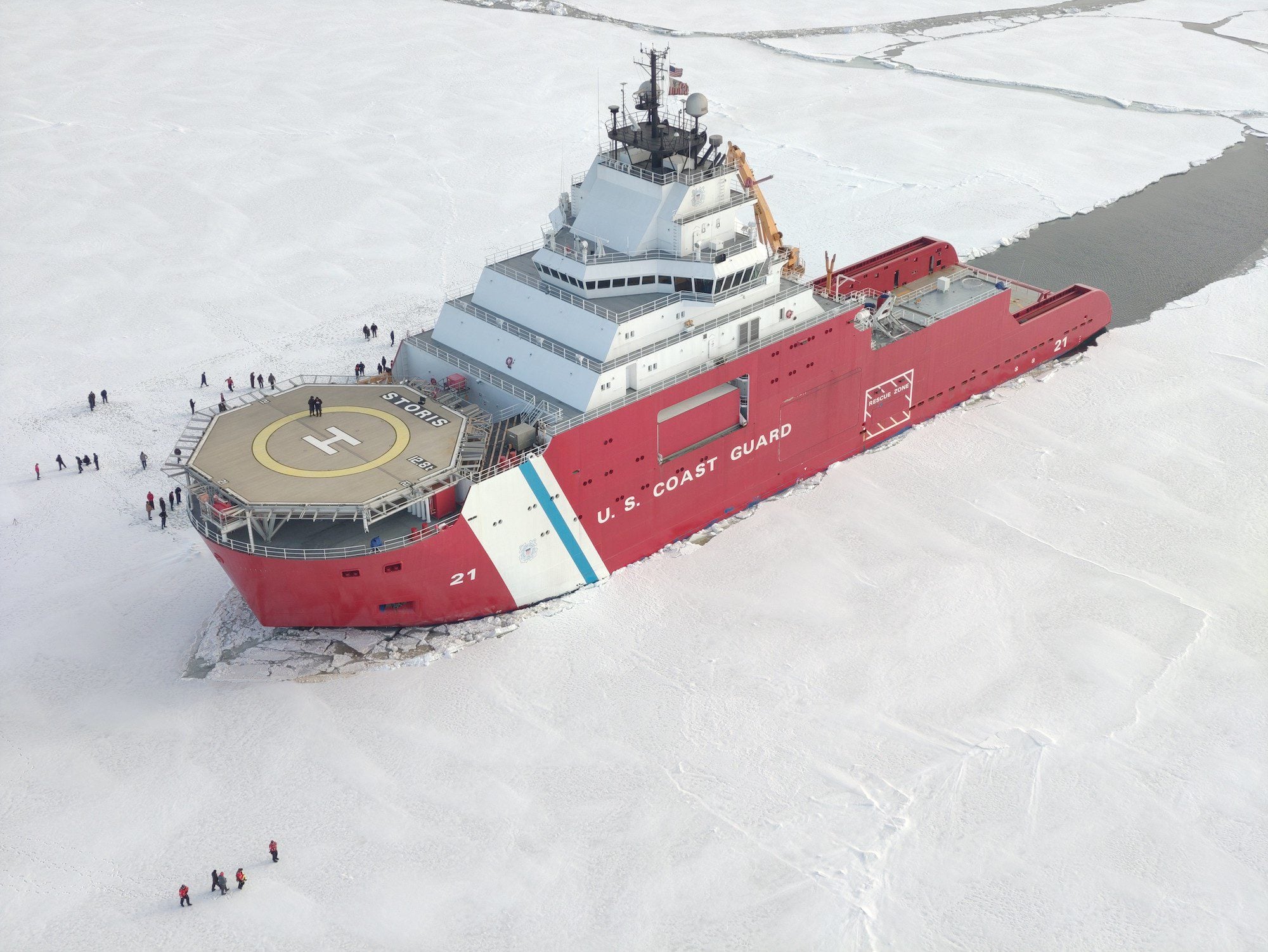
The U.S. Coast Guard will homeport its first two Arctic Security Cutters in Kodiak, Alaska, with a third cutter planned for Seward once supporting infrastructure is ready, marking a major step in Washington’s push to expand U.S. icebreaking capacity in the Arctic.
The first cutter is expected to be delivered in 2028. The Coast Guard said it is accelerating work on infrastructure, housing and support facilities needed to sustain the crews and operations tied to the new vessels.
“America’s future in the Arctic demands strength, capability and resolve,” said Homeland Security Secretary Markwayne Mullin. “These cutters will deliver the enduring operational capability our Nation needs to defend our sovereignty, deter adversaries, and safeguard vital resources for the American people.”
The announcement follows the Coast Guard’s April decision to base its first two Arctic Security Cutters in Alaska and comes amid a broader effort to rebuild the U.S. icebreaker fleet after years of concern over limited American capability in polar regions.
The Arctic Security Cutter program is backed by $3.5 billion in Fiscal Year 2025 reconciliation funding and supported by a U.S.-Finland icebreaker cooperation agreement. The program is intended to speed delivery of new medium icebreakers while strengthening U.S. shipbuilding capacity.
In December 2025, the Coast Guard awarded two contracts to a Bollinger Shipyards-led consortium for up to six Arctic Security Cutters. Rauma Marine Constructions of Finland will build up to two vessels with delivery of the first expected in 2028, while Bollinger Shipyards will construct up to four cutters domestically in Louisiana with the first U.S.-built vessel slated for 2029.
In May, Davie Defense finalized a $3.5 billion contract to build another five Arctic Security Cutters, with the first two expected to be built at Helsinki Shipyard in Finland before production shifts to Gulf Copper facilities in Texas. The contract runs through February 2035.
“Homeporting Arctic Security Cutters in Kodiak and Seward will strategically position these state-of-the-art icebreakers to reinforce America’s maritime dominance in the Arctic,” said Adm. Kevin E. Lunday, commandant of the Coast Guard. “This positioning is critical to national security, enabling the Coast Guard to defend our northern border and meet evolving threats with speed and strength.”
The Coast Guard said the cutters will form part of a modernized icebreaker fleet designed for sustained operations in demanding Arctic conditions.
The investment comes as the United States seeks to close a widening Arctic capability gap with Russia and respond to growing Chinese interest in the region. U.S. officials have repeatedly warned that America’s aging and limited icebreaker fleet is insufficient for emerging operational and national security demands in the far north.
Editorial Standards · Corrections · About gCaptain

 Join The Club